Backpacking Calorie Calculator
Estimate your daily burn and pack the right amount of food for your trip.
Backpacking Calorie Calculator
Plan smarter: calorie estimates by distance, elevation & pack weight.
Trip Details
Hiker Details
Fine-tune your estimate
Your estimated energy needs
Methodology & assumptions (click to expand)
Core model: The calculator uses a Pandolf-style load-carriage equation to estimate metabolic power while hiking with a pack. Power is converted to kcal and multiplied by hiking time derived from distance and chosen effort (speed). Results support Imperial/Metric units and compute either hiking-only calories or total calories (baseline + hiking).
Key steps:
- Convert inputs to SI where needed (kg, m, m/s). Unit labels and values adapt to the Imperial/Metric toggle.
- Estimate average slope (grade, %) from daily elevation gain and horizontal distance.
- Compute metabolic power (Watts) with a Pandolf-form equation scaled by a terrain coefficient (
η) based on the Terrain selector. - Apply small modifiers for temperature, altitude, sex (optional), and body-muscle category.
- Convert Watts → kcal/hr, multiply by hiking hours (distance ÷ speed) to get kcal/day.
- Optional controls: add +10% margin, toggle to include a baseline (rest-of-day) calorie estimate, and show food-weight equivalents using a configurable kcal/oz.
Equation (informal):
M (W) ≈ 1.5·W + 2.0·(W+L)·(L/W_den)^2 + η·(W+L)·(1.5·V^2 + 0.35·V·G)

where:
  W     = body mass (kg)
  L     = load (pack) mass (kg)
  V     = walking speed (m/s)
  G     = grade (%) (positive uphill, negative downhill)
  η     = terrain coefficient (~1.0 smooth → 1.5 rugged)
  W_den = max(W, 35 kg) — denominator floor used only in the (L/W) term to avoid instability at very low body masses
Baseline (total calories) option: When enabled, daily total = hiking kcal/day + a baseline estimate. By default, baseline is approximated as 24 × body_mass_kg, but you can enter your own value.
Food weight estimates: Per-day and trip food weight are derived from the displayed calories using the kcal/oz setting (default 130 kcal/oz). Values are shown in oz/lb or g/kg based on unit selection.
Assumptions & limits:
- Pandolf-style models were developed primarily for adults; this tool is tuned for adult backpackers.
- To prevent unrealistic outputs at very low body masses, the load ratio uses
W_den = max(W, 35 kg)only inside the(L/W)term; adults are unaffected. - Terrain, temperature, altitude, sex, and body-muscle adjustments are modest scaling factors intended for practical trip planning, not clinical precision.
- Results are estimates and can vary with individual fitness, gait, terrain variability, and pack distribution.
- Child accuracy note: Results may not be accurate for children under ~35 kg (77 lb).
Sources: Pandolf-style load-carriage literature and slope–cost research; adapted for backpacking-friendly inputs and unit handling.
How to Use the Calculator
Backpacking comfort lives and dies on energy: too few calories and you bonk; too many and you haul dead weight and overflow your bear can. Terrain, mileage, elevation, temperature, and pack weight all change how much you actually need — far more than any generic “X calories per day” rule of thumb.
To get the most accurate results:
- Days on trail – enter your hiking days (e.g., 3 days, 2 nights).
- Trip distance & elevation gain – more miles and more climbing = higher burn.
- Pack weight – include gear, food, and water.
- Season & effort – cold or tough terrain raises needs.
- (Optional) Open Advanced Options for fine-tuning (terrain, altitude, pace).
As you enter details, your results update instantly:
- Daily calories – expected burn per day.
- Trip total calories – how much food to pack or resupply.
- Calories per mile/km – useful for route adjustments.
- Food weight range – based on typical backpacking foods (110–140 cal/oz).
You can also toggle:
- +10% buffer for cold weather or safety margin.
- Show total calories (hiking + baseline daily needs).
👉 This gives you a realistic, backpacking-specific target — enough to stay strong on trail without carrying unnecessary food weight.
Hiking Calories vs. Total Calories
By default, the calculator shows calories burned from hiking only — the energy your body uses while moving on trail.
If you click “Show total calories,” it adds your baseline calories (TDEE) — what you burn just being alive, plus camp chores, setup, etc.
- Use hiking calories for pacing and route planning.
- Use total calories for actual food packing — that’s your full daily need.
Know your usual daily calorie intake? Edit the baseline number to match your needs

Assumptions & Safety Notes
The calculator uses real backpacking data, not gym-style calorie estimates.
- Results adjust for distance, pack weight, terrain, and temperature.
- Everyone’s different — fitness, altitude, and metabolism all matter.
- Hydration and rest affect energy just as much as food.
- Disclaimer: This is general guidance, not medical or dietary advice.
Note: Results may not be accurate for children under ~35 kg (77 lb).
Use your results as a starting point — then adjust based on experience, terrain, and how your body feels on trail.
Planning Benchmarks “Cheat Sheet“
Even without a calculator, a few rules of thumb can help you spot whether you’re carrying too much or too little food. Use these as quick checks against your trip plan.
Calories per Mile Ranges (flat vs steep)
On average, hikers burn:
- 60–80 cal/mile on flat, easy terrain with light packs
- 90–120 cal/mile on rolling or moderate climbs
- 130–160+ cal/mile on steep, sustained grades with heavy packs
Tip: If your route includes long climbs, always budget closer to the top end of the range.
Calories per Hour (moving vs in camp)
- 250–350 cal/hr at an easy pace with light load
- 400–600 cal/hr on steep climbs or long days
- 80–120 cal/hr while in camp (just sitting, cooking, setting up)
This helps you adjust for longer moving hours vs shorter “cruise” days.
When to Increase/Decrease Intake
- Increase if: temps drop below 40°F, daily gain >5,000 ft, or pack weight >30 lb
- Decrease slightly if: short miles, warm weather, lots of downtime in camp
- Always add a +10% buffer if you’re not sure. Running out of food is worse than carrying a few extra ounces.
“Calories depend on your mileage and elevation — plan smarter with my free Backpacking Route Planner Toolkit.”
Convert Calories to Food Weight
Calories on paper don’t mean much until you translate them into ounces and pounds of food in your pack. This step is where most backpackers overpack—choosing bulky, low-density items that burn space without delivering enough energy.
Calorie-Density Guide (100–160 cal/oz ranges)
Most backpacking foods fall somewhere between 100–160 calories per ounce:
- 100–120 cal/oz → fresh foods, bars, jerky, tortillas
- 120–140 cal/oz → typical freeze-dried meals, rice, pasta
- 140–160 cal/oz → nuts, nut butters, chocolate, oils
Rule of thumb: aim for an average density of ~120–130 cal/oz across your food bag. This keeps volume and weight in balance.
Daily Food-Weight Targets by Density
Here’s how density changes what you carry for the same calorie need:
- 3,000 cal/day @ 110 cal/oz → ~27 oz (1.7 lb)
- 3,000 cal/day @ 130 cal/oz → ~23 oz (1.4 lb)
- 3,000 cal/day @ 150 cal/oz → ~20 oz (1.25 lb)
That difference adds up—over 3 days, low-density foods could weigh a full pound more than a denser mix.
Bear-Can/Volume Considerations
Even if weight is fine, volume often kills a packing plan.
- Low-density foods (bars, chips, bulky freeze-dried meals) can overflow a bear can fast.
- High-density staples (nuts, nut butters, oils) save both space and weight.
- Always test-pack your canister before the trip; many hikers discover their meals by volume are the real limiter.
How the Calculator Works
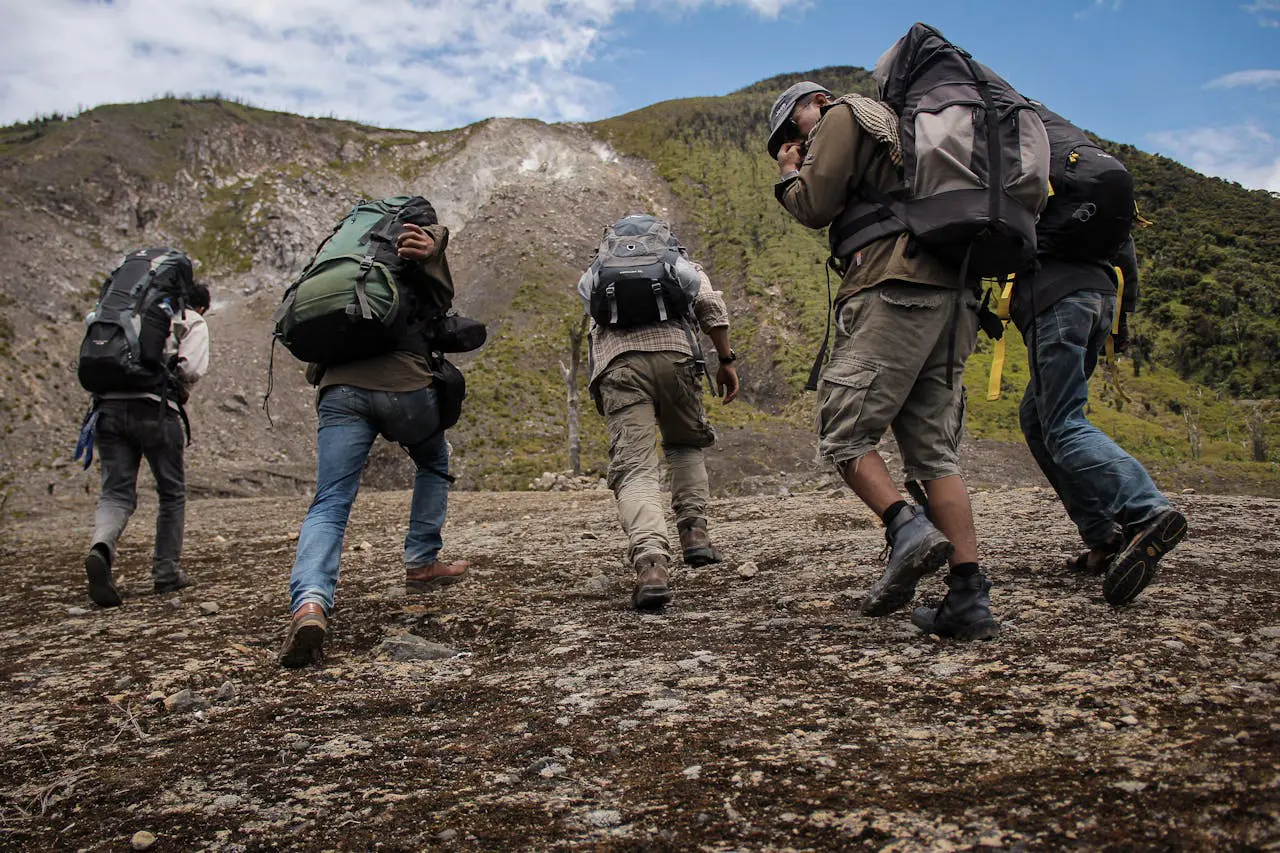
Unlike generic fitness apps, this tool is tuned for backpacking. It uses a load-carriage (Pandolf-style) model that factors in body weight, pack weight, speed, grade from your elevation/day, and terrain. Power (Watts) is converted to kcal/hour and multiplied by your moving time. You can also switch from hiking-only burn to total calories (baseline/TDEE + hiking).
Baseline Energy Model (load-carriage × hours)
The core is a Pandolf-form equation: body mass + carried load + speed + slope → metabolic power. We convert that to kcal/hr and multiply by hours (distance ÷ chosen pace). Terrain applies a coefficient, so rugged footing costs more. A stability guard prevents unrealistic results at very low body weights.
Elevation & Terrain Factor
Miles alone don’t tell the story. We compute average grade from your daily gain and distance, then scale cost for terrain (smooth → rugged). As a rule of thumb, substantial climbs can add hundreds of kcal/day versus flat ground; snow/sand/loose rock increase it further.
Pack Weight Factor
Carrying weight compounds effort. Light loads add little, 20–35 lb commonly adds ~5–10%, and heavier setups can exceed 10–20%+ depending on speed and slope. Use presets or enter a precise pack weight to see the impact.
Temperature/Season & Altitude Factors
Cold raises needs; hot can slightly lower them. The calculator applies small, practical multipliers (e.g., cold ≈ +7%, hot ≈ −3%). Altitude adds its own bump (~+3–12% from mid to very high). Labels swap °F/°C automatically with the unit toggle.
Pace & Moving-Time Assumptions
Moving time is distance ÷ pace (choose Relaxed → Strenuous). Typical backpacking days end up around 6–8 hours of movement, but your inputs drive the math. If you enable “Show total calories,” we add baseline/TDEE to cover camp time and non-hiking energy.
Field Validation & Error Bars
The model is tuned against real trip logs (miles, gain, pack, temps) and typically lands within ±10–15%. It leans slightly conservative to avoid bonking, and there’s a quick +10% margin toggle for tough conditions.
Adjust for Your Style
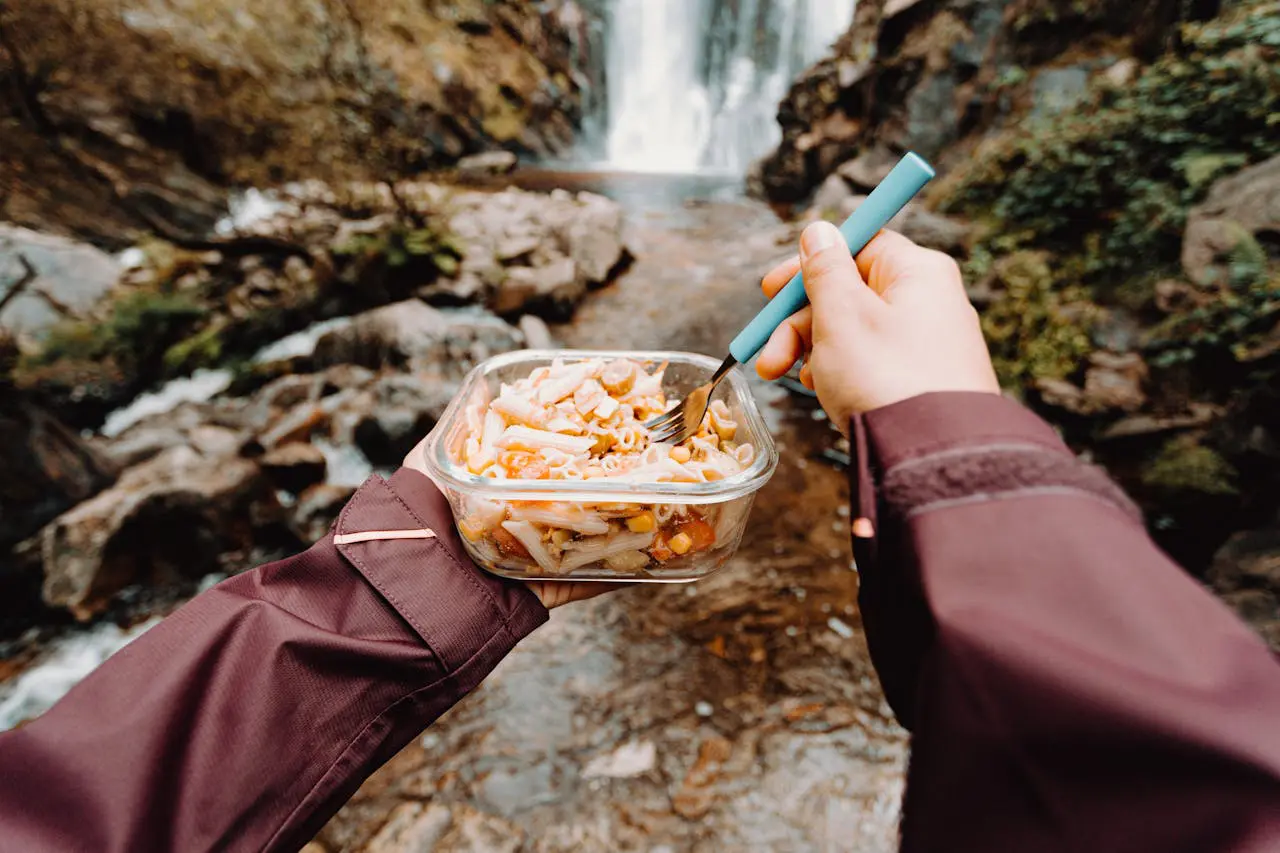
Not every backpacker eats the same way. Beyond the base calorie numbers, your cooking style, diet choices, and safety margin can shift what you actually pack.
Hot Meals vs No-Cook
Hot meals don’t add calories, but they change how you carry them. Freeze-dried dinners and boil-only staples usually fall in the 120–140 cal/oz range, which is fairly efficient. Going no-cook often means relying on bars and ready-to-eat foods, which are lighter on fuel but bulkier in volume. Think carefully about your balance: a stove might weigh a few ounces, but it can unlock higher-density foods and morale-boosting comfort.
Caffeine, Electrolytes, Sodium
Stimulants and hydration don’t add calories, but they can make or break your energy levels. Caffeine helps with alertness and endurance; electrolytes and sodium prevent cramping and fatigue, especially in heat or high-sweat conditions. Many hikers find that a small daily allotment of electrolyte mix is worth its weight for sustained comfort.
“Rescue Calories” Buffer (+10–15%)
Even with careful planning, conditions can change. Adding an extra 10–15% of calories per day gives you a safety net for unexpected climbs, colder nights, or a late exit. This doesn’t mean hauling a second dinner—simple, dense foods like nut butter packets, chocolate, or trail mix work best as emergency extras.
Common Mistakes to Avoid
Even with a calculator, it’s easy to get food planning wrong. These are the traps that most often wreck comfort on the trail.
Overpacking Low-Density Foods
Fresh fruit, heavy bars, and bulky snacks look good on paper but often come in under 110 cal/oz. That means you’ll fill your bear can faster and still fall short on energy. Prioritize foods in the 120–140 cal/oz range, then sprinkle in “comfort foods” sparingly.
Underestimating Elevation & Cold
Flat-mile benchmarks don’t translate to mountain terrain. A 12-mile day with 4,000 feet of gain can burn hundreds more calories than the same distance on rolling trails. Add cold nights into the mix, and your body spends even more energy just staying warm. Always err on the side of higher numbers in these conditions.
Ignoring Pack Weight Penalties
Carrying a 35–40 lb load isn’t just uncomfortable—it directly increases calorie burn. Many hikers underestimate how much extra fuel they need when starting a trip with full food and water weight. If your pack is heavy on Day 1, budget extra calories until it lightens up.
Skipping a Buffer for Day 3 Fatigue
The third or fourth day is often when the tank runs low. Muscles are sore, recovery is incomplete, and calorie deficit compounds. Without a 10–15% daily buffer, hikers risk running short before the trailhead. Pack one or two high-density extras you can lean on if needed.
Backpacking Calorie Calculator FAQs
How many calories do you burn backpacking per day?
Most backpackers burn 2,500–4,500 calories daily depending on distance, elevation, pack weight, and terrain. Use the calculator to get a trip-specific estimate.
How many calories per mile does hiking burn?
Flat, light-pack hiking averages 60–90 calories per mile. With steep climbs or heavy loads, burn can rise to 130–160+ calories per mile.
Do I need to enter height or weight?
Height is not required. Body weight is essential, since it directly affects calorie burn during backpacking.
Should I use hiking calories or total calories?
Use hiking calories for pacing and route planning. Use total calories (hiking + baseline) for food packing to cover full daily needs.
How do zero or resupply days affect the results?
On zero days, calorie needs drop sharply. For thru-hikes, calculate by resupply blocks (4–6 days) instead of the entire trail at once.
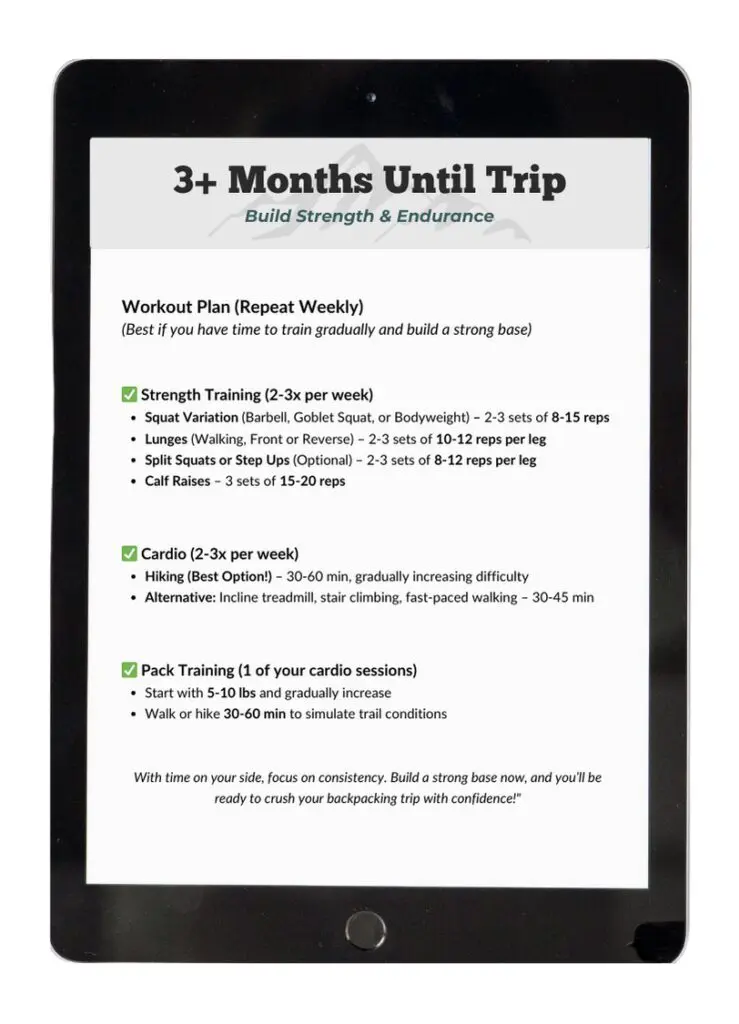
Get Your Free Backpacking Training Guide
Hike farther and carry your pack with confidence!
This free, step-by-step training plan will help you build strength, improve endurance, and prepare for real trail conditions.
No gym required!
- Strength Workouts to power up your legs and core
- Endurance Training to hike longer without fatigue
- Pack Training to prep for carrying real trail weight
References & Methodology
Primary Research & Load-Carriage Model
This calculator uses a Pandolf-style load-carriage model (walking with a pack over grade), not generic gym MET tables. It converts predicted metabolic power (Watts) into kcal/hour, then multiplies by your moving time (distance ÷ chosen pace).
Key inputs and adjustments in this implementation:
- Grade from your route: computed from daily elevation gain ÷ horizontal distance.
- Terrain factor: smooth → rugged scales cost upward.
- Pack weight & body weight: handled via the load term; we include a stability guard for very low body masses (child weights) to prevent unrealistic spikes.
- Temperature & altitude: small, practical multipliers (cold ↑, hot ↓; mid → very high altitude ↑).
- Units: all labels/values switch with the Imperial/Metric toggle; calories can be shown as hiking-only or total (baseline/TDEE + hiking).
Field-Tested Assumptions & Limitations
Outputs were sanity-checked against real trip logs (miles/km, gain, pack weights, temps) and typically land within ±10–15% for most adult hikers. The tool leans slightly conservative to reduce bonk risk, and you can add a quick +10% margin when conditions are uncertain.
What can shift results: fitness, pace, altitude acclimation, weather, sleep, hydration/electrolytes, and actual food energy density (we default to ~130 kcal/oz; many kits vary 110–140 kcal/oz). If you know your usual intake, edit the baseline/TDEE to personalize totals.
Planning guidance only — not medical or dietary advice. Note: results may not be accurate for children under ~35 kg (77 lb).
Latest from the Backpacking Blog:
Tips, Stories, and Guides
Explore expert backpacking tips, inspiring stories, and practical advice to elevate your outdoor experiences.
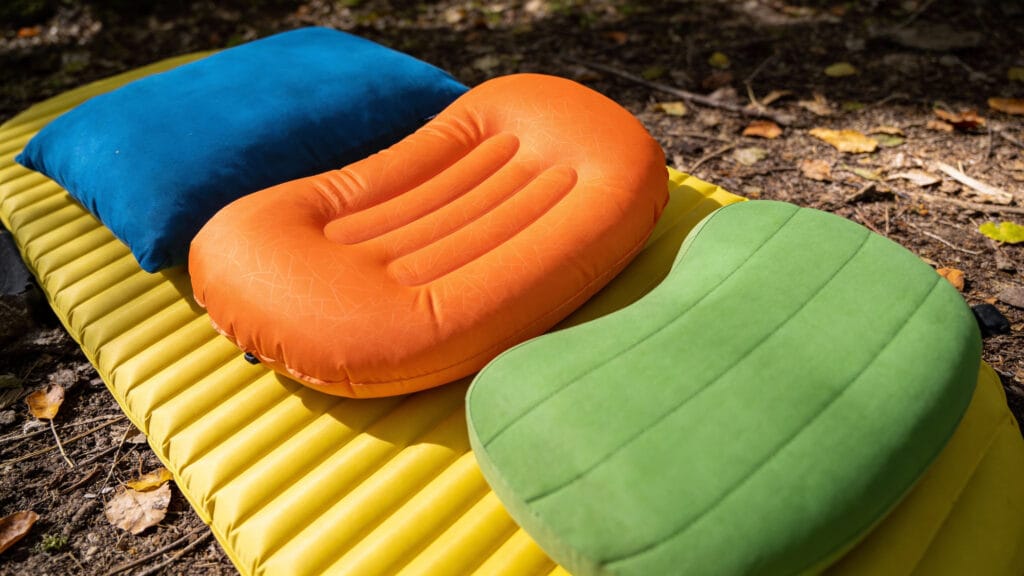
Best Backpacking Pillows for 2026: Comfort Picks
Best Budget Backpacking Tents Under $300