Best Backpack for Weekend Backpacking: 10 Picks Across Every Tier
Updated: 2026 | Reviewed by: Chris Mercer
Disclosure: As an Amazon Associate, we earn from qualifying purchases, at no extra cost to you.
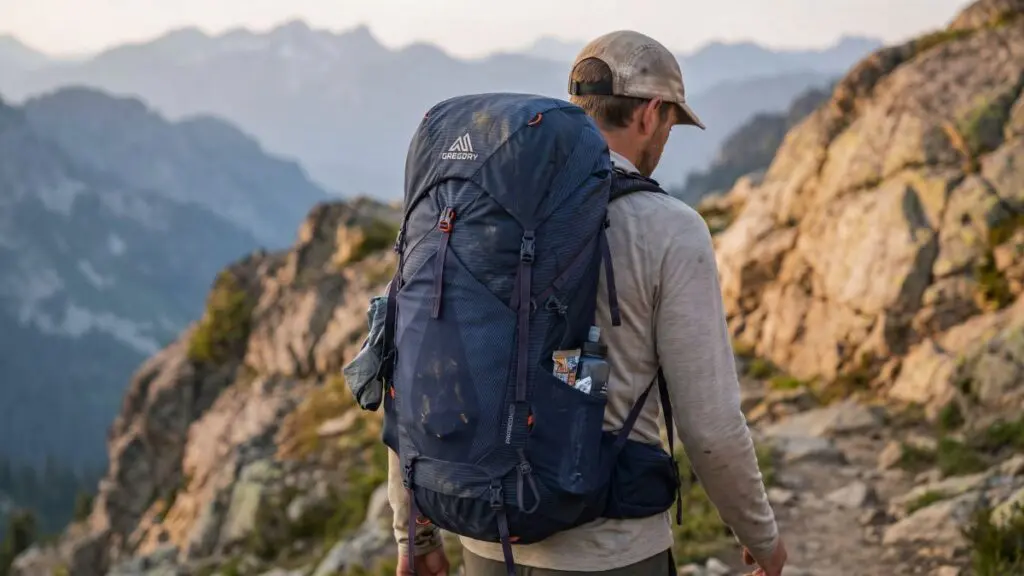
Weekend backpacking trips, two or three nights out, sit in a distinct gear sweet spot, and the pack you choose matters more than most gear decisions. The 45 to 55L range is where weekenders live. That’s enough room for a sleeping bag, shelter, food, and a bear canister if you need one, without the dead space and dead weight of a 65L expedition pack. This roundup compares the ten packs actually worth considering across four tiers (comfort-first, lightweight, budget, and ultralight value) so you can match the pack to how you actually backpack instead of buying the one with the best ad spend.
My Picks
Best Overall: Gregory Paragon 50 (men’s) / Gregory Maven 48 (women’s)
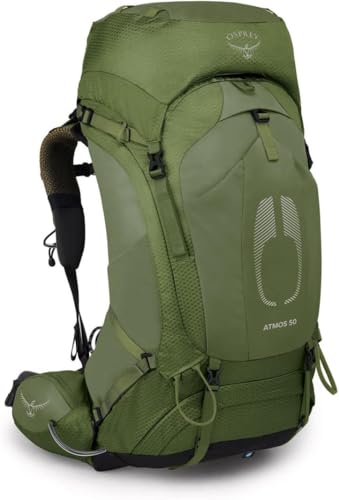
Best for Plush Comfort: Osprey Atmos AG 50 (men’s) / Osprey Aura AG 50 (women’s)
Best Lightweight: Osprey Exos 48 (men’s) / Osprey Eja 48 (women’s)
Best Budget: REI Co-op Flash 55
Best Ultralight Value: Durston Kakwa 55
How to Choose a Weekend Backpacking Pack
Three decisions actually determine which pack is right for you. Get these right and the rest is preference.
Match capacity to how you pack, not how long you’re out
The 45 to 55L window covers almost every weekend trip, but where you land within it depends on bulk, not nights. A two-night Sierra trip with a BV500 bear canister and a synthetic bag eats more volume than a three-night desert trip with a quilt and no canister. If you’re carrying a hard-sided canister, plan for at least 55L so it loads horizontally without forcing your sleeping bag into the lid. If you’re a quilt-and-pad sleeper traveling without a canister, 48L is plenty. Erring on the larger side costs you a few ounces and tempts you to overpack; erring small may leave you strapping things to the outside, which is often doable.

A 45L sized backpack requires careful planning for gear volume
Pick a load rating that matches your real pack weight
The max-load numbers issued by manufacturers tend to run optimistic. The Osprey Exos is rated for 40 lb but reviewer consensus puts the real comfort ceiling around 30 to 35 lb. The Mariposa is rated for 35 but most testers call it a 30 lb pack. The traditional packs (Paragon, Atmos, Aircontact) are honest at their numbers because they have the suspension to back them up. If your loaded pack with food and water consistently lands above 30 lb, buy a traditional pack with a real frame and real hipbelt padding. If you’re under 25 lb consistently, you can get away with a sub-2 lb ultralight pack and pocket the weight savings. The middle zone, 25 to 35 lb, is where the lightweight crossover packs (Exos, Focal, Crown3) live. If your kit is closer to traditional than ultralight, this gear guide is a useful sanity check on what’s adding up to that loaded weight.
Decide between trampoline ventilation and close-to-body carry
This is the comfort tradeoff most buyers underweight. Trampoline suspension (Osprey AntiGravity, Gregory FreeFloat) suspends a mesh backpanel a few centimeters off your back, creating a cooling air gap. The cost is that gear sits farther from your spine, which raises your center of gravity and can feel slightly less stable when scrambling or carrying heavy. Close-to-body foam panels (Granite Gear, Durston, ULA) hold gear tight against your back, which carries heavier loads better and stays out of your way on technical terrain, at the cost of a sweatier back in hot weather. There’s no wrong answer. There’s just hot-climate hiker versus shoulder-season hiker, and you probably know which one you are. The lightweight ventilated platform (what Gregory has done well across its Optic-to-Focal lineage) is genuinely effective in heat. That’s why the category exists.
A quick word on torso fit: any pack worth buying either has an adjustable torso (Paragon, Atmos, Flash 55, Aircontact Core) or comes in fixed sizes you order to match your measurement (Focal, Crown3, Kakwa, Mariposa, Circuit). For first-time pack buyers, the adjustables are forgiving. You can dial it in at home without committing. For repeat buyers who know their torso length, fixed sizes save weight and complexity. Neither approach is better; they solve different problems.
| PACKS | Weight (lb) | Volume (L) | Max Load (lb) | Frame Type |
|---|---|---|---|---|
| Gregory Paragon 50 | 3.3 | 50 | 50 | Internal perimeter |
| Osprey Atmos AG 50 | 4.4 | 50 | 40 | Internal perimeter |
| Deuter Aircontact Core 50+10 | 4.8 | 50+10 | 44 | Internal Y-frame |
| Osprey Exos 48 | 2.6 | 48 | 40 | Internal perimeter |
| Gregory Focal 58 | 2.6 | 58 | 35 | Internal perimeter |
| Granite Gear Crown3 60 | 2.4 | 60 | 35 | Removable framesheet |
| REI Co-op Flash 55 | 2.8 | 55 | 30 | Internal perimeter |
| Durston Kakwa 55 | 1.9 | 54 | 35 | Aluminum hoop |
| Gossamer Gear Mariposa 60 | 2.1 | 60 | 35 | Removable hoop stay |
| ULA Circuit | 2.4 | 68 | 35 | Carbon hoop + stay |
Best Overall Backpack for Weekend Backpacking: Gregory Paragon 50
The Gregory Paragon 50 (men’s) and Gregory Maven 48 (women’s) are what you buy when you want one pack that handles weekenders through week-long trips without making you specialize. At about 3.3 lb with a 50 lb load rating, an adjustable torso, a ventilated mesh backpanel, full side U-zip access, and a dedicated sleeping bag compartment, it covers nearly every feature box without crossing into expedition-pack territory. The price sits noticeably below the Atmos AG while the feature set is most of the way there, which is why it’s the default recommendation for most weekend buyers.
The honest weaknesses: hipbelt padding is on the thin side compared to plush competitors, and the side mesh pockets fit slightly tight for larger water bottles. The feature set is also unapologetically traditional (top lid, sleeping bag compartment, sleeping pad straps), which reads as “old-school” to ultralight buyers and as “everything I need” to traditional ones. Reviewer consensus is that the Paragon is the most versatile pack in its price tier, and the Maven version is genuinely women’s-specific rather than a smaller copy of the men’s pack.
Right buyer: the beginner-to-intermediate weekend backpacker carrying 25 to 40 lb who wants comfort, real adjustability, and the option to scale up loads, but isn’t ready to spend Atmos money or commit to ultralight.

Not sure what gear you actually need?
Grab the free backpacking checklist I built after 120+ trips. It covers every category so you don’t overbuy or forget something important.
Get the Checklist →Free. No spam. Unsubscribe anytime.
Best Backpack for Plush Comfort: Osprey Atmos AG 50
The Osprey Atmos AG 50 (men’s) and Osprey Aura AG 50 (women’s) are the benchmark for plush, ventilated weekend pack comfort. The AntiGravity trampoline suspension is genuinely best-in-class: a continuous mesh panel that wraps from the shoulder straps through the hipbelt, transferring load to your hips while keeping a real airgap against your back. The 2022 update added dual curved side zips, an integrated raincover comes standard, and Osprey’s All Mighty Guarantee is the most generous warranty in the category.
What you give up is weight. At roughly 4.3 lb, the Atmos is the heaviest pack on this list, and it’s also one of the priciest. Smaller-framed users, particularly women in the 5’2″ to 5’4″ range, sometimes find the hipbelt rigid even in the smallest size, and the trampoline panel curves away from your back enough that gear sits noticeably farther from your spine than on closer-carry packs. The mesh backpanel can also feel cold when wet, which matters in shoulder-season trips more than it does in summer.
Right buyer: the traditional weekender who prioritizes ventilation and plush carry above all else, hikes hot/humid climates, or has had hipbelt fit issues with stiffer packs. If you’re carrying 30 to 40 lb in heat and comfort is the deciding factor, this is the pack.

Deuter Aircontact Core 50+10
The Deuter Aircontact Core 50+10 is the most cargo-friendly traditional pack on this list. The base 50L volume expands another 10L through a spindrift collar, the bottom sleeping bag compartment is genuinely useful, the modular external strap system handles bulky shoulder-season gear, and the rain cover comes included. The Aircontact back system uses close-to-body foam panels with a central air channel, a different comfort philosophy than Osprey’s trampoline approach. Closer carry, better load control, less ventilation. Build quality is the standout: Deuter’s reputation for durability is well-earned, and the recycled fabrics and bluesign certification matter to buyers who care about that.
The weaknesses are real. At 4.76 lb it is the heaviest pack in this entire roundup, and the single-size design with VariSlide adjustment means shorter-torso users sometimes can’t get the harness to ride correctly even at minimum setting. Side compression straps route over the water bottle pockets, which is a recurring complaint across the Aircontact line. The 2-year warranty also lags behind Osprey, Gregory, and Granite Gear, all of which offer lifetime coverage.
Right buyer: the traditional features-first hiker who plans to throw everything on the pack and wants the option to expand for longer trips. Strong fit for shoulder-season and winter weekenders carrying bulky insulation and gear; weaker fit for shorter-torso hikers or anyone counting ounces.

Best Lightweight Backpack for Weekend Backpacking: Osprey Exos 48
The Osprey Exos 48 (men’s) and Osprey Eja 48 (women’s) are the crossover pack between traditional and ultralight. At about 2 lb 9 oz, the Exos is roughly 1 lb 12 oz lighter than the Atmos AG 50 while keeping Osprey’s full feature suite: AirSpeed trampoline suspension, real zippered hipbelt pockets, Stow-on-the-Go pole carry, and the FlapJacket cover for lidless use. It’s the lightest pack in this list with trampoline ventilation, which is why it dominates the category for hot-climate hikers who want to drop weight without giving up airflow.
The catch is the load ceiling. The manufacturer rates the Exos for 40 lb but reviewer consensus puts the real comfort threshold at 30 to 35 lb. Frame flex above that point is a documented and persistent issue. It is a top-load-only pack: no side zip, no sleeping bag compartment, and no included raincover. Mesh durability has historically been a weak point, though the 2022 redesign meaningfully strengthened the material. Side water bottle pockets are also hard to reach while wearing the pack, which is why many Exos owners run shoulder-strap bottle holsters instead.
Right buyer: the lightweight-curious weekender carrying 20 to 30 lb who wants Osprey’s familiar comfort and feature set at a meaningfully lower weight. Strong pick for hot-climate hikers who refuse to give up trampoline ventilation; wrong pick if your loaded pack regularly tops 35 lb.

Gregory Focal 58
The Gregory Focal 58 (men’s) and Gregory Facet 55 (women’s) sit in the same weight class as the Osprey Exos 48 (roughly 2 lb 9 oz) with the same trampoline-style mesh suspension philosophy. The Focal differentiates with oversized zippered hipbelt pockets, EVA-foam-padded shoulder straps that some hikers prefer to Osprey’s mesh harness, and Gregory’s FreeFloat dynamic hipbelt that pivots with your stride. Reviewer consensus places the Focal in a near-tie with the Exos on suspension comfort, with the Focal pulling ahead on hipbelt pockets and the extra liter of capacity, useful if you’re carrying a BV500 bear canister, which loads vertically or horizontally inside the Focal without fighting the frame.
The Focal sits in the same lineage as Gregory’s Optic 48, which I’ve carried as my main pack since long before the Focal existed. Same FreeFloat suspension architecture, same ventilated mesh backpanel platform. That brand-level experience translates to “this is a category Gregory has done well for years,” not a verdict on the current model. The Focal is the natural step up in volume from the Optic in the same lineage.
The honest weaknesses: no torso adjustment, so you have to order the right fixed size from the start. Multiple reviewers stress this. The hipbelt pockets, while large, won’t fit the largest current phones. Mesh side pockets snag and develop holes over time, and there’s no included raincover. Like every trampoline-suspension pack in the lightweight class, comfort drops sharply above 35 lb.
Right buyer: the lightweight weekender who likes the Exos concept but wants bigger hipbelt pockets, slightly more padded shoulder straps, or the extra 10L of volume for longer food carries or bear canisters. The Focal is also a better Sierra pack than the Exos for that reason alone. If you’re still working out which pack philosophy matches your kit, this YouTube breakdown of pack setup mistakes is a decent overview of how the wrong configuration shows up on trail.
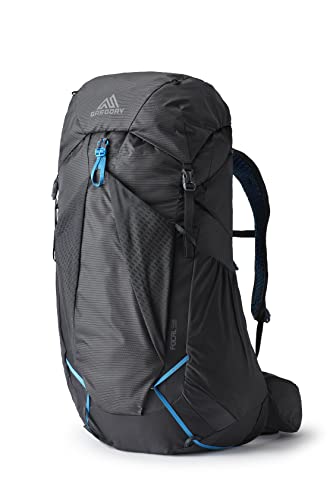
Granite Gear Crown3 60
The Granite Gear Crown3 60 is the most modular pack on this list. The frame sheet is removable. The top lid is removable and converts to a lumbar pack or chest pack. There’s an optional aluminum stay you can buy separately to bump the load rating from 35 lb to 43 lb. You can configure this pack from a sub-2 lb frameless ultralight setup all the way up to a 43 lb load hauler depending on what you carry on a given trip. Granite Gear’s lifetime warranty and reputation for durability (Crown2 owners reporting 2,000+ miles of PCT use without major issues) is the kind of track record you can’t fake, and the price is the second-lowest on this list.
What you give up is ventilation. The Crown3 uses a solid foam back panel with channels rather than trampoline mesh, so the pack sits closer to your body. In hot weather you will sweat more in this pack than in an Atmos or an Exos. That’s the tradeoff for closer carry and better load control. Side pocket openings sit high on the pack and can be hard to reach while wearing it, hipbelt pockets fit a phone but tightly, and the front mesh panel is the weakest fabric on the pack and the most likely to fail first. Shoulder strap padding is also narrower than competitors and can fatigue under heavier loads.
Right buyer: the hiker who wants ultralight versatility without ultralight prices, especially someone who plans to evolve their kit over time. Bridges the gap between traditional and ultralight better than almost any pack at this price, strong fit for shoulder-season hikers who need extra capacity for bulky gear, and for buyers who want a single pack to carry them from weekend trips into eventual longer adventures.

Best Budget Backpack for Weekend Backpacking: REI Co-op Flash 55
The REI Co-op Flash 55 is the price-to-feature champion of this list. It is meaningfully cheaper than every other lightweight pack here while offering an adjustable torso, real zippered hipbelt pockets, roll-top closure, and REI’s PackMod modular accessory system: removable lid that converts to a fanny pack, removable hipbelt pockets, removable shoulder strap pocket. Strip it down to 2 lb 5.6 oz or load it up with all the PackMod accessories. The 2023 redesign added a Velcro shift system for torso adjustability that the previous Flash didn’t have, and the available-in-store thing matters more than buyers admit. Being able to walk into an REI and try the pack on before committing eliminates a lot of guesswork that mail-order cottage brands force on you.
The weaknesses follow the price. The 100D Robic fabric is durable enough for normal use but vulnerable to snags from sharp rock or aggressive brush. The rear mesh has been a frequent failure point in long-term user reviews. The PackMod shoulder strap pocket is widely considered too small to be useful, the hanging hipbelt mesh pocket bounces around when walking, and there’s no included raincover. Like the Crown3 and Kakwa, the Flash uses a foam back panel rather than trampoline mesh, so ventilation lags the Atmos and Exos meaningfully. The 30 lb load ceiling is also real. This is not a pack designed for heavy hauling.
Right buyer: the weekender who wants the lightweight category benefits at the lowest possible cost, the buyer who wants to start traditional and customize toward ultralight via the PackMod system, and the REI member or first-time pack shopper who values being able to try it on in person. For a weekend kit landing under 30 lb, the Flash 55 is the best value pack in this roundup, full stop.
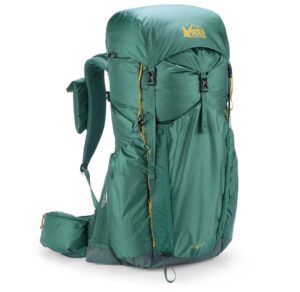
55L lightweight backpacking pack with adjustable torso, PackMod modular accessory system, roll-top closure, and convertible top lid that doubles as a fanny pack.
Best Ultralight Value Backpack: Durston Kakwa 55
The Durston Kakwa 55 is the “ultralight that actually carries weight” pick. At roughly 1 lb 13 oz it is about 50% lighter than the Atmos AG 50, yet rated for the same nominal max load, and reviewer-confirmed comfortable up to 35 lb in real-world testing. The standard fabric is Challenge Ultra 200X, a UHMWPE-laminated material that’s waterproof, abrasion-resistant, and outperforms Dyneema in nearly every measurable category at a lower cost. The sewn-on hipbelt with horizontal-rigidity tubular aluminum hoop frame delivers actual load transfer that most sub-2 lb packs sacrifice. Eight pockets including built-in shoulder strap pockets and large zippered hipbelt pockets cover real on-trail organization without aftermarket add-ons.
The honest tradeoffs: the Kakwa is frequently sold out. Dan Durston runs a one-person operation and inventory comes in batches, so timing your purchase matters. There’s no torso adjustment, which means you need to measure your torso accurately and order the correct fixed size. A wrong-size Kakwa is a hard pack to live with. Ventilation is minimal because the foam back panel sits close to your body. The roll-top closure can also snag on overhead branches when you’re off-trail or pushing through heavy snow, and there’s no in-store try-on option since the pack ships direct from Durston only. My personal ultralight backpacking gear list is a useful reference for the kind of kit that actually fits a sub-2 lb pack.
Right buyer: the committed lightweight or ultralight-curious backpacker who wants a real frame and load lifters in a sub-2 lb pack and is willing to wait for a restock. Excellent fit for buyers planning multi-week trips or coming from a heavier cottage-brand pack; not the right pick if you need to try-before-buy or hike in dense brush consistently.

Sub-2-pound ultralight backpacking pack with tubular aluminum hoop frame, sewn-on hipbelt, S-curve shoulder straps, and waterproof Ultra 200X fabric.
Gossamer Gear Mariposa 60
The Gossamer Gear Mariposa 60 is the PCT thru-hiker’s pack, a top-five most-used pack on the trail for multiple consecutive years per the annual hiker surveys. The differentiator is the asymmetric external pocket layout: one oversized left-side pocket sized for tents and trekking poles, two smaller right-side pockets for water and snacks, plus a large front mesh pocket. That layout is unusually well-tuned to thru-hiking workflow: water on the dominant side, gear on the off side, easy-access snacks where your hand naturally falls. The frame is removable, the back pad is removable and doubles as a camp sit pad, and the PVT pivoting hipbelt is sold separately and swappable, so you can dial in fit or adapt the pack to different trip loads.
The weaknesses are mostly about scope. The over-the-top flap closure doesn’t seal as well as a proper roll-top when the pack is overflowing, which limits its ability to handle bulkier-than-expected loads. Real-world comfort ceiling is closer to 30 lb than the manufacturer’s 35 lb claim. The asymmetric pocket layout is also divisive. Thru-hikers love it, weekenders used to symmetric water bottle access find it awkward at first. Robic nylon construction offers light water resistance only, no included raincover. The Mariposa sits near the top of the ultralight tier price-wise, and the waitlist for restocks can be long during peak season.
Right buyer: the thru-hiker or aspiring thru-hiker who values external pocket organization above almost everything else, and the buyer transitioning from Osprey’s pocket-rich layouts to ultralight without giving up storage. Not the best pick for buyers who need a clean symmetric pocket layout or who push close to 35 lb regularly.

60L ultralight backpacking pack with asymmetric external pocket layout, removable hooped aluminum frame, swappable PVT pivoting hipbelt, and SitLight foam back panel that doubles as a sit pad.
ULA Circuit
The ULA Circuit is the thru-hiker classic, the most-used pack on the Pacific Crest Trail for four consecutive years per the Halfway Anywhere annual survey. The Circuit’s standout feature is fit customization: 4 torso sizes by 6 hipbelt sizes by 2 strap shapes, for 48 fit combinations, more than any other pack in this category. Made-in-USA hand-built construction, 5,000+ mile reviewer reports, and a carbon fiber suspension hoop plus aluminum stay that carries comfortably to 35 lb. The 400D Robic standard fabric is meaningfully tougher than the thinner ultralight competitors, and there’s an Ultra Circuit option in waterproof Ultra fabric for buyers who want the upgrade.
The downsides are familiar in this tier. The foam back panel offers minimal ventilation, a real complaint in hot climates, where some reviewers report shoulder strap chafe in heat. Wider shoulder strap spacing can be uncomfortable for narrower-framed users (the S-curve strap option helps but doesn’t fully solve it). The single front mesh pocket is smaller than the Mariposa’s and the Kakwa’s, and like Durston, ULA is direct-to-consumer only with peak-season lead times running multiple weeks. Comfort drops sharply above 35 lb as the minimal frame starts to warp. The Robic Circuit costs more than the Kakwa or Mariposa; the Ultra Circuit costs significantly more still.
Right buyer: the committed thru-hiker or aspiring thru-hiker who wants the most fit-customizable ultralight pack on the market and is willing to wait 2 to 6 weeks for a hand-built pack. Particularly strong for buyers with non-standard body proportions (very small, very tall, very large hips relative to torso) where ULA’s 48 fit combinations beat anything else in the category.

68L ultralight backpacking pack with carbon fiber suspension hoop, aluminum stay, and 48 fit combinations across 4 torso sizes and 6 hipbelt sizes. Made in USA.
The Complete Kit I Use on Every Trip
This post covers one piece of the puzzle. If you want to see everything I actually carry, I keep my full kit documented on one page.
After 100+ trips across the Sierra, the Pacific Coast, and Desert Southwest, this is the setup I’ve dialed in for three-season weekend trips. Same gear, trip after trip. It’s what I’d recommend to anyone building out a dependable kit without overpacking.
Bottom Line: Which Weekend Pack Should You Buy
If you’re carrying 25 to 40 lb on weekend trips and you want one pack that does everything competently without breaking the bank, the Gregory Paragon 50 is the right call. It’s the most versatile pack on this list at a price that doesn’t punish you for not committing to a niche. If your loaded weight regularly tops 35 lb or comfort and ventilation are non-negotiable, the Osprey Atmos AG 50 earns the premium. If you’re consistently under 30 lb and want to drop weight without learning a new pack philosophy, the Osprey Exos 48 is the right step. Spend less and the REI Co-op Flash 55 gets you most of the lightweight experience for a fraction of the cost; spend the same on weight savings instead and the Durston Kakwa 55 is the smartest ultralight buy in the category.
Past that, the picks get specialized: the Mariposa for thru-hike workflow, the Circuit for fit customization, the Aircontact for bulky shoulder-season loads, the Crown3 for buyers who want one pack to evolve with them. Pick the tier that matches your real loaded weight, then pick the pack within that tier that solves your specific problem. That’s the whole exercise.
Related Reading
Amazon and the Amazon logo are trademarks of Amazon.com, Inc. or its affiliates.