Best Backpacking First Aid Kits: Matched to Trip Length and Group Size
Updated: 2026 | Reviewed by: Chris Mercer
Disclosure: As an Amazon Associate, we earn from qualifying purchases, at no extra cost to you.
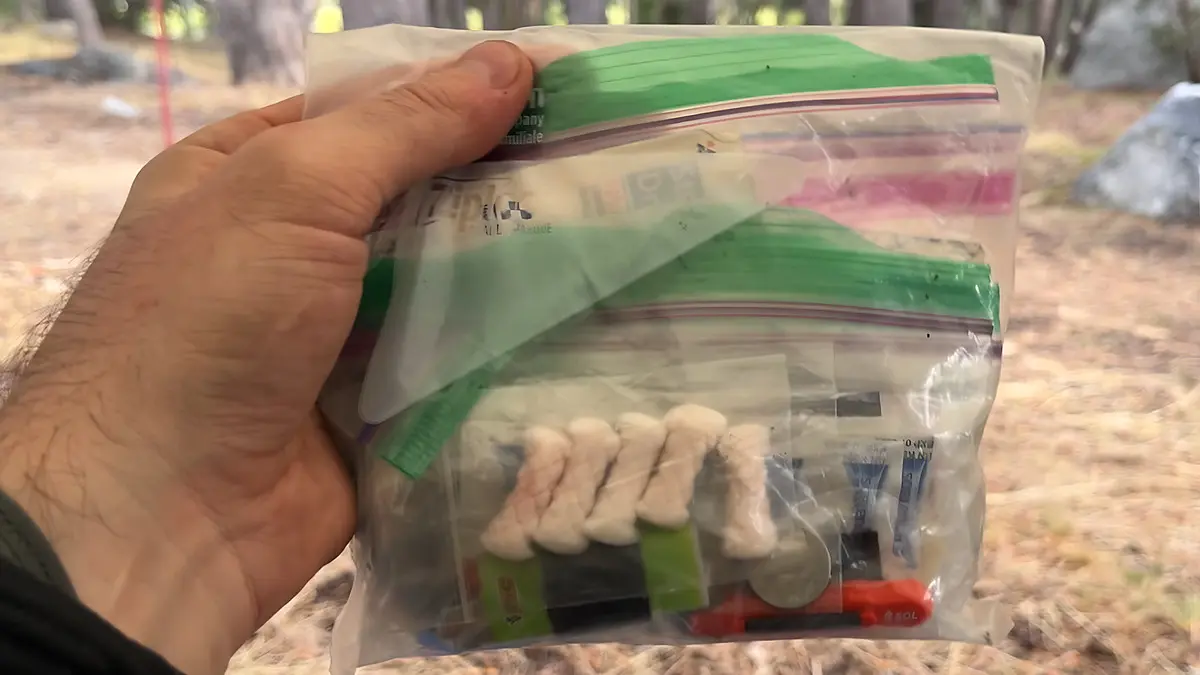
A first aid kit is one of the few pieces of backpacking gear you hope to carry for years without ever really opening, which is exactly why so many backpackers overthink it or ignore it entirely. This roundup covers the best backpacking first aid kits sorted by what actually decides the choice: how long you’re out, how many people you’re covering, and how much weight you’re willing to trade for broader trauma protection.
Every kit here is a credible pre-made option, from a sub-6-ounce solo-and-light kit to a 100-piece group setup, and I’ve been straight about where each one fits and where it doesn’t. I’ll also point you to when building your own makes more sense than buying off the shelf. The goal is a kit you match to your trip once and then stop thinking about.
My Picks
Best Overall: Adventure Medical Kits Ultralight/Watertight .7
Best Ultralight / Solo: Peak First Aid Kit
Best Budget: HART Outdoor Weekend
Best for Multi-Day / Group Trips: Adventure Medical Kits Mountain Series Backpacker
Most Customizable: Surviveware Small
Best Premium (Purpose-Built Backcountry): Cascade First Aid The Traverse
How to Choose a Backpacking First Aid Kit
Choosing a first aid kit comes down to one balance: weight against how much trauma protection you’re carrying. A kit built to handle a serious bleed weighs more than a kit built to handle blisters, hot spots, and a rolled ankle, and most of what actually happens on a weekend trip lives in that second category. So the real question is how far you want to hedge toward the rare, serious event, knowing you’ll carry that hedge every mile whether you need it or not.
Trip length and group size set the floor. A solo overnighter needs far less than four people out for four days, and a kit rated for two people over a weekend is a different animal than one meant to cover a small group deep into a multi-day route. Match the rating to your actual trips, not your most ambitious one, or you’ll carry a group kit on every solo overnight.
One consideration worth thinking through, especially if you go out alone, is whether to carry a dedicated bleeding-control item like a tourniquet. This is purely a weight-versus-trauma-protection tradeoff, not a recommendation in either direction. A solo backpacker has no built-in backup if something goes wrong, and no partner to start an evacuation, so some solo hikers decide the added weight is worth the peace of mind while others don’t. It’s your call to think through before the trip, not on it. If you’re routinely far from help, this is also where a satellite communicator does more for your actual safety margin than any single kit component.
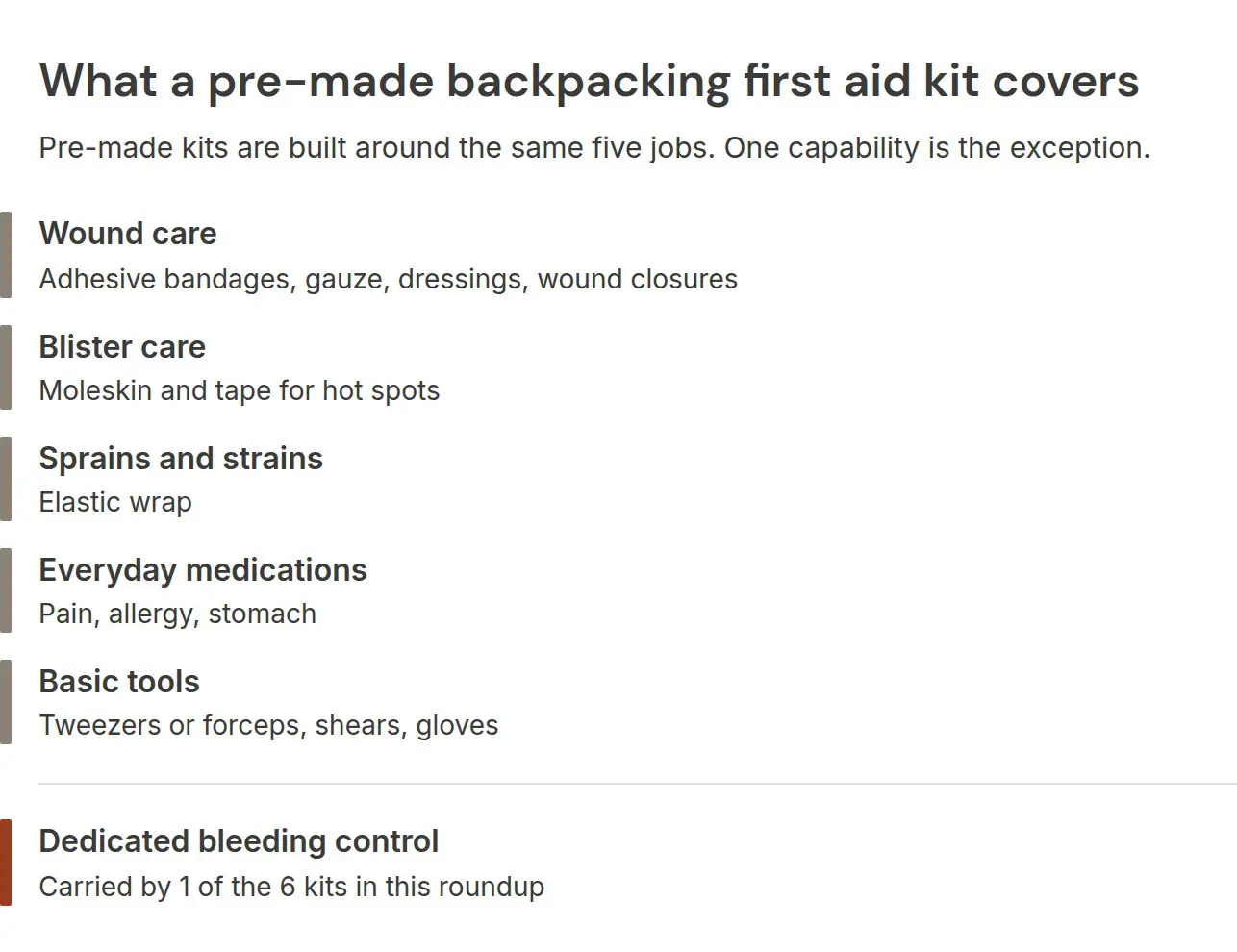
Two more things. First, waterproofing matters more than people expect, because a kit full of soggy gauze and dissolved tablets is a kit you can’t use. Most pre-made kits are water-resistant, which handles rain and splash but not submersion; genuine waterproofing is rarer and usually comes from a sealed inner bag rather than the outer shell. Second, and most important: knowing how to use what you carry matters as much as owning it. The best-stocked kit in the world does nothing if you’ve never opened it. A pre-made kit is a starting point, and many backpackers end up customizing one over time to match their trips, their skills, and the specific things that tend to go wrong for them.
Two kits worth naming here rather than in the picks. On the maximalist end, the My Medic MyFAK Mini is a group-and-basecamp kit at roughly two pounds, which is past what most backpackers should carry on their back but makes sense for a car-camp basecamp or a group medical bag. On the minimalist end, the Adventure Medical Kits Ultralight/Watertight .3 is the smallest, lightest credible pre-made kit out there and a genuinely good base to build your own around, if you source it as a single unit rather than the two-pack that usually shows up online.
| KITS | Weight (oz) | Rated (people/days) | Pieces | Waterproof |
|---|---|---|---|---|
| AMK Ultralight/Watertight .7 | 5.8 oz | 1-2 / 4 days | 47 | Yes (inner bag) |
| Peak First Aid Kit | 6.5 oz | Solo | 16 | Resistant |
| HART Weekend | 9.5 oz | 2 / 2-3 days | — | No |
| AMK Mountain Backpacker | <16 oz | 2 / 4 days | 96 | Resistant |
| Surviveware Small | 16 oz | 1-4 people | 98 | Resistant |
| Cascade Traverse | 15.2 oz | Solo | 40+ | Resistant |
Best Overall Backpacking First Aid Kit: Adventure Medical Kits Ultralight/Watertight .7
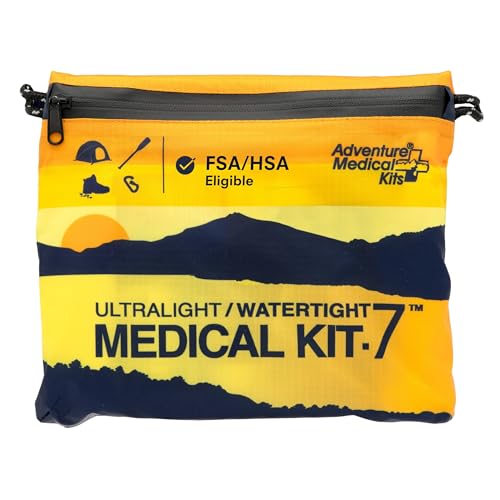
The Adventure Medical Kits Ultralight/Watertight .7 is the kit I’d point most backpackers to first, because it does the most for its weight without asking you to think hard about any of it. At 5.8 ounces it’s not the absolute lightest kit here, but it packs 47 pieces covering the full spread of what actually goes wrong on trail: adhesive bandages and wound closures, sterile gauze and dressings, elastic and cloth wraps, moleskin for hot spots, a small set of meds including pain relievers, an antihistamine, and antibiotic ointment, plus wound wipes, gloves, forceps, safety pins, and a bit of duct tape. For one or two people on anything from a weekend to a multi-day trip, this is the kit that covers the widest range of realistic problems at a weight you won’t notice.
The standout feature is the waterproofing, and it’s the real thing. The contents live in a 100 percent waterproof DryFlex inner bag inside a water-resistant outer shell, so even if your pack gets soaked or you ford a creek badly, your bandages and tablets stay dry and usable. That matters more than it sounds, because a first aid kit that’s been swimming is worse than useless when you actually reach for it. If waterproofing is non-negotiable for you, this is the pick that delivers it without a weight penalty. It’s the reference does-everything-light kit, and for most backpackers it’s where the search should start and usually end.
Not sure what gear you actually need?
Grab the free backpacking checklist I built after 120+ trips. It covers every category so you don’t overbuy or forget something important.
Get the Checklist →Free. No spam. Unsubscribe anytime.
Best Ultralight / Solo Backpacking First Aid Kit: Peak First Aid Kit

A 6.5 oz ultralight backcountry first aid kit built around a compact, curated set of trauma and wound-care supplies for solo adventurers.
The Peak First Aid Kit is the pick for solo and fast-and-light backpackers who want real trauma capability without the bulk. At 6.5 ounces it’s a curated, minimal kit built around 16 components, and the notable inclusion is a bleeding-control item: a proprietary tourniquet/pressure bandage. To be precise about what that is, it’s Peak’s own tourniquet/pressure bandage, not a windlass-style combat tourniquet like a CAT or SOFTT. What sets this kit apart is that it’s the lightest pick here that still includes a dedicated bleeding-control item at all, which is worth knowing whether or not you decide that capability belongs in your pack. Whether you want that item is a call only you can make before the trip, and solo hikers in particular tend to weigh it more carefully since there’s no partner as a backup.
The rest of the kit is tightly curated rather than comprehensive: extra-heavy-duty fabric bandages, sterile gauze pads, moleskin, seven yards of the brand’s own tape, six medications covering pain, allergy, antacid, and anti-diarrheal needs, safety pins, and precision tweezers. It’s made in the USA, and it’s the work of a small cottage brand, so there isn’t a deep well of independent reviews to lean on. Judge this one on its contents and its weight rather than its reputation because on those terms it’s a genuinely strong minimalist kit. If you go out alone and light and want bleeding-control capability without carrying a full trauma setup, the Peak is the most direct way to get there.
Best Budget Backpacking First Aid Kit: HART Outdoor Weekend

A budget-friendly weekend first aid kit in a clamshell case with clearly labeled pockets, aimed at 1-2 people on 2-3 day trips.
The HART Outdoor Weekend is the best value here, and it’s the kit I’d hand a budget-minded backpacker heading out for a weekend. At 9.5 ounces and rated for two people over a two-to-three-day trip, it’s well-stocked for the price: a full range of adhesive bandages in butterfly, strip, fingertip, and knuckle shapes, gauze in rolls, pads, sponges, and non-adherent form, antiseptic towelettes and antibiotic ointment, sting relief, burn cream, hydrocortisone, a spread of meds from antacid to allergy, an elastic bandage, moleskin, tape, scissors, forceps, and a wilderness first-aid guide. For a well-organized weekend kit at a genuinely low price, nothing else here competes on value.
The organization is a real strength: clearly labeled pockets so you’re not dumping the contents on the ground to find one bandage in the dark. The one honest tradeoff is the case, which is a clamshell that is not waterproof, so if you expect real rain or water crossings you’ll want to slip the whole thing into a zip-top bag. For a budget-conscious weekend setup covering one or two people, this is the most kit for the money, as long as you handle the water issue yourself. If you’re still assembling the rest of your setup, it pairs naturally with a solid weekend backpack and the kind of stripped-down load a two-to-three-night trip actually calls for.
Best Multi-Day / Group Backpacking First Aid Kit: Adventure Medical Kits Mountain Series Backpacker

The Adventure Medical Kits Mountain Series Backpacker is the kit for longer trips and small groups, the point where a solo overnight kit starts to feel thin. It’s rated for two people over four days and comes in under a pound, so you get a real step up in coverage without crossing into basecamp-medical-bag territory. The retail count lists 96 pieces, though the manufacturer itemizes it as roughly 39 distinct components; either way, the coverage is broad. You get fabric, knuckle, and butterfly bandages, a full dressing set that includes a trauma pad, an elastic bandage, a spread of meds, basic tools, and a wilderness first-aid guide, all organized in the brand’s Easy Care labeled-pocket system. This is the kit that scales to longer routes and a second person without turning into dead weight.
It doesn’t include a tourniquet, but the trauma pad and elastic bandage give it more serious-injury capability than a weekend kit, which fits the reality that longer trips put you farther from help. The bag is water-resistant rather than waterproof, so it’ll handle rain and splash but wants a dry bag if things get truly wet. For two people out for up to four days, this hits the sweet spot between comprehensive coverage and backpacking weight better than anything else here. It’s the natural pick when your trips have outgrown a minimalist solo kit but haven’t turned into full group expeditions.
Most Customizable Backpacking First Aid Kit: Surviveware Small

The Surviveware Small is the pick if you want to organize and customize your kit rather than accept whatever the manufacturer packed. It carries 98 pieces of broad wound-care supplies in a MOLLE-compatible bag, and the feature that earns it a spot is the internal layout: removable, individually labeled compartments you can pull out, rearrange, and restock to match how you actually use the thing. External attachment straps let you lash it to the outside of a pack or hand it off as a shared group kit. If you’re the type who wants to tune a kit over time instead of buying a new one, this is the most customizable option here.
The honest tradeoff is size and weight. At a full pound and 3.5 inches thick, it’s bulkier and heavier than the ultralight picks, which is why it’s better strapped externally or carried as a group kit than buried in a solo overnight load. The bag is water-resistant thanks to a laminated shell, not waterproof. It’s rated broadly for one to four people, which reinforces its role as a shared or customizable base rather than a grab-and-go solo kit. Worth noting that reviews still refer to it as the Small, while current retail listings call it the 98-piece comprehensive kit; it’s the same product. Buy this one for the organization and the room to make it your own, not for minimum weight.
Best Premium Backpacking First Aid Kit: Cascade First Aid The Traverse

A premium, purpose-built backcountry first aid kit in a slim weather-resistant VX21 Xpac pouch, with a physician-curated, wound-closure-focused content set for serious multi-day trips.
The Cascade First Aid The Traverse is the premium, purpose-built pick for experienced solo backpackers who want a curated backcountry kit and don’t mind buying direct. At 15.2 ounces it holds 40-plus physician-curated essentials built around wound closure, with Steri-Strip closures, 5.5-inch mini trauma shears, bandages, gauze, and gloves in a slim, weather-resistant VX21 Xpac pouch. This is the most deliberately curated kit here, built by people making specific choices about what a solo backcountry traveler actually needs rather than padding a piece count. It’s the most expensive kit in this roundup and sold direct-to-consumer only, so you’re buying the curation and the build quality.
Two things to be precise about. It does not include a tourniquet, and the maker specifically disclaims tourniquet use of the kit’s Ridgeline strap, so don’t buy this expecting bleeding-control capability it doesn’t claim to have. And the VX21 Xpac pouch is weather-resistant, not fully waterproof; if genuine waterproofing is what you’re after, the Adventure Medical Kits Ultralight/Watertight .7 covered above is the kit with a sealed waterproof inner bag. Buy the Traverse if you’re an experienced solo hiker who values a premium, wound-closure-focused kit and doesn’t mind a direct checkout. It’s a specialist’s kit, and it knows exactly who it’s for.
Watch: What I Actually Pack for First Aid and Repairs
For a look at how a first aid kit fits alongside the rest of what goes in the pack, this walkthrough covers the emergency and repair layer together in this YouTube video.
The Complete Kit I Use on Every Trip
This post covers one piece of the puzzle. If you want to see everything I actually carry, I keep my full kit documented on one page.
After 100+ trips across the Sierra, the Pacific Coast, and Desert Southwest, this is the setup I’ve dialed in for three-season weekend trips. Same gear, trip after trip. It’s what I’d recommend to anyone building out a dependable kit without overpacking.
The Bottom Line
For most backpackers, the Adventure Medical Kits Ultralight/Watertight .7 is the kit to buy: it covers the widest range of realistic problems for one or two people, weighs almost nothing, and keeps everything genuinely dry. Go solo and light, and the Peak First Aid Kit gives you real bleeding-control capability at minimum weight. Watching your budget for a weekend trip, take the HART Outdoor Weekend and drop it in a zip-top bag. Heading out longer or with a partner, the AMK Mountain Series Backpacker scales up without the weight penalty.
Want to tune and organize your own setup, the Surviveware Small gives you the room. And if you’re an experienced solo hiker who wants a premium curated kit, the Cascade Traverse is built for you. Whichever you choose, the kit is only half of it. Spend an evening actually learning what’s inside and consider tailoring it to the problems your trips tend to throw at you, because on trail, knowing how to use your gear matters every bit as much as having it.
Related Reading
Amazon and the Amazon logo are trademarks of Amazon.com, Inc. or its affiliates.