Best Backpacking Sleeping Pads for Side Sleepers: Hip and Shoulder Comfort Compared
Updated: 2026 | Reviewed by: Chris Mercer
Disclosure: This article contains affiliate links. As an Amazon Associate and an affiliate for other retailers, we earn from qualifying purchases, at no extra cost to you.
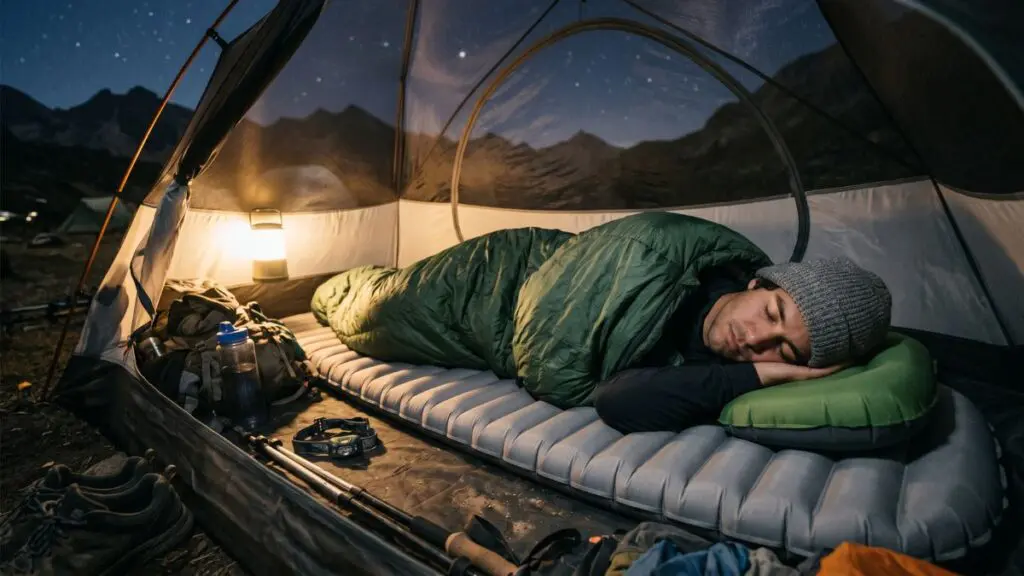
Side sleepers have a different problem than back sleepers when it comes to backpacking sleeping pads. Your hips and shoulders concentrate body weight onto two narrow contact points, and a thin pad turns every roll-over into a wake-up. The pad you pick matters more for you than for anyone else in the tent. This roundup covers eight pads that handle side-sleeper pressure points well, ranked across thickness, baffle construction, R-value, and weight so you can match a pad to the trips you actually take. The goal isn’t always the lightest or the warmest pad. It’s the right combination for someone who sleeps on their side and wants to stop dreading bedtime in the backcountry.
My Picks
Best Overall: Exped Ultra 6.5R
Best Ultralight: Therm-a-Rest NeoAir XLite NXT Max
Best Thickness: Sea to Summit Ether Light XR
Best Cold Weather: Therm-a-Rest NeoAir XTherm NXT
Best Budget: REI Co-op Helix Insulated
What Side Sleepers Need in a Backpacking Sleeping Pad
Three things determine whether a pad works for side sleeping: thickness, baffle geometry, and width. Get those right and you sleep. Get them wrong and you spend the night rotating between sore hips and a sore shoulder. The pad is also half of a sleep system, so once you’ve got the pad sorted, the best backpacking pillows become the next decision worth thinking through carefully.
Thickness Is the Headline Spec
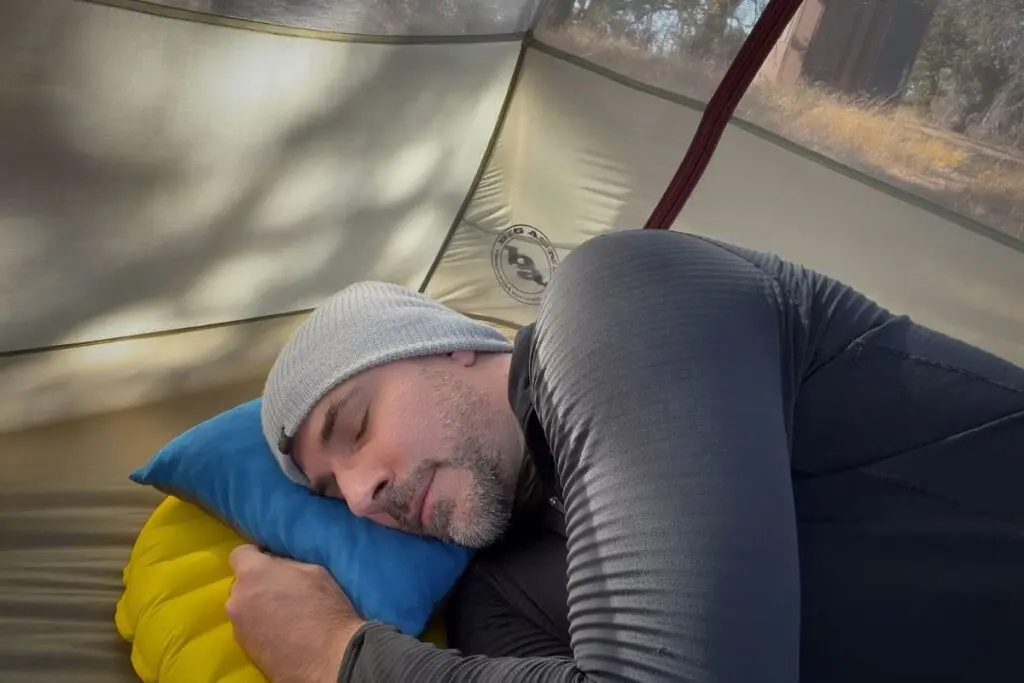
A side sleeper concentrates body weight on a narrow contact patch: your hip and your shoulder. On a 2-inch pad, those points compress the pad until they’re essentially touching the ground, which is exactly the failure mode you’re trying to avoid. Three inches is the practical minimum, 3.5 inches is the sweet spot, and 4 inches and above is genuinely plush. As an active side sleeper, an inflatable pad is non-negotiable. Closed-cell foam pads simply don’t get thick enough to support hip pressure overnight.
Baffle Geometry Matters More Than People Realize
Baffles are the internal structures that hold a pad’s shape when inflated. The four common layouts behave differently for side sleepers:
Horizontal flat-top baffles (Exped Ultra series, Nemo Tensor): air chambers run across the pad with a flat top surface, distributing weight evenly without pronounced ridges between baffles. Generally the most side-sleeper-friendly geometry.
Air sprung cells (Sea to Summit Ether Light XR): hexagonal interconnected cells create a quilted, mattress-like contour that flexes around hips and shoulders. The most “bed-like” feel of any backpacking pad construction.
Triangular core matrix (Therm-a-Rest NeoAir line): internal triangular structure with reflective films for warmth. Lightest and warmest per ounce, but some side sleepers feel the internal ridges as the pad shifts under bodyweight.
I-beam construction (Big Agnes Rapide SL): vertical baffles with a horizontal quilted top, adding a plush surface feel at the cost of weight.
Width Is the Forgotten Variable
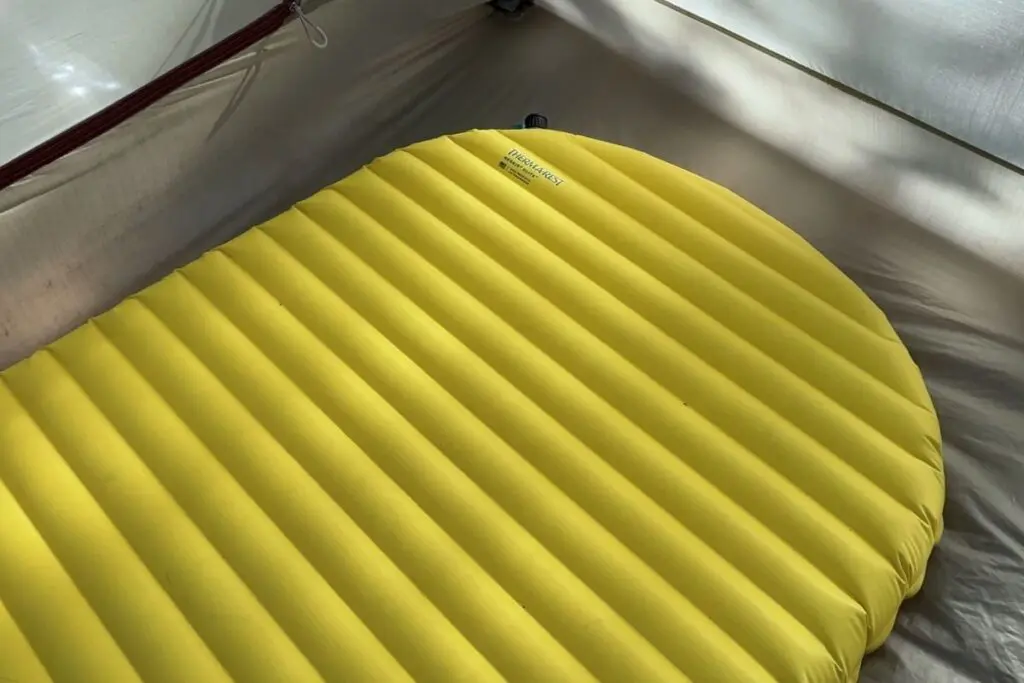
Most standard pads are 20 inches wide. That’s fine for a back sleeper but tight for a side sleeper, especially one who shifts sides through the night. A wide platform (25 inches) keeps elbows and bent knees from sliding off the edge mid-roll, which is the other thing, beyond hip compression, that wakes side sleepers up. Every pad in this roundup is featured in its wide configuration where one is offered.
R-Value Is About When You Sleep, Not How
R-value measures how well a pad insulates you from the cold ground. It scales with the trips you take, not with your sleeping position. For three-season backpacking, target R-3 minimum and R-4 to R-5 for shoulder season. For winter or alpine trips, R-6 and above. If R-value is genuinely confusing, this video on R-value and sleep pad selection walks through the logic in detail.
| PADS | Thickness (in) | R-Value | Weight (oz) | Baffle Type |
|---|---|---|---|---|
| Exped Ultra 6.5R | 3.5 | 6.9 | 22.6 | Horizontal flat-top |
| Sea to Summit Ether Light XR | 3.9 | 4.1 | 22.0 | Air Sprung Cells |
| Nemo Tensor All-Season | 3.5 | 5.4 | 19.0 | Horizontal Spaceframe |
| Therm-a-Rest NeoAir XLite NXT Max | 3 | 4.5 | 16.0 | Triangular Core Matrix |
| Exped Ultra 3R | 3.5 | 2.9 | 19.4 | Horizontal flat-top |
| Therm-a-Rest NeoAir XTherm NXT | 3 | 7.3 | 21.0 | Triangular Core Matrix |
| Big Agnes Rapide SL | 4.25 | 4.8 | 26.0 | I-Beam quilted |
| REI Co-op Helix Insulated | 3 | 4.9 | 18.5 | Vertical I-beam quilted |
Best Overall Backpacking Sleeping Pad: Exped Ultra 6.5R
The Exped Ultra 6.5R is the pad to buy if you want one inflatable that handles almost everything you’re going to throw at it. R-value 6.9 puts it in 4-season territory, meaning it’ll work for snow camping if you ever get there, and it gives cold sleepers significant margin even on cold three-season nights. The 3.5-inch thickness with horizontal flat-top baffles is where the side-sleeper case is made: weight distributes evenly across the pad without the pronounced ridge feel some sleepers report on triangular-baffle constructions, and 3.5 inches is enough cushion that hip pressure doesn’t bottom out.
The pad runs 22.6 ounces in the Medium Mummy size, which is heavier than an XLite NXT Max but lighter than the Big Agnes Rapide SL. Middle of the pack on weight while delivering one of the highest R-values in this roundup. Insulation is 700 fill power down with moisture treatment, and the top fabric is a stretch-knit polyester that’s comfortable against skin but slower to dry if it gets wet. The included Schnozzel pumpbag doubles as a stuff sack and pillow, so you’re not buying a separate inflation sack.
The case for the Ultra 6.5R is range. If you sleep cold, side-sleep, and don’t want to own two pads (a summer pad and a winter pad), this is the one to carry. The five-ounce weight penalty over an XLite NXT Max is real, but the warmth and comfort gain is worth it for anyone whose trips span shoulder season into actual cold.

Not sure what gear you actually need?
Grab the free backpacking checklist I built after 120+ trips. It covers every category so you don’t overbuy or forget something important.
Get the Checklist →Free. No spam. Unsubscribe anytime.
Best Thickness for Side Sleepers: Sea to Summit Ether Light XR
The Sea to Summit Ether Light XR is the closest thing to sleeping on a real mattress that you’ll find in a backpacking pad. The Air Sprung Cell construction, interconnected hexagonal cells rather than long baffles, contours around hips and shoulders in a way no other pad on this list does. Side sleepers who toss and turn or have hip pain consistently rate this construction as the most pressure-relieving of any backpacking pad design.
Thickness is the headline: 3.9 inches, just shy of the four-inch threshold and meaningfully more than the 3 to 3.5 inches you’ll get from competitors. R-value is 4.1, which is solid three-season warmth with margin into shoulder season but doesn’t stretch into winter. The XR is the current production model that replaced the older Ether Light XT. Improved R-value (4.1 vs 3.2 on the predecessor), updated XPRESS valve, and ThermalCore reflective insulation. If you’ve been comparing the XR against the XT in older reviews, the XR is the one to buy.
The trade-offs are weight and cell noise. At an estimated 22 ounces in the Regular Wide configuration, this is one of the heavier insulated pads on the list. The cells also produce a faint squeak when bodyweight shifts across them: quieter than NeoAir crinkle, but present. For a side sleeper for whom thickness is the deciding factor, neither tradeoff is a dealbreaker. This is the right pick if you’ve tried 3-inch pads and woken up with hip soreness and you’re not interested in trying that again.
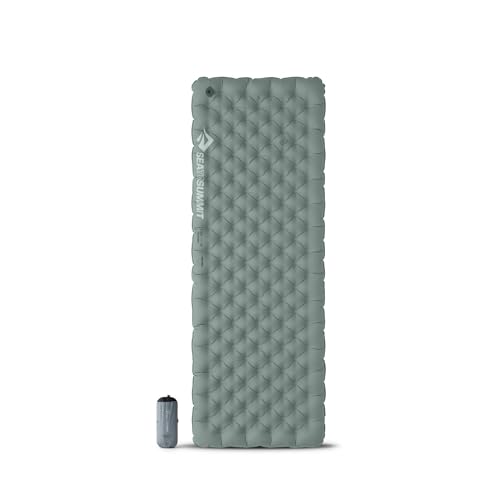
Nemo Tensor All-Season
The Nemo Tensor All-Season is the strongest warmth-to-weight pad on this roundup. At 19 ounces in the Regular Wide and an R-value of 5.4, it delivers near-XTherm-class insulation at a weight closer to the XLite NXT Max, a combination no other pad in this category quite matches.
Construction is horizontal Spaceframe baffles with two layers of metallized Thermal Mirror film and low-stretch internal trusses. The result is a flat 3.5-inch top surface with significantly less noise than the NeoAir line. Reviewer consensus is that this is one of the quieter premium pads available, which matters more than people realize when you’re shifting around in a quiet backcountry tent. The Laylow valve handles fine inflation adjustment well, which is useful for side sleepers who often need to dial firmness specifically to clear hip pressure rather than running the pad fully inflated.
The Tensor was redesigned in 2024, and the current All-Season variant is the production model. Some early-run reviews flagged valve assembly issues; consensus on current production is positive. The 20D top fabric is on the thinner side, so a groundsheet is worth carrying if you camp on rough terrain. For shoulder-season trips where you want quiet, warm, and not-too-heavy in a single pad, this is the strongest all-rounder on the list.

A 3.5-inch insulated air pad with Spaceframe baffles, dual Thermal Mirror films, and an R-value of 5.4. Built for backpackers who want quiet, warm, low-weight performance from shoulder season into early winter.
Best Ultralight Backpacking Sleeping Pad for Side Sleepers: Therm-a-Rest NeoAir XLite NXT Max
The Therm-a-Rest NeoAir XLite NXT Max is the lightest pad here that still works for side sleeping, full stop. At 16 ounces for the Regular Wide and an R-value of 4.5, it’s the warmth-to-weight benchmark for three-season ultralight backpacking, and the Max version’s 25-inch wide platform is a genuine upgrade for side sleepers over the standard 20-inch XLite NXT.
Construction is Therm-a-Rest’s Triangular Core Matrix with two layers of ThermaCapture reflective film. No down, no synthetic fill. The pad gets its R-value from the geometry and the films. The NXT generation also addressed the original XLite’s most-cited weakness, which was noise: Therm-a-Rest reports an 85 percent reduction in crinkle versus the original. As a longtime user of the original NeoAir XLite (predecessor to the NXT and NXT Max), I can confirm the original is genuinely loud. Every shift, every roll. The NXT is meaningfully quieter in head-to-head comparisons, though it’s still not silent.
The 3-inch thickness is the thinnest on this list, which is the real tradeoff. For a side sleeper, 3 inches is workable but unforgiving, with less margin if you sleep on rocky or uneven ground. The Max version’s 25-inch width compensates somewhat by giving you room to shift without falling off, but if hip pressure is your primary complaint, the thicker Ether Light XR or Big Agnes Rapide SL will treat you better. The XLite NXT Max is the right call when weight is the constraint and you’re on relatively even ground in genuine three-season conditions. If you’re building out a broader ultralight kit around it, these ultralight upgrades under $25 are worth a look for the rest of the system.


Exped Ultra 3R
The Exped Ultra 3R is the warm-weather sibling to the Ultra 6.5R. Same horizontal flat-top baffle construction, same 3.5-inch thickness, same 25.6-inch wide platform in the Medium Wide configuration, but with a much lower R-value of 2.9. It’s the pick for a side sleeper who has the side-sleeper comfort problem solved with the Ultra 3R’s geometry but doesn’t need the cold-weather insulation of the 6.5R.
The case for the Ultra 3R is most compelling in two scenarios. First: summer-only backpackers. If you only get out from May through September and you’re not heading high in the Sierra in June, R-2.9 covers you, and you save weight (19.4 ounces vs 22.6) and money over the 6.5R. Second: backpackers who already own a winter pad and want a lighter warm-weather option without changing the comfort profile they already trust. The flat-top horizontal baffle layout is identical to the 6.5R, so if you’ve slept well on one, you’ll sleep well on the other.
R-2.9 is the constraint to be honest about. Most backpackers are better served by an R-3.5 or higher pad as their three-season default, and cold sleepers will find the Ultra 3R insufficient below roughly 40°F ground temperatures. This is genuinely a summer pad despite the “3R” branding suggesting more capability.
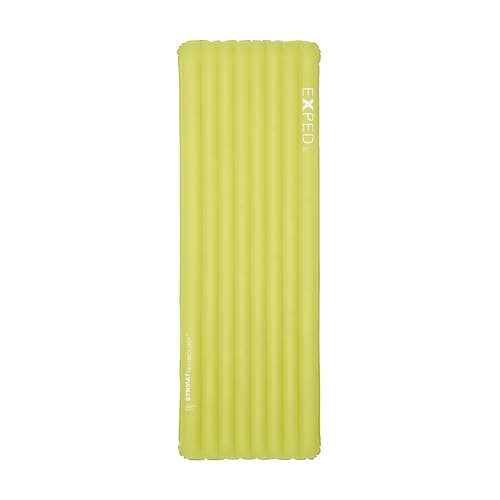
Best Cold Weather Backpacking Sleeping Pad: Therm-a-Rest NeoAir XTherm NXT
The Therm-a-Rest NeoAir XTherm NXT is the winter pad. R-value 7.3 is the highest in this roundup, achieved through four layers of ThermaCapture reflective film (double the films in the XLite NXT) without adding fill weight. At 21 ounces in the Regular Wide, it’s a pound-and-change of pad that handles snow camping, alpine trips, and cold shoulder-season nights where ground temperature is the failure mode that matters.
Construction is the same Triangular Core Matrix as the XLite NXT, with the same noise-reduction improvements over the original generation. The XTherm NXT shares the XLite’s strengths (light, warm, packable) and its weaknesses: 3-inch thickness and an audible (though improved) crinkle. For a cold-weather trip, those tradeoffs read differently than they do in summer. Three inches is enough when you’re packing a heavier sleeping bag and prioritizing thermal protection over plushness, and the noise is a minor issue when you’re more concerned about whether your toes stay warm.
The XTherm NXT is also the best pick for mountaineering, high-altitude trips, and any context where temperature is the limiting factor and weight matters. If you mostly do summer trips with the occasional cold-weather shoulder season outing, the Exped Ultra 6.5R is probably the better single-pad choice. It’s only slightly less warm (R-6.9 vs R-7.3) and significantly thicker. The XTherm NXT is the answer when you specifically need maximum R-value at minimum weight and you’re willing to accept the thinner profile to get it.

Big Agnes Rapide SL
The Big Agnes Rapide SL Insulated is the thickest pad on this list at 4.25 inches, with a quilted I-beam construction that produces a more “blanket-like” surface than any other option here. For a side sleeper who has tried thinner pads and been disappointed, the Rapide SL’s thickness is genuinely in a different category, with even more cushion than the Sea to Summit Ether Light XR’s 3.9 inches.
R-value is 4.8, which puts it in solid three-season-plus territory. Slightly warmer than the Ether Light XR (4.1) and well within shoulder-season range. The quilted top fabric and I-beam internal structure with offset chambers add a soft surface feel that pairs well with the thickness. Insulation is PrimaLoft synthetic.
Two real weaknesses to know about. First: at 26 ounces in the Regular Wide, this is the heaviest pad on the roundup, a real cost for side sleepers who already accept some weight penalty for thickness. Second: the pump sack is sold separately, which is an unusual choice in this price range and a detail many buyers don’t catch until they’re trying to inflate the pad on their first trip. Plan on either buying the Pumphouse Ultra alongside the pad or factoring lung inflation into your routine. The I-beam construction can also feel slightly less stable than horizontal-baffle layouts under restless sleepers, a minor issue for most side sleepers but worth knowing if you’re a particularly active sleeper.
The Rapide SL is the right pick when thickness is the absolute priority and you’re carrying loads short enough that the extra weight doesn’t matter. Car-camping-adjacent backpacking, shorter weekend trips, and base camp scenarios.

Best Budget Backpacking Sleeping Pad: REI Co-op Helix Insulated
The REI Co-op Helix Insulated is the value pick on this roundup and delivers a strong feature set for a meaningfully lower investment than the premium options. R-value 4.9 puts it ahead of the Sea to Summit Ether Light XR and the NeoAir XLite NXT Max for warmth, while 18.5 ounces keeps it competitive on weight.
Construction is vertical I-beam baffles with a quilted top. Different from the horizontal-baffle layouts that dominate the premium tier, and more comparable to the Big Agnes Rapide SL’s geometry though at a lower thickness (3 inches vs 4.25). The quilted top adds a softer surface feel than a flat-top baffled pad. An integrated stuff-sack pump is included, so you’re not buying a separate inflation sack.
The two limits to be honest about: 3 inches is the thinnest tier on this list, which is the same critique that applies to the NeoAir line. Workable for side sleepers but less forgiving for hip pressure than the 3.5+ inch options. And REI’s own gear, in general, tends to lag the premium brands in fabric refinement and long-term durability. Not a fatal flaw, but the Helix isn’t going to feel quite as polished as a Sea to Summit or a Therm-a-Rest in the hand. If you’re putting together a first kit on a tighter budget, this guide to cheap backpacking gear that actually works covers the same value-first thinking across other categories. For a side sleeper getting into backpacking who wants real three-season warmth without the premium-tier investment, the Helix Insulated is the best value pad in this category.

A budget-friendly insulated air pad with a quilted 3-inch top, R-value of 4.9, and an integrated stuff-sack pump. Built for backpackers who want strong value without sacrificing 3-season warmth.
The Complete Kit I Use on Every Trip
This post covers one piece of the puzzle. If you want to see everything I actually carry, I keep my full kit documented on one page.
After 100+ trips across the Sierra, the Pacific Coast, and Desert Southwest, this is the setup I’ve dialed in for three-season weekend trips. Same gear, trip after trip. It’s what I’d recommend to anyone building out a dependable kit without overpacking.
Putting It Together
For most side sleepers shopping for a single backpacking pad that handles their actual trips, the Exped Ultra 6.5R is the right answer. It’s the broadest, with cold-weather margin, side-sleeper-friendly geometry, and a thickness that resolves the hip-pressure problem most pads create. If you’re willing to commit to thicker-and-heavier or thinner-and-lighter at the ends of the spectrum, the Sea to Summit Ether Light XR and the Therm-a-Rest NeoAir XLite NXT Max are the strongest picks at their respective extremes.
If you only backpack in summer, the Exped Ultra 3R saves weight and money without changing the comfort profile. If your trips skew cold or alpine, the Therm-a-Rest NeoAir XTherm NXT is the answer. If you want maximum thickness regardless of weight, the Big Agnes Rapide SL delivers it. And if you’re working with a tighter budget, the REI Co-op Helix Insulated gets you 80% of the way there for meaningfully less.
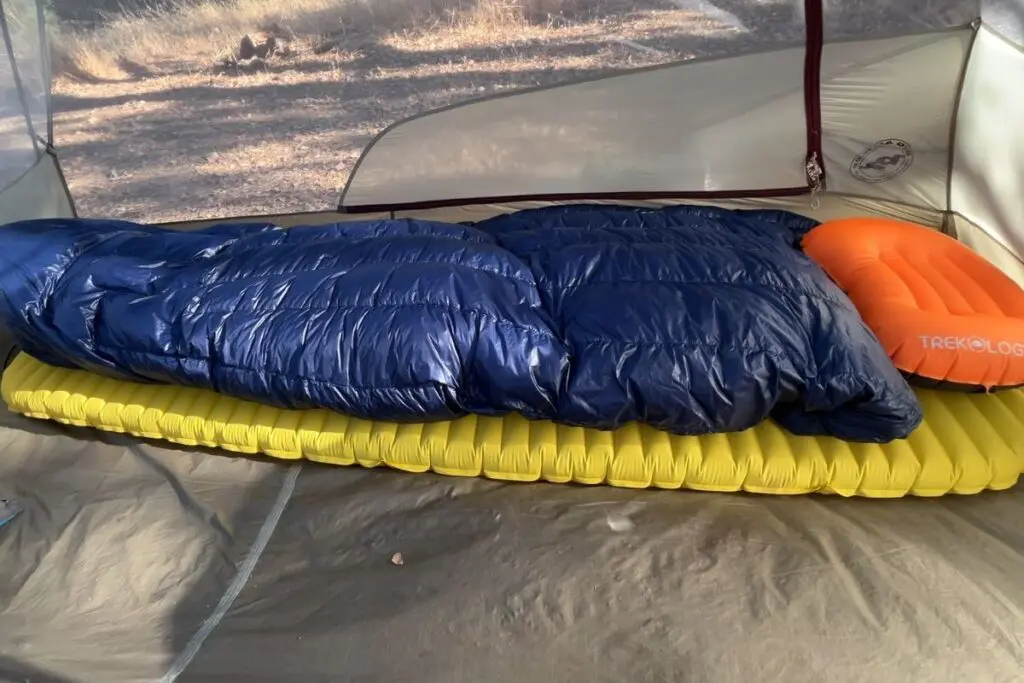
The pad you don’t notice is the right pad. Once you’ve stopped waking up to hip pressure or rolling onto a deflated edge, the rest of the sleep system (bag, pillow, and tent) starts working the way it’s supposed to.
Related Reading
Amazon and the Amazon logo are trademarks of Amazon.com, Inc. or its affiliates.