Best Ultralight Headlamps for Backpacking: 6 Sub-2-Ounce Picks
Updated: 2026 | Reviewed by: Chris Mercer
Disclosure: As an Amazon Associate, we earn from qualifying purchases, at no extra cost to you.

A headlamp is one of those pieces of gear where backpackers either obsess over the weight or ignore it entirely, and both approaches usually lead to the wrong purchase. The ultralight category (sub-2-ounce, USB-C rechargeable, with enough output and battery life to actually backpack with) has tightened up considerably in the last two years, and a few standout models now genuinely cover the spectrum from minimalist camp light to legitimate night-hiking workhorse. This post picks six and tells you which one is right for which kind of trip.
My Picks
Best Overall: Nitecore NU27
Best for Most Backpackers: Nitecore NU25 MCT UL
Best Budget / Lightest: Nitecore NU20 Classic
Best Comfort: BioLite Range 300
Best for Trail Runners: Petzl Swift LT
Most Unique: Knog Bandicoot 250
How to Choose an Ultralight Headlamp for Backpacking
The biggest shift in headlamp design over the last decade was rechargeable lithium-ion replacing 3xAAA. For anyone already carrying a power bank for a phone or GPS, a rechargeable headlamp eliminates the spare-battery question entirely. No half-drained AAAs to manage, no dead-battery surprise on night three. If you’re still on an AAA setup, the upgrade is worth it. The weight savings alone are usually enough to justify the switch, and the modern USB-C top-ups in 60 to 90 minutes make charging from a power bank trivial.
Three features separate a real backpacking headlamp from a flashlight you can strap to your face. Red light matters more than the spec sheet suggests. It’s the difference between rummaging through your tent at 3 a.m. without blowing out your night vision and waking up your tent neighbor with a 200-lumen wall of white. A tilt mechanism matters for anything trail-related, because a fixed-angle beam pointed straight ahead lights up the trees instead of the ground in front of your feet. And multiple brightness levels matter because real use spans two orders of magnitude: 5 to 10 lumens for in-tent reading, 50 to 100 lumens for around camp, 200+ for actual night hiking. Five of the six lamps in this lineup do all three. The sixth (the BioLite Range 300) trades red light for comfort, and that tradeoff is worth understanding before you buy.
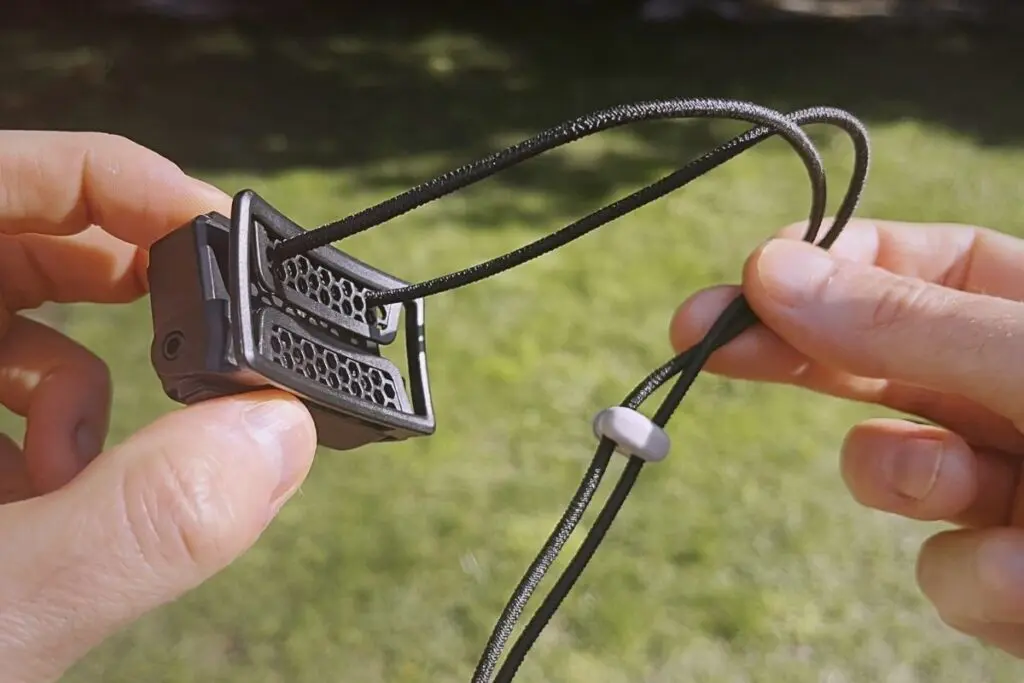
The last decision point is strap type. Shock-cord straps save another 0.1 to 0.2 oz over a fabric headband and are a real lever for grams-counters. Both the Nitecore NU25 MCT UL and the NU20 Classic ship with shock-cord bands stock, and the NU20 has an aftermarket single-cord upgrade (Litesmith Spiderlite UL) that drops it further still. The NU27 fits both philosophies depending on how you mount it. If you’re already chasing every gram, this is one of the easier places to find them. If you’re not, a fabric headband is more comfortable for long sessions and worth the trivial weight penalty.
If you’re still building out the rest of your kit, the ultralight backpacking gear list lays out where the rest of the grams come from, and the base weight guide covers how to think about cuts like this in context.
| HEADLAMPS | Weight (oz) | Max Lumens | Battery Life (low/high) | IP Rating |
|---|---|---|---|---|
| Nitecore NU27 | 1.98 | 600 | 57 h / 3 h | IP66 |
| Nitecore NU25 MCT UL | 1.66 | 400 | 45 h / 2 h 40 min | IP66 |
| Nitecore NU20 Classic | 1.34 | 360 | 97 h / 5 h | IP66 |
| BioLite Range 300 | 1.80 | 300 | 100 h / 4 h | IP67 |
| Petzl Swift LT | 1.52 | 380 | 60 h / 2 h | IPX4 |
| Knog Bandicoot 250 | 2.12 | 250 | 22 h / 8 h | IP67 |
Best Overall Ultralight Headlamp: Nitecore NU27
The Nitecore NU27 hits 600 lumens at 1.98 oz, which is the best brightness-to-weight ratio in the ultralight category right now. It’s about a third of an ounce heavier than the NU25 MCT UL but pushes 50% more peak output and adds the multi-color temperature system, which is the feature that actually justifies the upgrade. Warm light cuts through fog and falling snow noticeably better than cool, and cool maximizes contrast on dry terrain. The toggle between 3000K, 4500K, and 6500K isn’t a gimmick. In real conditions it’s the difference between seeing the trail and seeing a wall of reflected white.
The NU27 also includes the diffusing stuff sack that doubles as a tent lantern, a 4-way clip for hat brim or shoulder strap mounting, and five brightness levels per color. Battery life is solid: 57 hours at the ultralow 6-lumen setting, around 3 hours at 400 lumens, and under an hour at full turbo. The lack of published turbo runtime is mildly annoying but consistent with how every brand treats the highest output mode.
The biggest knock on the NU27 is no mode memory. It resets to the lowest neutral white setting every time you turn it off, which is a mild but persistent friction in actual use. The flood beam has minor edge artifacts and isn’t the best long-throw spot, so if you do a lot of open-ridge night hiking, the wider beam pattern may not be your preference. And the 0.3-ounce premium over the NU25 MCT UL is real. If you don’t need the extra output, you don’t need the NU27.
Right pick if you want the brightest legitimate ultralight headlamp on the market, want the multi-color temperatures for variable conditions, and use the diffuser-as-lantern feature on every trip.

Not sure what gear you actually need?
Grab the free backpacking checklist I built after 120+ trips. It covers every category so you don’t overbuy or forget something important.
Get the Checklist →Free. No spam. Unsubscribe anytime.
Best for Most Backpackers: Nitecore NU25 MCT UL
The Nitecore NU25 MCT UL is the direct successor to the original NU25 that dominated thru-hiker gear lists for most of the last decade, and it’s the one-headlamp answer for most backpackers. At 1.66 oz with 400 lumens, it’s the best balance of weight and capability in this lineup. The “UL” variant uses a thin shock-cord strap instead of the standard fabric headband, which saves weight and is a built-in ultralight feature rather than an aftermarket mod.
The original NU25 nailed the three features that matter most for backpacking: red light, tiltable face, and multiple brightness levels. After using one on every trip since 2017 (same lamp, still going), I can confirm the MCT UL carries all three forward and adds the multi-color temperature system from the NU27. The dual spotlight-plus-floodlight beam is genuinely versatile: spot for trail, flood for camp tasks, both together when you need maximum coverage. Battery life on high (400 lumens) is 2 hours 40 minutes, which is enough for a real night hike, and the 45-hour ultralow runtime means you can run it as a tent reading light for a week without thinking about it.
Where it falls short: the cord strap is less comfortable than a fabric headband for long sessions, and there’s no mode memory. The high-mode runtime is solid but not class-leading, and tariff fluctuations have made the retail price less predictable than it used to be.
Right pick if you want one headlamp that does everything well at minimum weight without sacrificing the features that actually matter on a multi-day trip. This is the lamp most backpackers should buy.

Best Budget Ultralight Headlamp: Nitecore NU20 Classic
The Nitecore NU20 Classic is the cheapest and lightest in this lineup at 1.34 oz, and it’s the right pick for anyone whose headlamp use is mostly camp tasks and in-tent reading rather than sustained night hiking. It pushes 360 lumens on paper, has three light outputs (a primary white, a 90-CRI auxiliary reading light, and a red light), and an IP66 rating. There’s also a Litesmith aftermarket shock-cord headband mod that drops it to 1.14 oz if you want to push the weight further.
The catch is real and worth understanding before you buy: turbo output drops from 360 to around 200 lumens within 30 minutes due to thermal step-down, so the practical max useful brightness is closer to 200 lumens. That’s fine for camp and short trail bursts, not great for fast night hiking. High mode (around 38 lm sustained) runs for 5 hours, which is the more relevant battery-life number for actual backpacking use than the 30-minute turbo figure. The 500 mAh battery is smaller than its siblings, which means shorter runtimes at usable brightness levels, and the fixed beam angle frustrates anyone used to tilting the lamp down for trail or task work. There’s no multi-color temperature.
The reflective glow-in-the-dark headband is a small but useful touch. Finding the lamp inside a dark tent at 4 a.m. is easier than it sounds. The reading light is genuinely high-CRI and good for in-tent use without the glare of the main beam.
Right pick if budget is the deciding factor, if absolute minimum weight matters more than night-hiking capability, or if your headlamp is primarily a camp light. Skip it if you do a lot of pre-dawn alpine starts or off-trail night travel.

Best Comfort Ultralight Headlamp: BioLite Range 300
The BioLite Range 300 wins this lineup on comfort, full stop. BioLite’s 3D SlimFit design integrates the lamp directly into a moisture-wicking band: no separate battery pack on the back of your head, no front-heavy bracket, just a flush 9 mm front profile that sits cleanly on your forehead. For side sleepers who want to wear a headlamp while reading, or for anyone whose previous headlamps have slipped or bounced, this is the one to consider. It’s BioLite’s current 2025 entry-level model, replacing the now-retired HeadLamp 325 with USB-C charging and an upgraded IP67 rating that’s submersible to one meter for 30 minutes.
The fast-charge spec is the real headline feature: 8 minutes of charging adds an hour of high-output runtime, and 0 to 100% takes 70 minutes. If you’ve ever forgotten to charge a headlamp before a trip, that 8-minute top-up from a power bank in camp is a genuinely useful capability. Stepless dimming from 300 lumens down to 3 lumens replaces the discrete-mode interface most lamps use, light memory remembers your last setting, and the single-button operation is dead simple.
The catch is the no-red-light tradeoff, and it’s real. The Range 300 is single-button white-spot only, which means no red mode for tent etiquette or preserving night vision around camp. For backpacking, that’s the one feature regression vs. the older HeadLamp 325 it replaces. Five of the six lamps in this roundup have red light, so this is the comfort-pick-with-tradeoffs option. Stepping up to the Range 400 adds red light and a flood beam but pushes the weight to 2.4 oz, which doesn’t credibly belong on an ultralight list. Other limitations: 4-hour high-mode runtime is shorter than several alternatives, the 75-meter beam is the shortest in the lineup, and the white-spot-only beam pattern is less versatile than dual-beam options.
Right pick if comfort and bounce-free fit are your top priorities and you don’t consider red light essential. Wrong pick if you treat red light as non-negotiable.

Best for Trail Runners: Petzl Swift LT
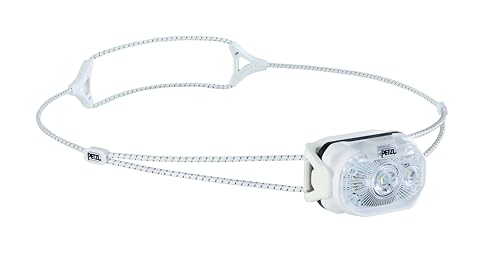
The Petzl Swift LT is Petzl’s replacement for the discontinued Bindi in their 2026 lineup, and it’s the headlamp in this roundup with the highest build quality and most refined headband. At 1.52 oz with 380 lumens, it punches above its weight class on fit and finish. Petzl’s regulated lighting is the standout feature: instead of dimming progressively as the battery drains, output holds steady at standard settings, so what you see at minute 1 is what you see at minute 90. For trail runners and fastpackers who need predictable brightness, that’s a meaningful capability difference.
The headband is the most comfortable in the lineup: split-construction, woven with reflective thread along its entire length, sold as a swappable spare part if you ever need to replace it. The eco-design uses 50% recycled or biosourced materials, which doesn’t matter on trail but matters to some buyers. Battery life on standard (100 lumens) is 6 hours plus a 2-hour reserve, which is enough for an all-night fastpack. The Swift LT cord-style strap is also reportedly cross-compatible with the Nitecore NU20, which is a useful note for anyone running shock-cord setups across multiple lamps.
The red light implementation is the lamp’s biggest weakness and is widely criticized: a dim 2-lumen spot beam in a single brightness, no flood, no second mode. It’s borderline useless for camp or tent reading. Charging is also surprisingly slow at 3 hours from empty for an 880 mAh battery, when comparable lamps top up in 75 to 90 minutes. There’s no pass-through charging. The 70-meter beam distance is short for open ridgelines because there’s no spot mode, just a wide uniform flood. Pricing runs higher than the Nitecore competitors at similar weight, and you’re paying for the Petzl build and the regulated output rather than feature breadth.
Right pick if you’re a trail runner or fastpacker who values stable brightness and headband comfort over multi-mode versatility. Wrong pick if you actually use red light or want a dual spot-plus-flood beam.
Most Unique Ultralight Headlamp: Knog Bandicoot 250
The Knog Bandicoot 250 is the most genuinely different design in the category. Instead of a fabric headband, it uses a one-piece molded silicone strap that won’t tangle hair, won’t absorb sweat, won’t fray, and wipes clean with a damp cloth. Instead of a charging cable, it has an integrated USB-A plug built into the lamp itself, so you plug the whole headlamp directly into a wall charger or power bank. For anyone who’s lost a charging cable mid-trip or had a headlamp ruin their hair, both of those design choices solve real problems no other headlamp addresses.
The four-LED system gives you a high-beam spot, two elliptical ambient/flood beams, a downward-angled reading light, and red. The IP67 rating is the best in this lineup (submersible to one meter for 30 minutes) and meaningful for shoulder-season backpacking and wet creek crossings. The ModeMaker app lets you fully customize up to nine modes and set custom flash patterns, which is overkill for most backpackers but genuinely useful for climbers and SAR users who need specific signaling sequences. Battery life is the longest in the lineup at the lower brightness levels: 22 hours of ambient (50 lm) and 25 to 32 hours on red and reading modes.
The tradeoffs are also real. At 2.12 oz it’s the heaviest lamp in this lineup and pushes the upper edge of “ultralight.” The 250-lumen max output is the lowest, and the 40-meter beam is the shortest, so this isn’t the right pick for fast night hiking on open terrain. The lamp dims to about 180 lumens after the first minute on max. There’s reportedly visible PWM flicker on all modes per a single technical review, flagged here as a single-source observation but worth noting if you’re sensitive to flicker. Charging is USB-A only in a world that’s mostly moved to USB-C, and the integrated plug shape can be awkward to fit into some power banks. Charging from empty takes 4 hours.
Right pick if you want a “set it and forget it” headlamp that survives wet, dusty, multi-week conditions, if you’re tired of losing charging cables, or if hair-tangle on fabric headbands has been a recurring problem. The silicone strap and integrated plug are the headline features, and they’re worth the weight penalty for the right buyer.

The Complete Kit I Use on Every Trip
This post covers one piece of the puzzle. If you want to see everything I actually carry, I keep my full kit documented on one page.
After 100+ trips across the Sierra, the Pacific Coast, and Desert Southwest, this is the setup I’ve dialed in for three-season weekend trips. Same gear, trip after trip. It’s what I’d recommend to anyone building out a dependable kit without overpacking.
The Bottom Line
If you want the brightest legitimate ultralight headlamp on the market and use the diffuser-lantern feature, the Nitecore NU27 is the right call. If you want the one headlamp that does everything well at minimum weight (the right answer for most backpackers), buy the Nitecore NU25 MCT UL. If budget or absolute minimum weight is the deciding factor and your headlamp is mostly a camp light, the Nitecore NU20 Classic is the pick. If comfort is your top priority and you can live without red light, get the BioLite Range 300. If you’re a trail runner who values stable regulated output, the Petzl Swift LT. And if you want the most durable, lowest-maintenance design in the category, the Knog Bandicoot 250.
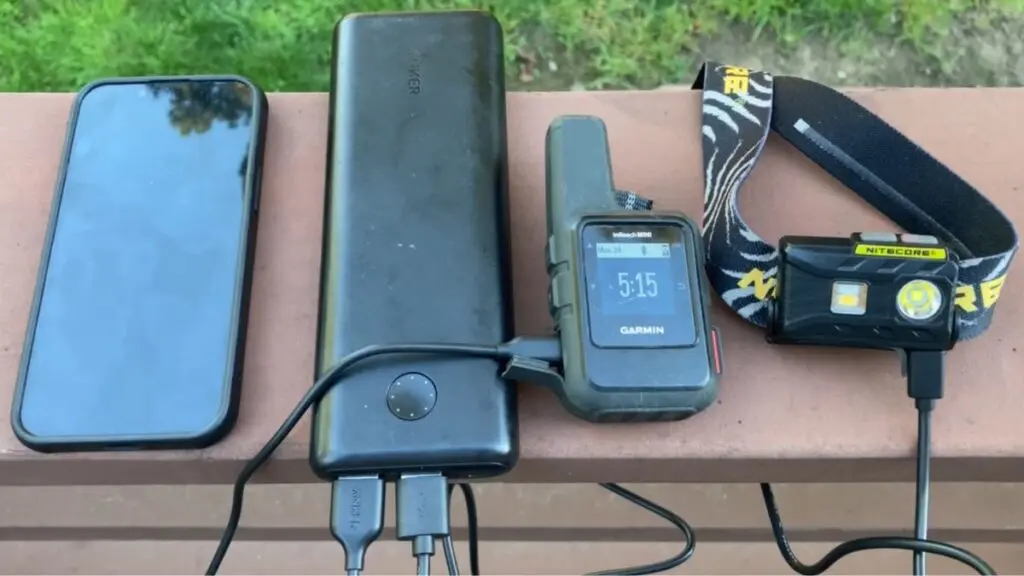
The original Nitecore NU25 that I still bring on every trip
For most readers landing on this post, the NU25 MCT UL is the answer. It’s not the lightest, not the brightest, and not the most comfortable, but it’s the only one in the lineup that doesn’t make a meaningful sacrifice in any of the three.
Related Reading
Amazon and the Amazon logo are trademarks of Amazon.com, Inc. or its affiliates.