Best Backpacking Sleeping Bags for Three-Season Trips
Updated: 2026 | Reviewed by: Chris Mercer
Disclosure: As an Amazon Associate, we earn from qualifying purchases, at no extra cost to you.
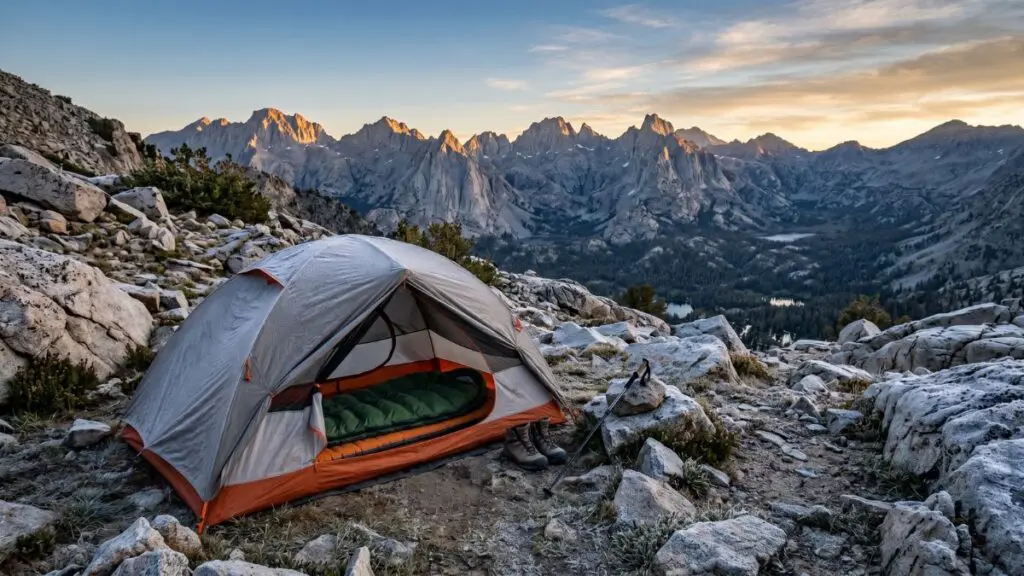
A backpacking sleeping bag is the enclosed alternative to a quilt: a zippered, hooded system that traps warmth on all sides instead of relying on your pad and body weight to seal the bottom. For three-season trips where you want a sealed, no-draft system rather than a quilt’s weight savings, the differences between bags come down to fill power, cut, and how honestly each one is rated.
This roundup covers nine bags spanning premium down, true budget, ultralight, side-sleeper-friendly, and synthetic, so you can match the bag to how you actually sleep and what you’re willing to carry.
My Picks
Best Overall: Feathered Friends Swallow UL 20
Best for Cold Sleepers: Western Mountaineering UltraLite 20
Best Value: REI Co-op Magma 15
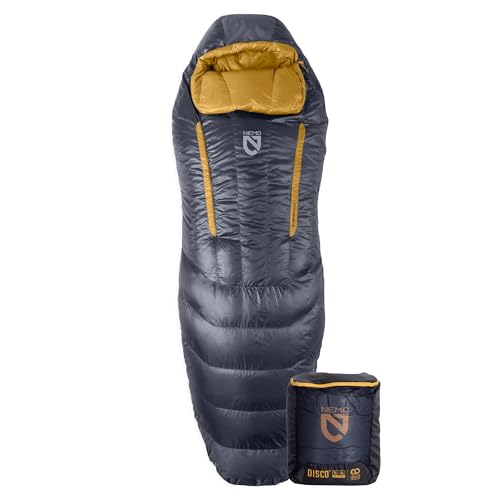
Best for Side Sleepers: NEMO Disco 15 Endless Promise
Best Budget: Kelty Cosmic Down 20
Best Synthetic: Marmot Trestles Elite Eco 20
How to Choose a Backpacking Sleeping Bag
The temp rating on the tag is the least trustworthy number in this category. Brands rate bags differently, some conservatively and some optimistically, so a “20°F” bag from one manufacturer can sleep ten degrees colder than a “20°F” bag from another. Read the rating as a starting point, not a guarantee, and weigh it against fill power and fill weight together, since a bag with less down but more fill power can sleep just as warm as a heavier, lower-fill-power bag.
Fit matters more in an enclosed bag than in a quilt, because you’re sealed inside it. A snug mummy traps heat efficiently but restricts side sleepers and broad-shouldered sleepers who need room to roll. A roomier cut sleeps more comfortably for restless sleepers but can leave air gaps that cost you a few degrees of real warmth at the rated temperature. If you’re a dedicated side sleeper, it’s worth cross-checking your sleeping pad choice too, since pad and bag fit compound each other for that sleep position, and prioritize shoulder and hip room over the lowest possible weight.
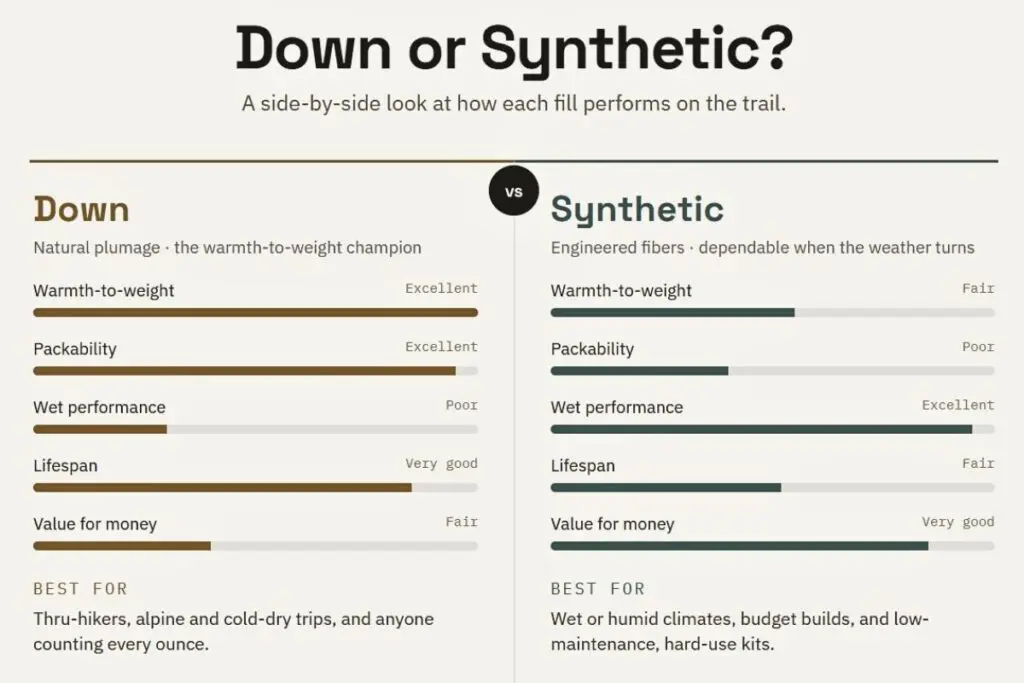
Down and synthetic solve different problems. Down wins on warmth-to-weight and packability in nearly every case, but it loses loft and insulating power when wet and takes real time to dry in the field. Synthetic keeps insulating even damp, shrugs off humidity, and costs less, at the price of more weight and bulk for the same warmth. If you’re camping mostly in dry Western conditions, down is the better default; if you’re regularly dealing with rain, condensation, or high humidity, synthetic removes a real risk.
| BAGS | Temp Rating (°F) | Weight (oz) | Fill Power | Insulation |
|---|---|---|---|---|
| Feathered Friends Swallow UL 20 | 20 | 27.3 | 950+ | Down |
| Western Mountaineering UltraLite 20 | 20 | 29 | 850+ | Down |
| REI Co-op Magma 15 | 15 | 35.6 | 850 | Down |
| Sea to Summit Spark 15F | 15 | 26.7 | 850+ | Down |
| NEMO Disco 15 Endless Promise | 15 | 43 | 650 | Down |
| Western Mountaineering MegaLite 30 | 30 | 24 | 850+ | Down |
| Mountain Hardwear Bishop Pass 15 | 15 | 37 | 650 | Down |
| Kelty Cosmic Down 20 | 20 | 39 | 550 | Down |
| Marmot Trestles Elite Eco 20 | 20 | 60 | — | Synthetic |
Best Overall Backpacking Sleeping Bag: Feathered Friends Swallow UL 20
The Swallow UL 20 is built around 950+ fill-power goose down, which is about as high as fill power gets in a production bag, and it sleeps genuinely warm to its 20°F rating, not optimistically close to it. That combination is the whole case for this bag: you’re not trading warmth for weight or paying extra just for a number on a spec sheet.
The cut is standard-width, not the narrowest mummy in this roundup, which gives it enough room to work for side sleepers without going fully spacious. The tradeoff for that class-leading warmth-to-weight ratio is a thin 7D shell that needs careful handling, and a feature set that skips extras like an interior stash pocket. This isn’t a bag with bells on it. It does one thing better than almost anything else on the market: stay warm at minimal weight.
Right for: dedicated three-season backpackers who want guaranteed warmth and buy-it-for-life build quality and aren’t chasing the lowest possible price. It also doubles as a strong side-sleeper pick given the relaxed cut relative to a true snug mummy.

A premium 950+ fill-power down mummy sleeping bag rated to 20°F, handmade in the USA for three-season backpacking. Known for a class-leading warmth-to-weight ratio and a roomy-yet-efficient cut.
Not sure what gear you actually need?
Grab the free backpacking checklist I built after 120+ trips. It covers every category so you don’t overbuy or forget something important.
Get the Checklist →Free. No spam. Unsubscribe anytime.
Best Cold-Sleeper Backpacking Sleeping Bag: Western Mountaineering UltraLite 20
Western Mountaineering has a reputation for conservative, trustworthy temp ratings, and the UltraLite 20 earns that reputation with a full 360-degree down draft collar that does more work than most bags in this class to seal warmth around your neck and shoulders. It delivers genuine warmth at and even below the stated 20°F, which puts it in a different category from bags that hit their number only on paper.
The snug, classic mummy cut is the thing to know before buying. It’s narrower through the shoulders and hips than the Feathered Friends Swallow UL 20, so it’s less forgiving for side sleepers or anyone broad-shouldered, and the continuous baffles mean the down inside can settle and need occasional redistribution. Western Mountaineering doesn’t discount this bag, so it’s a premium price with no sale to wait for. What you’re paying for is a rating you can actually trust.
Right for: cold sleepers and anyone pushing the colder edge of three-season conditions who wants a bag they can trust at the number on the label, not a number they’ll need to layer around.

Best Value Backpacking Sleeping Bag: REI Co-op Magma 15
The Magma 15 carries a genuinely high fill weight for its price point, which is why it sleeps warmer than its 15°F name suggests, closer to a true 10°F bag by most accounts. That’s the rare case where a manufacturer underselling their own product works in your favor.
What actually sets this bag apart, though, is fit. REI offers it in nine sizes at one price, more fit customization than any other bag in this roundup. If you’ve ever bought a “regular” mummy bag and found it too tight through the hips or too loose in the shoulders, this solves that problem directly. The cost of all that extra down is weight: at roughly 35.6 ounces it’s noticeably heavier than the premium 850+ fill bags here, because it reaches its warmth through down volume rather than higher fill power.
Right for: value-focused backpackers who want real cold-weather warmth and a dialed fit without paying premium-brand prices, especially if you fall between standard sizes.

An 850-fill-power down mummy sleeping bag rated to 15°F, offered in nine sizes for a dialed fit. Delivers premium warmth and a contoured hood at a mid-range price, making it a standout value.
Sea to Summit Spark 15F
The Spark 15F sits in the same weight class as the Feathered Friends Swallow UL 20 and Western Mountaineering UltraLite 20, but it earns that spot with a roomier cut instead of matching their snug mummy shape. At 61 inches at the shoulder it’s noticeably wider than either, which makes it one of the few genuinely ultralight bags that works for side sleepers.
The tradeoff shows up in the rating. Despite the 15°F name it comfort-rates closer to freezing, not below it, so it’s a bag for nights at or above freezing, not genuine sub-freezing cold. The 10D shell is as thin as the Swallow UL 20’s, so the same careful handling applies, and the minimalist feature set skips a stash pocket to keep weight down.
Right for: weight-conscious three-season backpackers who want more interior room than a classic snug mummy without giving up ultralight packability, and who camp mostly at or above freezing rather than pushing into genuine cold.

An ultralight 850+ fill-power down mummy sleeping bag rated to 15°F with a 10D shell. One of the lightest true 15°F bags, with a slightly roomier cut than most premium mummies.
Best Side-Sleeper Backpacking Sleeping Bag: NEMO Disco 15 Endless Promise
NEMO’s Spoon shape is the reason the Disco 15 Endless Promise works for side and stomach sleepers in a way a traditional mummy simply doesn’t. The hourglass cut widens dramatically at the knees, giving you room to bend your legs and roll without fighting the bag’s shape, which is the single biggest complaint side sleepers have about enclosed bags in general.
That room comes at a real cost. At roughly 43 ounces this is one of the heaviest bags in the roundup, and the 650 fill power plus the extra interior volume means cold spots can show up near the rated temperature for anyone who runs cold. Built-in Thermo Gill vents help regulate temperature on warmer nights, and the fully recycled polyester shell is a genuine sustainability upgrade over a typical nylon shell. This is a comfort-first bag, not a weight-conscious one, and if that’s your priority, the built-in pillow pocket pairs naturally with a dedicated backpacking pillow rather than relying on stuffed clothing.
Right for: side sleepers, restless sleepers, and anyone who values room to move over shaving ounces, especially on shorter trips where the extra bulk in your pack matters less.
Western Mountaineering MegaLite 30
At around 24 ounces, the MegaLite 30 is the lightest bag in this entire roundup, and it gets there with the same 850+ fill-power down and conservative Western Mountaineering rating philosophy as the UltraLite 20. A bag this light often skimps on real cold-weather performance to hit its weight target, but this one runs warmer in practice than most 30°F bags.
The cut is wide rather than snug, which is a deliberate choice: it’s roomy enough for broad-shouldered sleepers and leaves space to layer clothing inside on colder nights, extending its usable range below the rated temperature. The tradeoff is the rating itself. A 30°F bag is a warm-weather tool, not one for a shoulder-season trip expecting freezing lows.
Right for: warm-weather and summer backpackers, and broad-shouldered sleepers who want the lightest premium bag available with enough room to layer if temperatures dip.

Mountain Hardwear Bishop Pass 15
The Bishop Pass 15 uses a lower 650 fill power than the premium bags in this roundup, but it compensates with a generous fill weight that gets it genuinely below freezing at a price well under the premium down options. The 20D shell and 30D lining are also more durable than the thin ultralight fabrics on bags like the Feathered Friends Swallow UL 20, which matters if you’re rough on gear or camping off-trail in brush.
The tapered mummy cut is snug through the hips, a poor fit for side sleepers or broader frames. It’s also one of the heavier bags in the roundup, the direct consequence of that lower fill power needing more down volume to hit the same warmth. This is a bag built for durability and value over refinement.
Right for: budget-minded backpackers and multisport campers who want real down warmth below freezing and don’t mind extra weight and a snugger fit in exchange for a lower price and a tougher shell.

A durable 650-fill-power down mummy sleeping bag rated to 15°F with a full feature set and rugged shell. A budget-friendly down option offering genuine below-freezing warmth for the price.
Best Budget Backpacking Sleeping Bag: Kelty Cosmic Down 20
The Cosmic Down 20 is the most affordable way into real down warmth in this roundup, full stop. The 550 fill power is the lowest of any down bag here, and it comfort-rates closer to 30°F than the 20°F on the tag, so plan around that number.
What you get for the lower price is a durable 50D shell, thicker and tougher than anything on the premium bags in this list, plus a semi-rectangular cut roomy enough through the shoulders to be comfortable for most sleepers despite a noticeable taper below the waist. It’s heavier and bulkier than every premium bag here, the direct tradeoff for the lower fill power and price. This is the bag for trying down without the premium investment.
Right for: budget-conscious and entry-level backpackers who want affordable down warmth for summer and mild shoulder-season nights and don’t need ultralight numbers.

Best Synthetic Backpacking Sleeping Bag: Marmot Trestles Elite Eco 20
Synthetic insulation keeps insulating when it gets wet, and that’s the entire reason to choose the Trestles Elite Eco 20 over any down bag in this roundup. If you’re backpacking somewhere humid, rainy, or condensation-prone, that single property solves a real risk no down bag fully eliminates. The recycled HL-ElixR Eco fill is also roughly 96% recycled material, a genuine sustainability edge.
The cost is significant. At around 60 ounces this is the heaviest and bulkiest bag in the roundup, basketball-sized even compressed. Like most synthetics it rates optimistically, so plan for comfort near freezing rather than below it. You choose this bag for a specific reason, not by default.
Right for: backpackers in wet or humid climates, anyone who wants synthetic’s wet-weather reliability or avoids down outright, and budget or short-trip campers who don’t mind the extra weight.

A recycled synthetic mummy sleeping bag rated to 20°F that keeps insulating when wet. The roundup's synthetic pick, favored for wet-climate reliability, durability, and a budget-friendly price.
The Complete Kit I Use on Every Trip
This post covers one piece of the puzzle. If you want to see everything I actually carry, I keep my full kit documented on one page.
After 100+ trips across the Sierra, the Pacific Coast, and Desert Southwest, this is the setup I’ve dialed in for three-season weekend trips. Same gear, trip after trip. It’s what I’d recommend to anyone building out a dependable kit without overpacking.
Which Sleeping Bag Should You Buy
If you want the best all-around bag and don’t need to shave every dollar, the Feathered Friends Swallow UL 20 delivers the best combination of warmth, weight, and honest rating in this roundup. If you run cold and want a bag you can trust at the number on the tag, the Western Mountaineering UltraLite 20 is the safer bet.
Side sleepers should go straight to the NEMO Disco 15 for the room the Spoon shape provides, and anyone camping in wet or humid conditions should choose the Marmot Trestles Elite Eco 20 over any down option here regardless of price.
For most weekend three-season backpackers who want genuine warmth without a premium price, the REI Co-op Magma 15 is the pick that makes the most sense: it’s warm, well-fitted across nine sizes, and priced to match what most people actually need.
Related Reading
Amazon and the Amazon logo are trademarks of Amazon.com, Inc. or its affiliates.