Best Trekking Poles for Backpacking
Updated: 2026 | Reviewed by: Chris Mercer
Disclosure: As an Amazon Associate, we earn from qualifying purchases, at no extra cost to you.
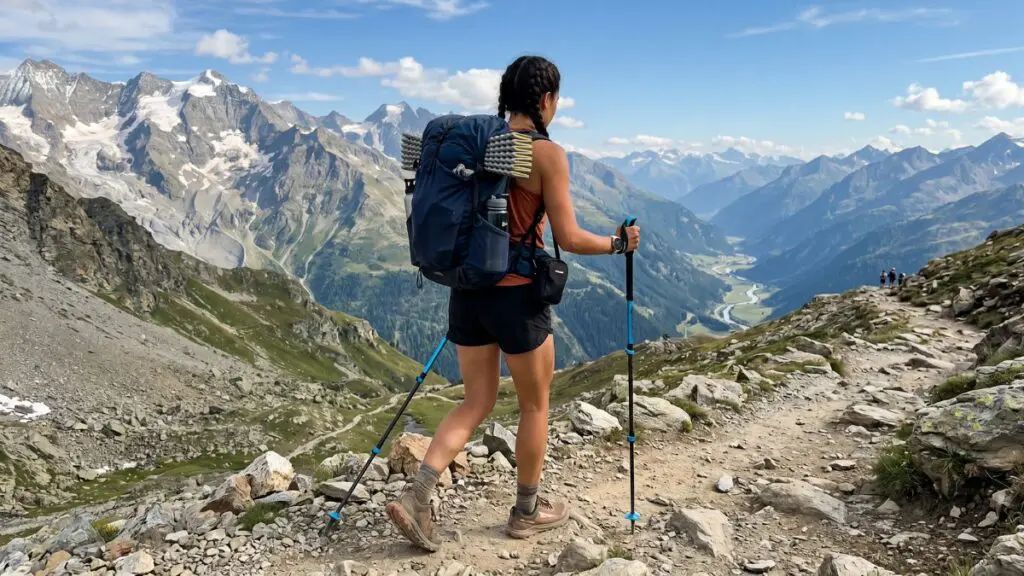
Trekking poles are one of the most underestimated pieces of gear in a backpacker’s kit. Dismissed by newcomers, yet relied on obsessively by anyone who’s carried a loaded pack over serious terrain. The right pair saves your knees on long descents, transfers energy on climbs, keeps you upright on river crossings, and doubles as shelter support if you’re running a trekking-pole tarp.
This roundup cuts through the noise on seven poles worth considering, with a focus on the durability, comfort, and real-world utility that matter most for weekend-warrior trips.
My Picks
Best Overall: Black Diamond Pursuit
Best Value: REI Co-op Traverse
Best Budget: Black Diamond Trail Back
Best Four-Season / Packable: MSR DynaLock Ascent Carbon
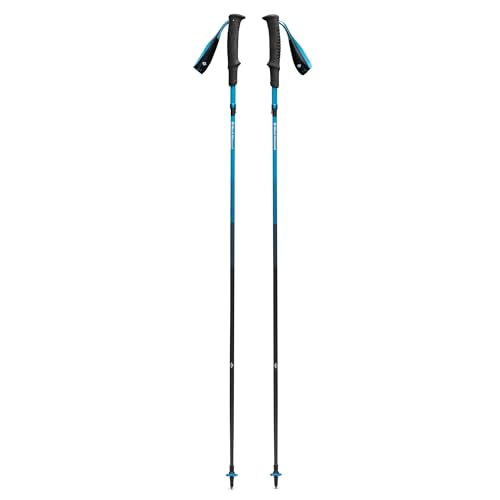
Best Ultralight: Black Diamond Distance Carbon Z
How to Choose Trekking Poles for Backpacking
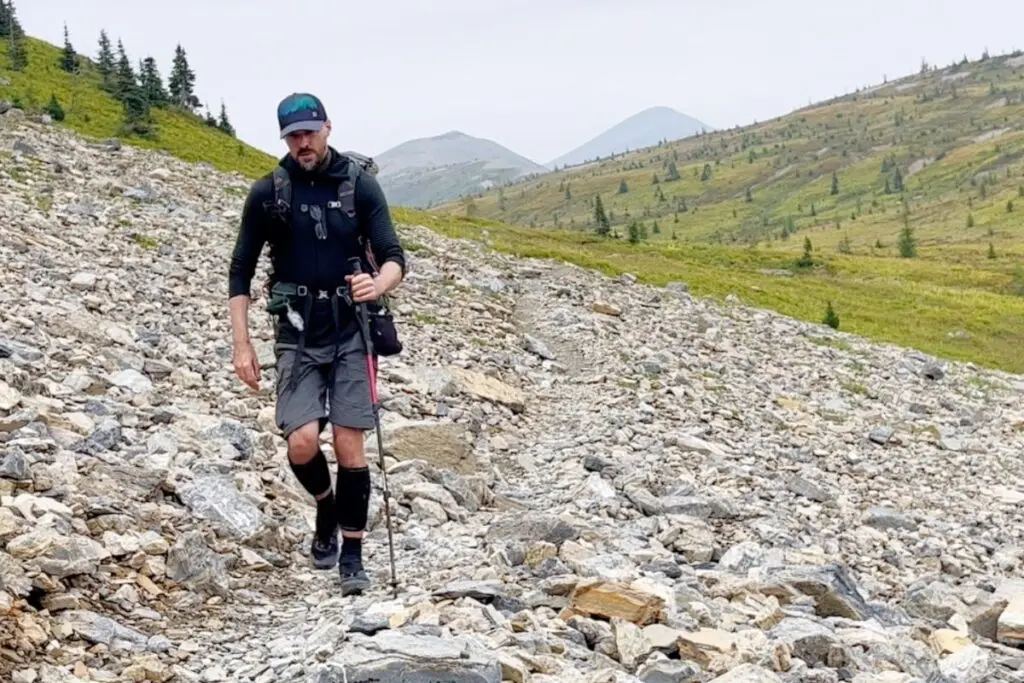
The biggest fork in the road is shaft material: aluminum or carbon. Aluminum bends under stress and can often be field-repaired or splinted; carbon is lighter but snaps under torsional impact with no warning and no fix. For weekend trips on maintained Sierra trails, either is fine. For off-trail scrambling, talus, or any situation where you’re using your poles as a brace, aluminum’s forgiveness is worth the weight penalty.
The second decision is folding versus telescoping. Telescoping poles are heavier but adjustable to any length — you can dial in the angle for a long climb, shorten up for a steep descent, and hand them to a partner without issue. Folding poles pack down dramatically smaller (some to 13–15 inches), which matters if you’re stowing them on your pack or traveling to a trailhead. The tradeoff is that most folding poles are fixed-length or offer only limited adjustability, which makes shelter pitching harder and sharing impossible.
Grip material shapes how your hands feel after 15 miles. Cork conforms to your palm over time and handles moisture well — sweaty hands, light rain, stream crossings. EVA foam is softer out of the box, lighter, and cheaper, but retains heat and breaks down faster. Rubber is uncomfortable under sustained use and belongs on walking sticks, not backpacking poles.
Lock mechanisms determine how much you trust your poles mid-trail. External lever locks (FlickLock, Speed Lock, similar) are the standard for a reason: visible, auditable, adjustable with gloves on, and easy to repair if a lever breaks. Twist locks are lighter but fail silently under load — not a camp-friendly failure mode when you’re two days out. For any pole you’ll stress regularly, stick with an external lever lock.
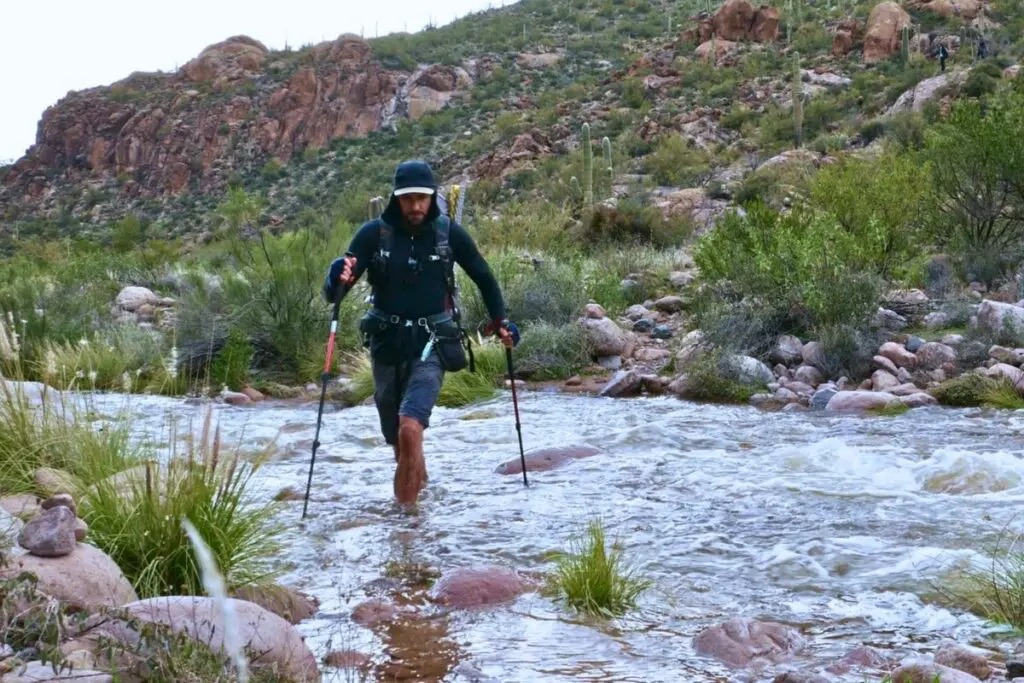
Finally, collapsed length matters more than most buyers realize before their first trip. Telescoping poles average 24–26 inches collapsed and will not fit inside a standard backpack. If you want to stow your poles when scrambling or crossing snowfields without poles, you need a folding design that fits your pack’s dedicated pole loops or side pocket. If you’re still sorting out your pack setup, our best backpacks for weekend backpacking post covers which packs have proper pole attachment systems.
| POLES | Weight (oz) | Material | Max Length (cm) | Collapsed (in) |
|---|---|---|---|---|
| Black Diamond Pursuit | 17.6 | Aluminum | 140 | 24.4 |
| REI Co-op Traverse | 19.5 | Aluminum | 140 | 26 |
| Black Diamond Trail Back | 18.8 | Aluminum | 140 | 24 |
| MSR DynaLock Ascent Carbon | 17 | Carbon | 140 | 14.25 |
| Black Diamond Distance Carbon Z | 10 | Carbon | 130 | 16 |
| Leki Makalu Cork Lite | 17.9 | Aluminum | 135 | 26.4 |
| Trekology Trek-Z 2.0 | 19.8 | Aluminum | 135 | 15 |
Best Overall Backpacking Trekking Pole: Black Diamond Pursuit
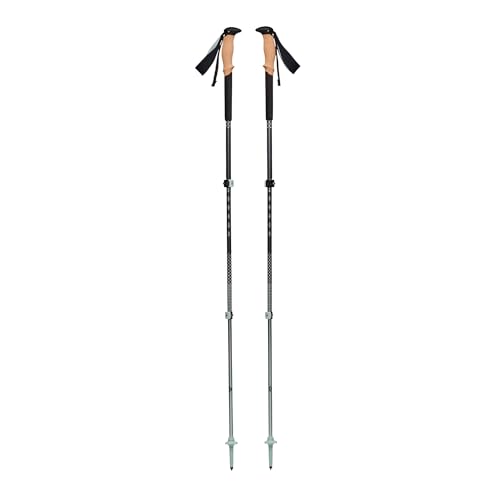
The Black Diamond Pursuit earns its spot as the best all-around option because it gets the things that matter most exactly right. Cork grips that genuinely absorb sweat and feel better the longer you hold them. FlickLock+ levers that click firmly at every length increment and haven’t produced a single credible report of mid-trail collapse. A built-in hex tool inside the shaft for field adjustment — a real thing you will use if you’re regularly tweaking tension. This is a pole built for people who go out a lot and expect their gear to last.
The weak points are real: at 17.6 oz (S/M) per pair by manufacturer spec — and scale-weighed closer to 19 oz in independent testing — the Pursuit is a mid-weight aluminum pole, not a lightweight one. Collapsed to 24.4 inches (S/M), it won’t stash inside your pack; you’re clipping it to the outside when terrain demands both hands. The three-section telescoping design means there’s no compact folded option.
What you’re paying for with the Pursuit is a pole that doesn’t quit. The 7075-series aluminum shafts are stiffer and more dent-resistant than standard alloy. The FlickLock+ is the premium version of the mechanism — aluminum lever rather than plastic, with better long-term retention. Reviewer consensus across independent testing consistently rates it among the most durable and best-feeling aluminum poles available at any price. If you’re buying one pair of poles and keeping them for years of Sierra trips, this is the pick.
The cork grip with Bloom foam extensions is worth noting specifically. The extensions run further down the shaft than most competitors, which means you can choke up on a steep climb without transferring to a bare aluminum shaft. It’s a small thing until you’re 2,000 feet into an ascent and you notice you still have grip material underhand.
Not sure what gear you actually need?
Grab the free backpacking checklist I built after 120+ trips. It covers every category so you don’t overbuy or forget something important.
Get the Checklist →Free. No spam. Unsubscribe anytime.
Best Value Backpacking Trekking Poles: REI Co-op Traverse
The REI Co-op Traverse is an REI-exclusive product, which means no Amazon listing — but it’s the most durable cork-grip aluminum pole you can get for under $120, and that gap against comparable poles from Black Diamond or Leki is meaningful.
At 19.5 oz per pair (manufacturer spec, with independent testing landing slightly heavier), the Traverse is one of the heavier poles in this lineup. That’s not a surprise: it’s a no-shortcuts aluminum build with thick-walled shafts, extended cork grips with a built-in palm rest, and metal lever locks with a micro-adjust tightening knob that lets you dial in tension without tools. The Traverse is built for someone who wants bomber durability and real cork comfort and isn’t willing to spend $150–170 to get it.
The tradeoffs are blunt. The swing weight is noticeable over a long day. Collapsed at 25–26 inches, it’s the longest-folding pole here. Snow baskets are sold separately. And one reviewer documented receiving a defective pair with failing locks — a single data point, not a pattern, and REI’s warranty handled it — but worth noting in context. Cork grips can chip if you strike them hard on sharp rock, which occasionally happens when you’re moving fast on talus.
None of that changes the value calculus. At the price, the Traverse competes directly with poles that use lesser grip materials and aluminum alloy with less favorable heat treatment. If you want a proper cork grip without paying premium prices, this is the right call. The extended grip with palm rest is better than what most poles at this price offer, and the adjustment range — 90–120 cm on the shorter size, up to 140 cm on the longer — covers virtually every buyer.

Aluminum telescoping trekking poles with cork grips and tool-free lever locks. A durable, value-priced workhorse for hiking and backpacking.
Best Budget Backpacking Trekking Poles: Black Diamond Trail Back
The Black Diamond Trail Back is the answer to a specific question: what do you buy when you want the quality baseline of a real brand at the lowest possible price? At roughly $100, this is Black Diamond’s entry-level aluminum pole, and it shows — but not in the places that actually break.
The shafts are the same 7075 aluminum as the Pursuit. The FlickLock mechanism works exactly as it does on more expensive BD poles; the only difference is that the Trail Back uses a plastic lever instead of aluminum, which is lighter but theoretically less durable over thousands of adjustment cycles. The tips are replaceable carbide tech tips, compatible with BD’s 4-season flex tips and standard trekking baskets. You’re not getting budget hardware throughout — you’re getting one downgrade in the lock lever and a switch from cork to EVA foam grips.
Those grips are the Trail Back’s main real-world limitation. EVA foam doesn’t wick moisture the way cork does, which means hot weather and sweaty palms make them feel slick over a long day. They also compress and wear more quickly than cork over extended use. The grip extension is short — you have less choke-up room on steep pitches than the Pursuit or Traverse provide.
The other limitation is form factor: at 24 inches collapsed and 18.8 oz per pair (again, scale-weighed slightly heavier than BD’s listed spec), it’s comparable in bulk to the Pursuit. No packability advantage, just a lower price point.
For a beginner buying their first pair of poles, for shared group gear, or for anyone who needs something durable and trustworthy without the cork-grip premium: the Trail Back is the correct call. The combination of Black Diamond’s build standards and FlickLock at this price tier is hard to beat.

Best Four-Season / Packable Backpacking Trekking Poles: MSR DynaLock Ascent Carbon
The MSR DynaLock Ascent Carbon is the only folding carbon pole in this roundup that gives you genuine length adjustability — 20 cm of telescoping range in the upper section, enough to dial in your fit properly and, critically, enough to pitch a trekking-pole shelter. Most folding poles are fixed-length or offer token adjustment; the DynaLock closes that gap without forcing you into a fixed size. That combination — packable, carbon-light, four-season ready, shelter-compatible — is rare.
The folded length is the headline: 14.25 inches (S size) to 17.5 inches (L). That’s under half the collapsed length of any telescoping pole here. It fits inside a standard backpack rather than clipped to the outside, which matters when you’re scrambling, crossing snow, or moving through dense brush. If you’ve ever had to stop and unclip your poles before a tricky section, the DynaLock’s packed size is a genuine quality-of-life difference.
The shaft is Kevlar-reinforced carbon rather than standard carbon fiber, which changes the failure mode significantly. Standard carbon snaps; Kevlar-reinforced carbon is designed to resist that catastrophic failure. The exterior surfaces scratch and scuff quickly, which reviewers mention consistently, but the structural integrity under load is substantially better than conventional carbon. Both summer and winter baskets are included — the only pole in this roundup that ships four-season-ready out of the box.
The legitimate weaknesses: at 17 oz per pair (scale-weighed as low as 15.7 oz in one source, but clustering around 16–17 oz in most testing), it’s heavier than you’d expect from a carbon folding pole. The premium pricing reflects the DynaLock mechanism and the Kevlar reinforcement, not light weight. The S and L sizes don’t overlap (S goes to 120 cm, L starts at 120 cm), which can complicate sizing for taller buyers who land right at the boundary. But if you want one pole for three-season backpacking, winter travel, and shelter pitching, and you need it to pack small, this is the one.


Best Ultralight Backpacking Trekking Poles: Black Diamond Distance Carbon Z
At roughly 10 oz per pair, the Black Diamond Distance Carbon Z is in a different weight class than everything else in this roundup. The swing weight — that cumulative fatigue from lifting a heavy pole ten thousand times a day — drops to near-nothing. For fastpacking, high-mileage weekends, or any application where pole weight translates directly into how you feel at mile 15, the Distance Carbon Z has a real performance argument.
The poles fold to 13–16 inches depending on size and deploy via BD’s Speed Cone system: unfold, pull taut, and the pin locks seat automatically. Setup takes about 5 seconds. The 100% carbon fiber construction keeps weight down, and the grip-to-shaft transition is clean enough that choke-up on steep pitches works without thinking about it.
The fixed-length design is the defining limitation. You pick your size at purchase — unisex options from 110 to 130 cm — and that’s what you have. No terrain adjustment, no sharing, and no pitching trekking-pole shelters. The fixed-length constraint also means that if your fit sits between two sizes, you’re choosing the worse of two imperfect options. A women’s SKU (100–120 cm) is separately available for buyers who need shorter sizing.
Carbon fiber’s impact-fragility is real here. Unlike the DynaLock Ascent Carbon’s Kevlar reinforcement, the Distance Carbon Z uses standard carbon — lighter, but less forgiving of off-axis strikes and torsional stress. Isolated reports of shaft cracking at the pin holes exist, though they haven’t risen to a consensus reliability pattern. For on-trail use on established routes, this isn’t a practical concern. For aggressive off-trail travel, rock scrambling, and anything involving significant lateral stress, the aluminum options handle punishment better.
This is the pole for fastpackers and high-mileage weekenders who already know their fit and stick to established routes. If you know your size, run established trails, and want the lightest packable poles on the market, the Distance Carbon Z is the right pick. If any of those conditions don’t apply, you’ll give up too much for the weight savings.
Leki Makalu Cork Lite
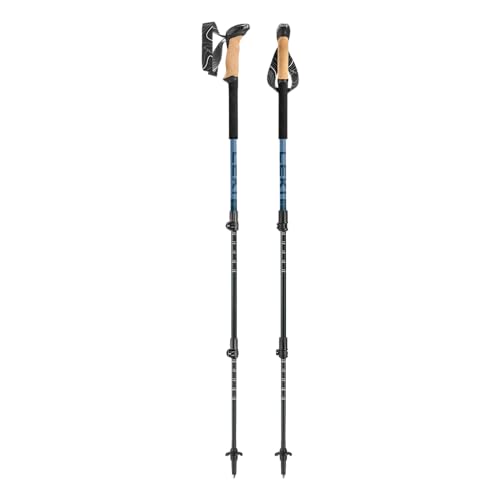
The Leki Makalu Cork Lite makes a case on two things most poles don’t optimize for simultaneously: adjustment range and warranty. The adjustment span covers most buyers from 100 to 135 cm in one size — broad enough for most adult heights on both ends, and long enough to pitch the majority of trekking-pole shelters without extensions. Leki backs the aluminum shaft against breakage for life, which is a substantive commitment on a product used over rough terrain.
The Speed Lock+ external lever system is Leki’s standard mechanism and a reliable one: tool-free tension dial per lock, audible click at each position, field-adjustable in seconds. The Aergon Air cork grip uses an 8-degree positive angle that some buyers find more comfortable on long climbs; the foam extension below the grip covers choke-up positions well. Independent testing places the overall feel between “good cork” and “premium cork” — firmer than some prefer, but noticeably better than EVA foam over a full day.
At 17.9 oz per pair and 26.4 inches collapsed, the Makalu Cork Lite is among the heavier, longer-folding poles in this category. That’s the fundamental tradeoff with maximum adjustability in a telescoping design: you get range, and you give up packability. The wrist straps are the most consistent reviewer complaint — thin and unpadded, noticeable on long days.
The Makalu Cork Lite slots in as a durable, versatile aluminum pole with a compelling warranty for buyers who want maximum fit flexibility and aren’t counting ounces. Leki also sells a women’s-specific counterpart, the Cressida Cork Lite, with shorter sizing and a slimmer grip — worth knowing if the Makalu’s lower adjustment limit is too long. For backpackers who share poles with a partner, want to pitch a shelter, or simply want one pair that fits multiple use cases without compromise, the Leki’s range makes it a smart buy.
Trekology Trek-Z 2.0
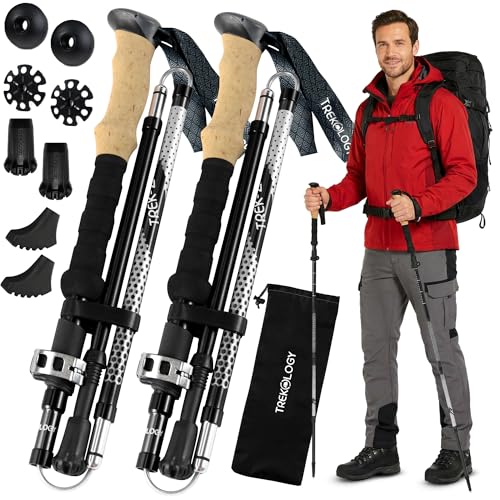
The Trekology Trek-Z 2.0 has no business existing, and yet here it is: a folding aluminum pole that packs to 15 inches, ships with carbide tips, mud baskets, snow baskets, rubber tips, and a storage pouch, and costs roughly $45. For a buyer who wants the packability of a folding design without paying carbon prices, it fills a gap nothing else in this roundup touches.
The mechanical design combines an external metal flip-lock with an internal cord snap system — functional, if slightly fiddlier to set up than a pure telescoping pole. The 7 cm of lever adjustment on top of the fold covers basic sizing, though the range is narrower than a true telescoping design. Two size options (S/M covering 100–120 cm, L/XL covering 115–135 cm) handle most buyers.
The honest accounting: at 19.8 oz per pair in independent testing, this is the heaviest pole in the roundup — noticeably heavier than either of the carbon folding options and comparable to the bulkiest telescoping aluminum poles. EVA foam grips run warm and feel budget-grade over a long day. Some testers note that the aluminum is stiff enough that it may snap rather than bend under serious lateral stress, which is different from and arguably worse than a slow-bend failure. Isolated reports of internal cord and lock issues exist, though not at a frequency suggesting a systemic problem.
What the Trek-Z 2.0 does well is the format at the price. If you’re a beginner who wants to try trekking poles without committing to a serious investment, a traveler who needs poles that fit in a carry-on, or a casual hiker doing occasional overnight trips, this is a reasonable starting point. It’s also worth considering as a backup or loaner pair when the cost of losing or damaging a primary set matters. If the packability argument is driving your decision, our best bear canisters for backpacking post is a useful companion read — canister size directly affects how much room you have left for poles and other pack-attached gear when everything needs to fit.
The Complete Kit I Use on Every Trip
This post covers one piece of the puzzle. If you want to see everything I actually carry, I keep my full kit documented on one page.
After 100+ trips across the Sierra, the Pacific Coast, and Desert Southwest, this is the setup I’ve dialed in for three-season weekend trips. Same gear, trip after trip. It’s what I’d recommend to anyone building out a dependable kit without overpacking.
The Bottom Line
For most weekend backpackers, the Black Diamond Pursuit is the right pole. It’s not the lightest, not the most packable, and not the cheapest — it’s the one that holds up over years of use without making you second-guess it mid-trail. The cork grips, the FlickLock+, and the field-maintainability all add up to a pole you stop thinking about.
The REI Co-op Traverse earns its place as the best value: you get real cork comfort and the same durable aluminum construction at a meaningfully lower price, with the only real cost being extra swing weight and REI exclusivity.
If folding packability is what drives your decision — because you’re flying to a trailhead, running a trekking-pole shelter, or need poles that stash inside your pack — the MSR DynaLock Ascent Carbon is the one to buy. The Distance Carbon Z is lighter but surrenders adjustability; the DynaLock splits the difference in a way nothing else in this category does.

New to poles entirely? Start with the Trail Back. Proven brand, proven mechanism, proven durability, and low enough that a rough first season won’t sting.
Related Reading
Amazon and the Amazon logo are trademarks of Amazon.com, Inc. or its affiliates.