Beginner’s Guide to Backpacking: Everything You Need to Get Started
Updated: July, 2025 | Reviewed by: the Step Massive team
Disclosure: As an Amazon Associate, we earn from qualifying purchases, at no extra cost to you.
This guide covers every decision you’ll make for your first trip — click below to jump to a section:
Table of Contents
New to Backpacking? Start Here.
Most beginners start with more questions than answers:
What gear do I actually need? How far should I hike? What if I forget something important?
That uncertainty is normal—but it doesn’t have to stop you. This guide is designed to replace confusion with clarity, so you can focus on what matters: planning a safe, comfortable, and rewarding first trip.
If you’ve ever stood in an REI aisle or scrolled through trail reviews and felt overwhelmed, you’re not alone. Many beginners worry they’ll choose the wrong gear, hike too far, or make a critical mistake. The truth? You don’t need perfect knowledge to get started. You need a clear system.
That’s what StepMassive is here for. We specialize in helping comfort-focused backpackers build real-world confidence. Whether your goal is a peaceful overnight or your first 3-day trip, this guide will walk you through every major step—route, gear, food, safety, and more.
You’ll learn:
- How to pick a trail that fits your body, gear, and goals
- What to pack (and what’s a waste of weight)
- How to stay safe, sleep well, and feel prepared—not panicked
We’ll show you how to use the free Route Planning Toolkit to choose the right trail, and how the 3-Day Trip Planner Kit turns that trail into a complete, beginner-ready plan.
By the end, you’ll not only know what to do—you’ll feel ready to do it.
Let’s get started. Your first trip is more doable than it feels right now.
What Is Backpacking? A Beginner’s Guide to Starting Your First Trip
Backpacking means carrying everything you need—shelter, food, clothing, and essentials—on your back, and hiking to a campsite instead of driving to one. Unlike car camping, where your gear lives in your trunk, or day hiking, where you return home before dark, backpacking involves walking into the wild and spending the night there.
At its core, it’s a simple idea: walk, camp, repeat. But for beginners, it can feel like a puzzle with high stakes—especially when you’re unsure where to begin. What gear do I need? How far can I go? What if I run into bad weather—or worse, forget something important?
Let’s clear something up early: backpacking doesn’t have to be hardcore. You don’t need to trek 15 miles a day or sleep in a storm to earn the title. Some of the best beginner trips are short, scenic, and designed around comfort, not conquest.
There are two beginner-friendly ways to start:
- Overnight Trips (1 Night): Hike in a few miles, camp, and hike out the next morning. This is the easiest way to test your setup and confidence.
- 3-Day Trips (2 Nights): Our favorite starting format. With smart planning, you get a full day to hike, a flex day to explore or rest, and a final short hike out—plenty of time to settle in and find your rhythm.
So why do it? Because backpacking builds more than skill. It builds self-trust. You learn how to carry what matters, pack smart, solve problems, and stay calm when plans shift. You’ll realize how little you actually need to feel comfortable—and how freeing that can be.
There’s also a deeper payoff: a quiet kind of confidence that comes from moving through nature on your own terms. Without constant notifications or modern noise, you’re left with space—to think, to breathe, to notice where you are and how capable you’ve become.
Even if it feels intimidating now, you’re more ready than you realize. You don’t have to guess or wing it. This guide breaks down every major decision—gear, route, food, safety—into simple, doable steps so you can move forward with clarity.
🔗 What I Wish I Knew Before My First Backpacking Trip
How to Choose Your First Backpacking Trip
Choosing your first backpacking route doesn’t need to be overwhelming. But it does need to be thoughtful. The right trail will match your fitness, gear, and comfort level. It’ll give you enough challenge to feel rewarding—without tipping into frustration or burnout.
A strong first trip usually falls in this range:
- 10 to 20 total miles over 2–3 days
- Less than 1,500 feet of elevation gain per day
- Loop or out-and-back trail format
- 4+ star ratings and recent reviews
Trail apps like AllTrails and Gaia GPS are excellent starting points. Filter by mileage, elevation, and trail type, then read reviews carefully. You want reports from the past few months that confirm the trail is well-marked, water is available, and campsites are clearly established. Be cautious of vague or outdated info—especially if you’re hiking outside peak season.

Beyond apps, don’t overlook state and national park websites. Many list recommended beginner loops, include printable maps, and link directly to permit systems like Recreation.gov. If you’re not sure where to start, try a Google search like:
“best beginner backpacking trails near [your city or state]”
or
“easy overnight hikes in [national/state park name]”
You don’t need to spend weeks researching. A few focused searches and filters will surface plenty of viable options.
As you compare trails, watch out for common red flags:
- Long climbs early in the route (especially with a full pack)
- No nearby water sources, or dry camps
- Campsites that require hard-to-get reservations
- Poor trail reviews or missing maintenance updates
Permits are another layer to consider. Some trails require you to reserve campsites in advance or carry a printed permit for your route. Others allow dispersed camping, where you can set up outside of designated sites—often without a formal permit. The easiest first trip usually avoids quota systems or long booking windows. If your chosen trail does need a permit, most parks handle this online or via walk-in kiosks.
You don’t need to memorize permit types or worry about every detail now. The important thing is to confirm whether one is required before you commit to a trail. The Route Planning Toolkit walks you through this step—filtering routes, comparing reviews, and spotting red flags fast.
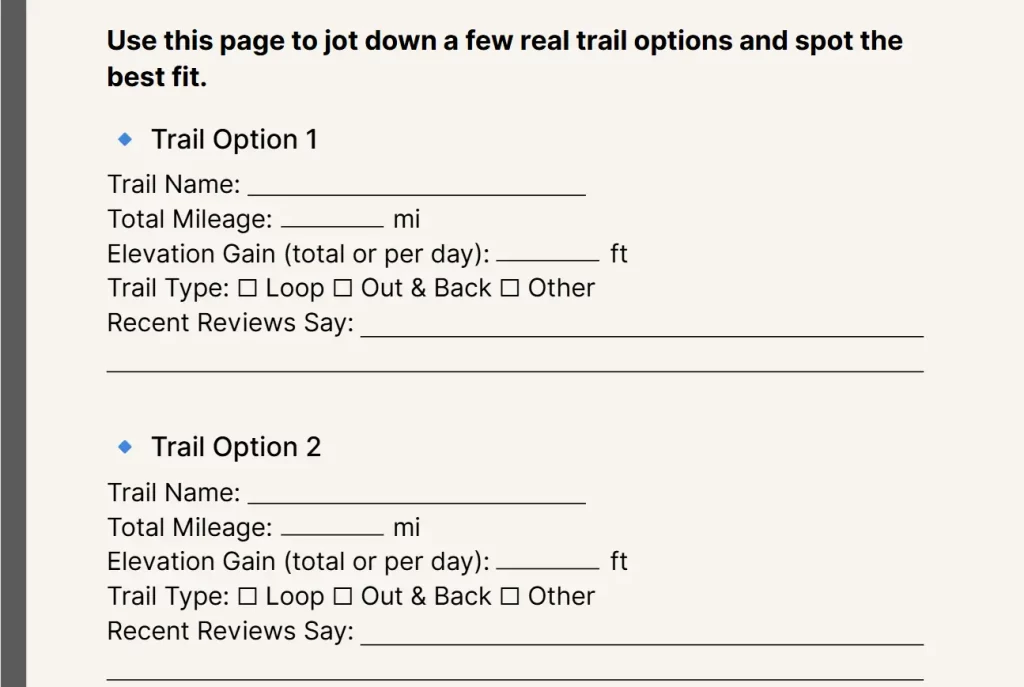
Example from the Route Planning Toolkit
Finally, once you’ve found a trail that feels like a fit, apply the 50/30/20 rule:
Hike about half your total mileage on Day 1, 30% on Day 2, and the final 20% on Day 3. This pacing leaves space for your body to adjust, and your mind to enjoy the experience.
🔗 Best Backpacking Trails Near Me
Backpacking Gear for Beginners: Only What You Really Need
If you’ve ever googled “backpacking gear list” and walked away more overwhelmed than informed, you’re not alone. For beginners, gear is often the biggest source of stress. It’s hard to know what actually matters, what you can skip, and what’s just marketing.
You don’t need the lightest, most expensive gear to start. You need a kit that fits your trip, your comfort level, and your current budget.
This section breaks gear into clear, functional categories—so you can pack with purpose and leave the guesswork behind.
The Big Three: Shelter, Sleep, and Pack
Your shelter, sleep system, and pack are the core of your gear. They affect comfort, weight, and rest more than anything else.
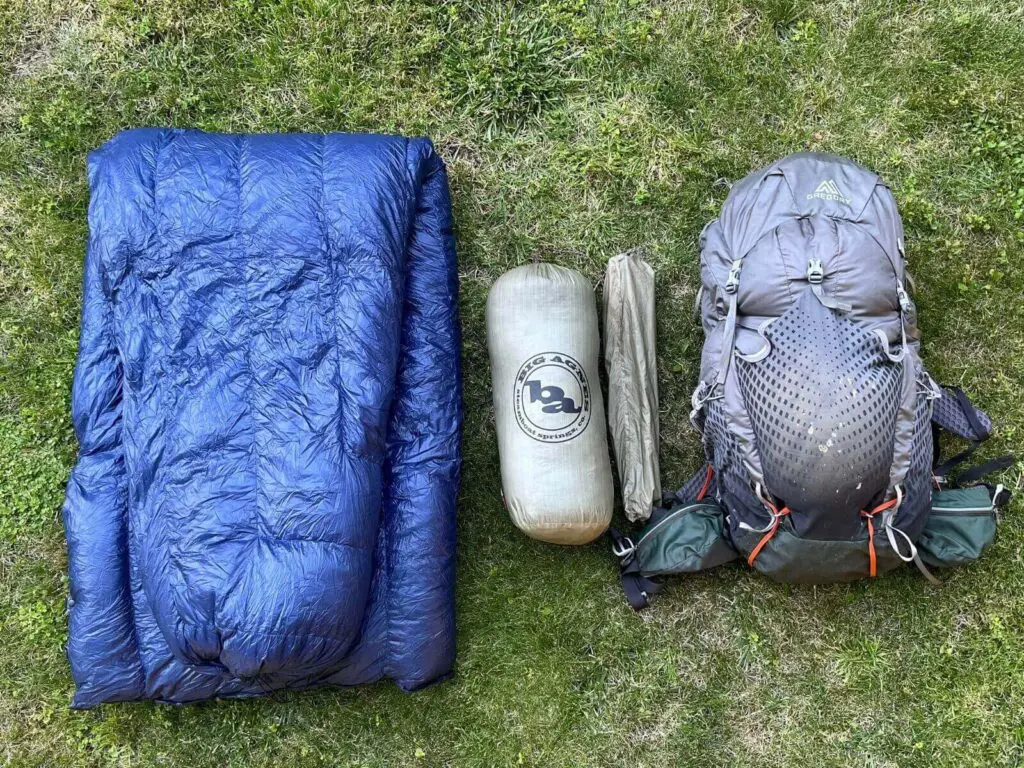
The Big 3: Backpack, Shelter, Sleep System
Backpack:
Look for a 45–60 liter internal frame pack. That gives you enough room for a 3-day trip without encouraging overload. Comfort matters more than features. Beginner-friendly options like the Osprey Atmos AG 50 [Amazon] offer good support and adjustability. Load your pack before your trip and do a practice walk—it makes a big difference.
Shelter:
Your shelter protects you from wind, rain, bugs, and cold—and it’s one of the biggest comfort factors on any trip. Most beginners do well with a freestanding 2-person tent: it’s easier to set up, offers more room, and keeps you dry even in mild storms. The Kelty Late Start 2P tent [Amazon option] is a solid beginner-friendly choice — reliable, affordable, and simple.
Want a premium upgrade? The Big Agnes Copper Spur HV UL2 [Amazon option] is lighter, roomier, and trusted by experienced hikers. Don’t forget a groundsheet or footprint to protect the tent floor.
Sleep System:
You’ll need a sleeping pad (R-value of 3+), a 20–30°F sleeping bag or quilt, and a weatherproof tent (covered above). For sleeping bags, the Kelty Cosmic 20 [Amazon option] is a beginner-trusted choice that balances warmth, packability, and price. For pads, the Therm-a-Rest Trail Scout [Amazon option] offers a reliable blend of cost, comfort, and insulation.
Footwear: Fit, Function, and Trail Readiness:
Trail runners like the Altra Lone Peak or Salomon Sense Ride [Amazon options] are popular for first-timers. Just make sure they’re broken in. Combine them with quality wool or synthetic socks—never cotton.
Think in Functional Categories
After the Big Three, build your kit by category. Every item should solve a real need.

Clothing: Layer for Comfort and Weather
Your clothing system should adapt to changing conditions without overpacking. Think in layers that wick sweat, trap heat, and block wind or rain. You don’t need a new outfit each day. You do need:
- Moisture-wicking base layers
- Insulating layer (fleece or puffy)
- Waterproof outer layer
- 2–3 pairs of socks and underwear
- Sun protection and a warm hat
Kitchen + Food Systems
Cooking on trail doesn’t need to be complicated. A basic stove setup and a few familiar foods will keep your energy up without weighing you down.
- Compact stove (MSR PocketRocket 2 or BRS-3000T on Amazon)
- Fuel, lighter, pot, and utensil
- One mug or insulated bottle
- Easy food: dehydrated meals, oats, tortillas, snacks
Water: Carrying, Filtering, and Planning
Water is one of the heaviest essentials, so it pays to plan. Know how much you need, where to refill, and how to treat it safely. Plan for 2–4 liters per day. Bring:
- A bladder or bottles
- Water filter (Sawyer Squeeze or Katadyn BeFree on Amazon)
- Knowledge of refill spots along your route
Safety + Navigation Essentials
You don’t need survivalist gear—just a smart tools that keep you oriented, visible, and ready to handle small problems. Even short trips deserve basic backups:
- Printed map and compass (Suunto clip-on compass on Amazon)
- Headlamp (NiteCore NU25 on Amazon)
- Small first aid kit, whistle, and multi-tool (Leatherman Micra on Amazon)
Optional Comfort Items
Many beginners also wonder about camp comfort items—things like a pillow, camp shoes, or a lightweight chair. These aren’t required, but small comforts can go a long way on your first trip. An inflatable backpacking pillow [Amazon option] takes up less space than bundled clothes and improves sleep. Ultralight camp shoes (like Crocs or slides) give your feet a break after hiking. Just make sure every comfort item earns its place—and won’t leave your pack overloaded.
Gear Mistakes Most Beginners Make
The most common issue? Overpacking. Beginners often bring duplicates or luxury extras they never use. Watch for these traps:
- “Just in case” clothing
- Bulky pillows or heavy cookware
- Redundant backup gear
Every item adds weight. If you wouldn’t carry it for an hour on a day hike, it probably doesn’t belong on your back for three days.
We break down common regret items in our guides on Gear That’s Not Worth Bringing and Packing Mistakes Beginners Often Make.
What If You Don’t Own Everything Yet?
That’s normal. Many first-timers borrow gear, use budget options, or mix and match from car camping setups. If you’re cost-conscious, check out Cheap Backpacking Gear That Actually Works.
And if you want a plug-and-play checklist with exactly what a 3-day trip requires (and nothing it doesn’t), the Trip Planner Kit includes a fillable gear sheet designed for comfort-focused beginners.
Remember: your gear doesn’t have to be perfect. It just has to work for this trip.
Next up: How to pack it all so it actually carries well.
How to Pack Your Backpack (Without Overpacking or Guessing)
Packing your backpack isn’t just about fitting things in—it’s about creating balance, efficiency, and comfort on the trail. When your pack is dialed in, hiking feels smoother. When it’s not, every uphill stretch reminds you what you didn’t need to bring.
Why Pack Layout Matters More Than You Think
Many beginners overpack because they’re unsure of what the trip will demand. That leads to redundant layers, bulky backups, and “just in case” items that never get used. A few extra pounds might not sound like much at home, but after a few miles, they drag on your energy and motivation.
Start with the essentials. Your sleep system and shelter go at the bottom of your pack. These are the bulkiest but least accessed items during the day. In the center zone, near your back, place heavier gear—like your food bag, stove, and tent. That keeps the weight close to your spine and helps your hips carry the load. Toward the top and in external pockets, store frequently used items: snacks, water filter, headlamp, map, and rain gear.
Use the Pack Zones System

A smart layout follows the Pack Zones system:
- Bottom zone: Sleeping bag or quilt, pillow, camp clothes
- Middle zone (center of gravity): Food bag, stove, tent, bear canister (if required)
- Top zone: Rain jacket, warm layer, hygiene kit, headlamp, meals for the day
- Outside pockets: Map, water bottles, sunscreen, emergency whistle
Compression straps should be snug but not over-tightened. You want your pack to stay stable as you hike, without sharp pressure points or gear shifting.
Test Your Pack Before the Trip
One of the best tests you can run before your trip is a simple one-hour walk with your fully packed bag. Use a trail, park path, or even your neighborhood. Pay attention to what feels awkward or heavy. If something seems unnecessary after one hour, it’ll feel even worse after five miles.

You don’t need every comfort item, but a few smart upgrades can make a big difference:
- Stuff sacks and dry bags [Amazon option] keep your gear organized and protected
- Inflatable backpacking pillows [Amazon link] improve sleep without bulk
- Ultralight camp shoes like Crocs or foam slides let your feet breathe after hiking
If you want a structured way to plan your pack layout and ensure nothing essential gets missed, the Trip Planner Kit includes a printable loadout worksheet. It’s designed to help you think in systems, not guesses.
🔗 Backpacking Base Weight Guide
Food and Water Planning for a 3-Day Backpacking Trip
Planning what to eat and drink on your first backpacking trip can feel oddly high-stakes. Will you bring enough? Will it be too heavy? Will you actually want to eat it after a long day? These are valid questions—but the answers don’t have to be complicated.
How Much Food Do You Really Need?
Let’s start with food. For a 3-day backpacking trip, most hikers need around 2,800 to 3,200 calories per day. That number can vary significantly depending on your body size, pack weight, elevation gain, weather, and daily mileage. Some hikers may need closer to 3,500—especially in cold or high-exertion conditions. Think of 2,800 to 3,200 as a safe planning range for most beginner-friendly trips.
When in doubt, bring slightly more than you think you’ll need, and include a small buffer of calorie-dense snacks for flexibility. Bring food you already know you like, that holds up well without refrigeration, and that doesn’t take much effort to prepare.
There’s no right or wrong setup—just tradeoffs. Some backpackers go stoveless, packing shelf-stable meals like tortillas, tuna, couscous, or nut butter. Others prefer a warm meal each night, even if it adds a bit of weight. A lightweight stove setup (like the MSR PocketRocket 2 or the BRS-3000T) paired with one pot and a spork covers most needs [Amazon options]. The trick is to keep it minimal.
Sample 3-Day Backpacking Menu
Here’s a sample framework for meals:

- Breakfast: Instant oats or English muffins, dried fruit, protein bars, or powdered drink mixes (e.g., protein shakes or coffee)
- Lunch: Wraps, trail mix, hard cheese, or jerky
- Dinner: Dehydrated meals, ramen, or stoveless grain bowls with olive oil
- Snacks: Bring 2–3 per day—bars, gummies, nuts, or dried fruit
Want to see exactly what this looks like packed for a real trip?
I walk through my 4-day food kit in this short video — it’s casual, but gives a clear visual of the meals I actually bring.
Also pack an emergency food buffer—enough calories for one extra day in case your trip takes longer than expected.
Water: How to Carry, Filter, and Plan Refills
Now for water. Always assume you’ll need to treat water from natural sources, even if it looks clean. Two of the most beginner-friendly filtration systems are:
- Sawyer Squeeze: highly portable, long-lasting, and affordable [on Amazon]
- Katadyn BeFree: faster flow and easier to clean—great for solo hikers [on Amazon]
Check your trail map and recent reports to confirm water availability along your route. On most trails, you’ll want to carry 2 to 3 liters between sources, depending on distance, heat, and effort level. If you’re camping away from water, bring a collapsible bladder to haul extra to camp.
Don’t forget electrolytes. A few packets of sports drink mix or hydration tablets can help replace salt and boost energy—especially if you’re hiking in warm conditions or sweating heavily.
Planning your food and water ahead of time isn’t just about fuel. It reduces stress. It prevents overpacking. And it makes each day on trail feel more predictable and manageable.
If you’d like a printable meal planner and hydration tracker, the Trip Planner Kit includes beginner-friendly templates to help you break it all down by day, calorie, and refill point.
Backpacking Safety and Navigation for Beginners (Don’t Skip These Basics)
Staying safe on a backpacking trip starts with a few simple habits. You don’t need to be a wilderness survival expert to stay safe on the trail. But you do need a few basic habits and tools that help you stay oriented, respond to minor issues, and give someone peace of mind back home.
Start with navigation. Even if you’re using an app like AllTrails or Gaia GPS, always carry a printed map and know how to use it. Digital tools are helpful, but batteries die, and cell service can be spotty or nonexistent. Bring a basic compass—something simple like the Suunto clip-on [available on Amazon]—and learn how to read your route. You don’t need to master triangulation. You just need to recognize key landmarks and understand where you are on the trail.
A headlamp is another non-negotiable. Choose one that’s bright, lightweight, and easy to operate in the dark—like the NiteCore NU25, which is USB-rechargeable [Amazon link]. If you choose a battery-operated headlamp, always bring spare batteries.
Your first aid kit doesn’t need to be elaborate. Bandages, tape, antiseptic wipes, and basic medications (pain relief, antihistamines) go a long way. Round it out with a small knife or multi-tool, a whistle, and waterproof matches.
At minimum, every beginner should carry:
- Paper map + compass
- GPS or phone with offline maps
- Headlamp with spare batteries
- Basic first aid and repair supplies
- Whistle and lighter/matches
- Water filter and extra snacks
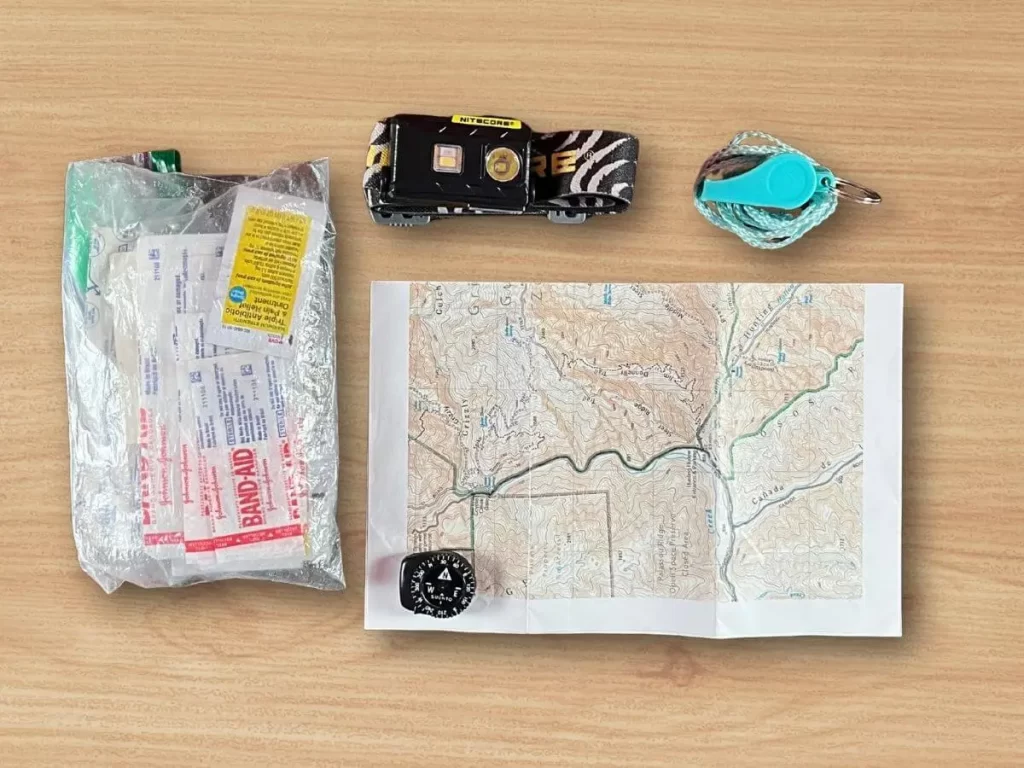
Safety and Navigation Essentials
Wildlife safety is largely about prevention. Store your food properly (in a bear bag or canister, depending on the area), don’t leave food scraps at camp, and never approach animals. Most encounters happen when people get careless.
Finally, let someone know your plan. Before you leave, share your route, expected return date, and key info with a trusted person. The Trip Planner Kit includes a safety handoff sheet—fill it out, print it, and give them clear instructions in case something goes wrong.
The goal isn’t to worry—it’s to be ready. When you have a clear plan and a few core habits in place, you’ll spend less time second-guessing and more time enjoying the trail.
Step-by-Step: How to Plan Your First Backpacking Trip
Planning your first backpacking trip can feel like spinning plates—mileage, gear, weather, permits, campsites. But it gets simpler once you break it into a clear sequence. Each decision unlocks the next, and before you know it, you’re not guessing anymore. You’re preparing.
Step 1: Choose Your Trail
Start with a trail that fits your body, gear, and timeframe. Use the route criteria we covered earlier—10–20 miles total, less than 1,500 feet of gain per day, and strong reviews with recent updates. Filter out trails with complex permits, water gaps, or vague directions. Once you find 2–3 realistic options, pick the one that aligns best with your goals. Good enough is good to go.
Step 2: Sketch Your Daily Mileage
Use the 50/30/20 rule:
- Day 1 = ~50% of your total mileage
- Day 2 = ~30% (room for side hikes or a slower pace)
- Day 3 = ~20% (a short, easy exit)
This pacing helps you avoid burnout and gives your body a chance to adjust to life on trail.
Step 3: Plan Your Campsites + Permits
Look for clear, flat camping areas near reliable water. Avoid spots that require hard-to-get permits or force you into long mile days just to reach legal zones. For each night, have one primary campsite in mind—and a backup if something’s off. Then check permit rules. Many beginner trails allow dispersed camping or simple walk-in permits, which reduce complexity.
Step 4: Build Your Gear and Food Systems
Now that you know your mileage, terrain, and overnight needs, you can dial in your gear. Think in systems: What do you need to sleep warm, cook meals, treat water, and stay dry? Pack items that solve a clear problem—not extras you hope might help. The same logic applies to food: simple, calorie-dense, and testable at home.
Step 5: Final Prep
A few days before your trip, run your final checks. Print your map, charge devices, share your plan with a trusted person, and pack your bag for a short test walk. If anything feels awkward during a local walk, it’ll feel even worse five miles out. Make tweaks now, not on the trail.
Want help organizing all of this in one place? The Trip Planner Kit includes clean, fillable templates for mileage, campsites, gear loadout, and a safety handoff sheet—built specifically for beginners planning a 3-day trip. It turns scattered notes into a real trip plan you can trust.

Excerpt from the 3-Day Backpacking Trip Planner Kit
What Backpacking Really Feels Like (Physical and Emotional Reality)
Most first-time backpackers expect the hiking to be hard. What surprises many is how much energy everything else takes: setting up camp, filtering water, finding your rhythm, and managing basic tasks when your body is already tired. This isn’t meant to scare you—it’s just the truth that most blog posts skip. And knowing it ahead of time helps you prepare better.
Physically, the first few miles of Day 1 can feel heavier than you imagined. Even with a well-packed bag, the weight takes some getting used to. Your hips and shoulders will feel it. Your pace will likely be slower than expected. That’s normal. So is the voice in your head wondering, “Did I pack too much?”
Camp setup is another common surprise. It takes longer than you think—especially the first time. Finding a flat tent spot, pitching your shelter, filtering water, setting up your sleep system… it’s all part of the learning curve. Allow at least an hour of daylight to get settled without stress. The last thing you want is to be fumbling with gear in fading light.
Day 2 usually feels more fluid. You’ve slept outside (even if not perfectly), eaten breakfast, and started to trust your system. Your muscles will feel it, but your routine starts to click. Small challenges—like adjusting your pack or refilling water—feel less confusing. There’s also a growing mental shift: fewer distractions, fewer choices, more awareness of where you are.
By Day 3, you’re moving with more confidence. Your pack is lighter. You know how to adjust your straps, where your snacks are, how to break down camp efficiently. That early uncertainty gives way to quiet competence. You still might be sore, but you’ll also feel proud. You didn’t just survive—you figured it out.
Backpacking is harder than most beginners expect. But it’s also more rewarding. The effort makes the simple things—warm food, a flat tent site, your first good sleep—feel like wins. And that contrast is part of what makes backpacking stick.
🔗 Beginner Backpacking Mistakes
Beginner Backpacking FAQs: Real Answers to Common Fears
Every beginner has questions. Most are rooted in the same place—uncertainty about what’s “normal,” what’s necessary, and what’s just noise. Here are straight answers to the most common concerns new backpackers have before their first trip.
How many miles should I hike on my first backpacking trip?
Start with 6–8 miles per day on moderate terrain. If your route includes steep climbs or high elevation, go shorter. Use the 50/30/20 rule to break your trip into a strong start, a lighter middle day, and a short final hike out.
What gear do I actually need to start backpacking?
You need a well-fitting pack, a way to sleep warm and dry, food and water systems, and clothing suited to the weather. Skip the gadgets and “nice-to-haves.” A checklist like the one in the Trip Planner Kit will keep you focused on what actually matters.
How heavy should my backpack be?
For most beginners, 25–35 pounds is a reasonable target. That includes food, water, and gear for a 3-day trip. If your pack is over 40 pounds, revisit your load—extra clothing, unnecessary tools, or redundant items are often the culprit.
What if I’ve never camped or hiked alone before?
Start with a buddy. You’ll learn faster, share the load, and reduce stress. If you’re going solo, choose a popular trail with clear campsites and bring a detailed plan. Share it with someone you trust before you go.
How do I find and choose a beginner-friendly trail?
Use trail apps like AllTrails or Gaia GPS, filter by mileage and elevation, and read the most recent reviews. Look for signs of good maintenance, water access, and well-marked campsites. Our Route Planning Toolkit walks you through this process step by step.
Do I need a permit for my backpacking trip?
Some trails do require permits—especially in national parks or popular wilderness areas. Check the park website or recreation.gov. If it feels confusing, start with a trail that offers dispersed camping and minimal regulations.
What happens if something goes wrong on the trail?
Preparation matters here. Bring a paper map, a headlamp, a whistle, and a backup plan. Share your route and return time with someone before you leave. The Trip Planner Kit includes a safety handoff sheet designed for exactly this situation.
🔗 Backpacking Gear List Regrets
🔗 Backpacking Training Plan
You’re Closer Than You Think: Final Thoughts + Next Steps
If backpacking still feels a little overwhelming, that’s okay. You’ve just absorbed a lot. But here’s the truth most beginners miss: once you’ve picked a route and sketched your mileage, you’re already halfway there.
You don’t need to be ultralight, fearless, or perfectly prepared. You just need a route that fits, a system you trust, and a few tested tools to back you up. The rest comes from doing it—one trip at a time.
Here’s what you’ve done so far:
- Learned how to choose a beginner-friendly trail
- Understood the gear that matters—and what to skip
- Built a basic system for food, water, safety, and pacing
- Previewed what your first trip will actually feel like
You’re not guessing anymore. You’re preparing with intention. That’s a massive step forward.
If you want extra support turning your plan into a real trip—without scrambling last-minute—the 3-Day Backpacking Trip Planner Kit is built to help. It includes fillable mileage maps, safety templates, and a gear checklist tuned for comfort-focused beginners. Use it as your backup brain while you prep.
Or, if you’re still finalizing your trail, grab the Route Planning Toolkit. It’s free, printable, and built to help you filter, compare, and choose the right fit.
Backpacking isn’t about doing everything right. It’s about showing up ready enough—and learning what works along the way.
Ready to turn your plan into action? Use the free toolkit or get the Trip Planner Kit to lock it all in.
Related Resources
Explore more beginner-focused guides and tools:
- Free Route Planning Toolkit – Filter trails, check mileage, and pick the right first trip
- Free Beginner Gear Checklist – Know what to bring and what to skip
- Free Backpacking Training Plan – Get trail-ready without a gym
📝 Blog Posts:
- Planning Your First Backpacking Trip
- Beginner Backpacking Mistakes
- Cheap Backpacking Gear That Actually Works
- Backpacking Gear Not Worth It
- Solo Backpacking Mistakes to Avoid
👉 Want more gear breakdowns, trail tips, and honest stories? Check out my YouTube channel or subscribe to the newsletter below so you don’t miss any posts.
If this guide helped you, share it with a fellow adventurer and explore our blog for more tips and gear reviews. Happy trails!
Join Our Community of Adventure Seekers!
Get the latest backpacking tips, gear guides, and trail inspiration sent directly to your inbox.
Sign up to start exploring!
Amazon and the Amazon logo are trademarks of Amazon.com, Inc. or its affiliates.