Best Backpacking Rain Jackets: Weight, Breathability, and Packability Compared
Updated: 2026 | Reviewed by: Chris Mercer
Disclosure: As an Amazon Associate, we earn from qualifying purchases, at no extra cost to you.
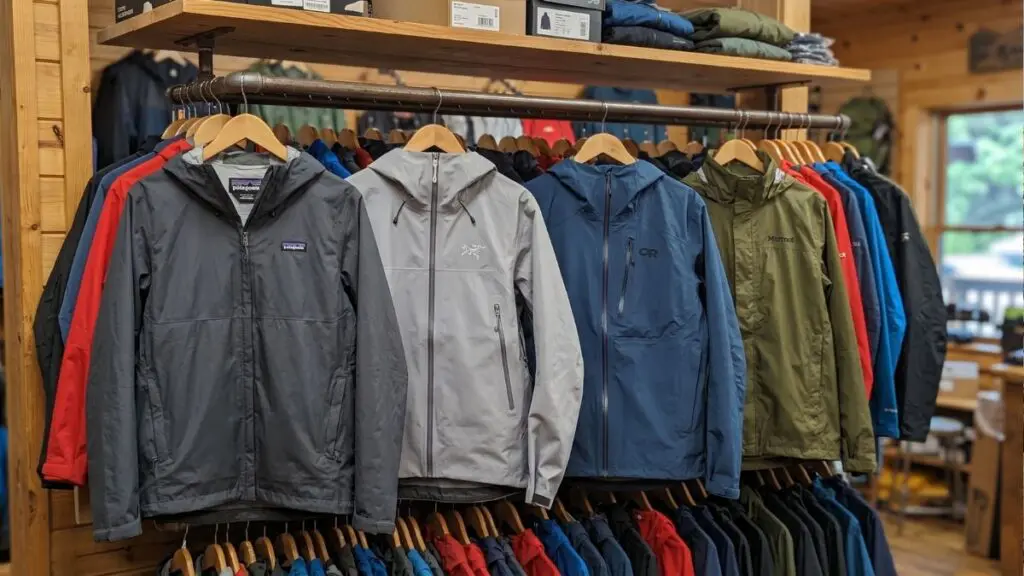
A backpacking rain jacket has one job on paper and a much harder job in practice: keep the rain out without turning into a personal sauna the moment you start climbing under a loaded pack. That tension between waterproofing and breathability is what separates the best backpacking rain jackets from the pile of generic shells that work fine standing still and soak you in sweat the second you move. A waterproof jacket for hiking has to breathe, not just block rain, and that’s the line most shells fail to walk.
This guide covers eight jackets across the full range, from a barebones emergency layer to a serious mountain shell, and sorts out which one is right for the way you actually hike. The picks are weighed on the three things that matter most for backpacking specifically: weight, breathability under exertion, and how small the thing packs down when the sky clears. If you want the short version, start with the Quick Picks.
My Picks
Best Overall: Patagonia Torrentshell 3L
Best Ultralight: Montbell Versalite
Best Budget: Marmot PreCip Eco
Best Premium: Arc’teryx Beta SL
How to Choose a Backpacking Rain Jacket
Three decisions determine which of these jackets is right for you, and none of them is “which is most waterproof.” Every jacket here keeps rain out. The differences are in how they handle sweat, how much they weigh, and how long they’ll survive contact with the real world.
Layer construction is the breathability story. You’ll see jackets labeled 2L, 2.5L, 2.75L, and 3L. A 3-layer shell bonds a protective interior fabric to the membrane, which stays comfortable longer under sustained output and doesn’t get that clammy, sticky-against-the-skin feel a cheaper 2.5-layer coating develops when it wets out. A 2.5-layer jacket saves weight and money by printing a thin coating on the inside instead, and it’s perfectly fine for intermittent showers and lower-exertion days. If you run hot or hike hard uphill in the rain, the 3L construction earns its keep. If rain is an occasional nuisance rather than a daily companion, 2.5L will do.
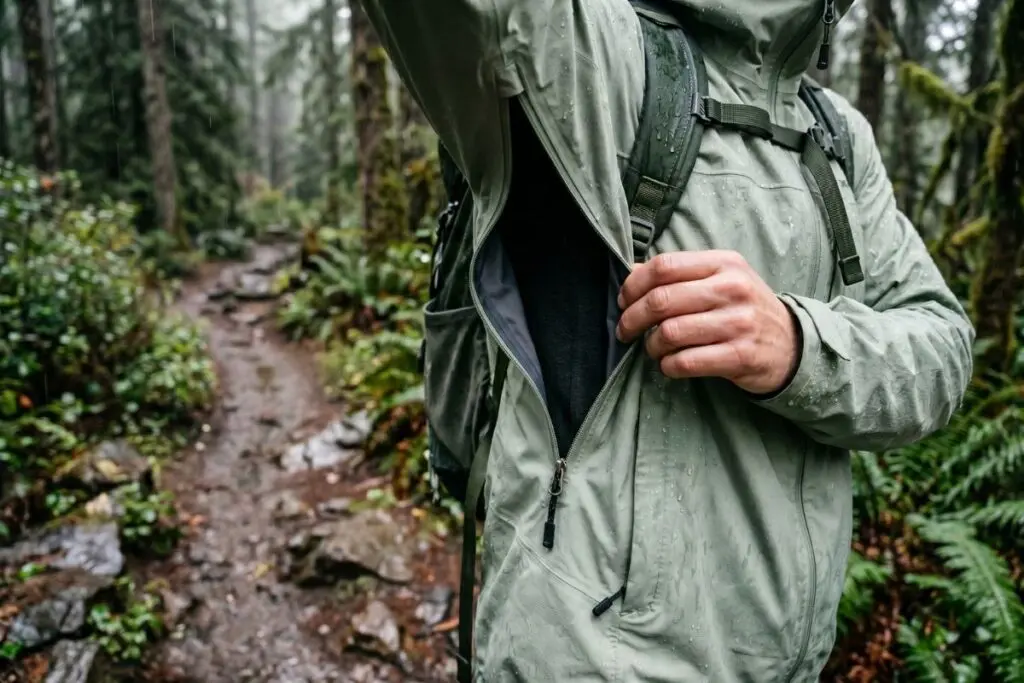
Pit zips matter more than the membrane spec. No fabric breathes fast enough to keep up with a hard climb in warm rain, which is why underarm vents are the single most useful feature on a backpacking rain jacket. They dump heat and moisture faster than any membrane can. Most of the jackets here have them; the Outdoor Research Helium UL and Frogg Toggs Ultra-Lite2 skip them to save weight, and that omission is a real tradeoff, not a footnote. Decide whether you want mechanical venting before you get seduced by a low weight number.
Weight and durability pull against each other. The sub-6-ounce shells hit those numbers with 7D and 15D face fabrics that are genuinely delicate. They’re brilliant if you’re counting grams and willing to handle the jacket with care, and they’ll tear on rock or brush if you’re not. A burlier 40D-to-50D face weighs more but shrugs off abrasion and lasts more seasons. Match the fabric to your terrain: gram-counters going off-trail should know what they’re signing up for, and anyone bushwhacking through desert scrub or scrambling granite wants the tougher face. Rain protection is only one piece of staying comfortable in wet weather, and the dumbest mistake I made backpacking in the rain had nothing to do with the jacket at all.
| RAIN JACKETS | Weight (oz) | Layers | Denier (D) | Pit Zips |
|---|---|---|---|---|
| Patagonia Torrentshell 3L | 14.1 | 3L | 50D | Yes |
| Montbell Versalite | 6.4 | 3L | 7D | Yes |
| Zpacks Vertice | 5.9 | 3L | 7D | Yes |
| Arc'teryx Beta SL | 12 | 3L | 40D/70D | Yes |
| Black Diamond Fineline Stretch | 11.3 | 2.5L | 50D | Yes |
| Outdoor Research Helium UL | 5.7 | 2.75L | 15D | No |
| Marmot PreCip Eco | 10.6 | 2.5L | — | Yes |
| Frogg Toggs Ultra-Lite2 | 5.5 | 2L | — | No |
Best Overall Backpacking Rain Jacket: Patagonia Torrentshell 3L
The Patagonia Torrentshell 3L is the jacket I’d hand to a backpacker who wants to buy one shell and stop thinking about it. It’s a true 3-layer construction at a mid-tier price, which is unusual, and it’s the reason this jacket earns the top spot over lighter and pricier options. The 3L build means the interior stays comfortable against your skin instead of developing the clammy plastic-bag feel that cheaper 2.5-layer shells get when they wet out, and it holds up to abuse better than anything in the ultralight tier.
At 14.1 ounces it is heavier and bulkier than the sub-6-ounce specialists, and there’s no getting around that. What you’re buying with those extra ounces is durability and all-day comfort, and for most backpackers that’s the right trade. The 50D recycled nylon face shrugs off the kind of contact that would put a hole in a 7D shell, welted pit zips give you real venting on the climbs, and the whole thing self-stuffs into its own pocket with a clip loop. The cut runs a touch roomy, which is a plus if you layer underneath and slightly baggy if you don’t. Breathability is good rather than exceptional, so if your hiking is sustained high-output in warm rain, one of the more breathable shells below will serve you better. For the backpacker who wants a do-everything jacket that lasts many seasons and doesn’t flinch at rough handling, this is the one to buy.

A durable 3-layer waterproof/breathable rain jacket built to Patagonia's H2No standard, with pit zips and a packable design. A do-everything backpacking shell.
Not sure what gear you actually need?
Grab the free backpacking checklist I built after 120+ trips. It covers every category so you don’t overbuy or forget something important.
Get the Checklist →Free. No spam. Unsubscribe anytime.
Best Ultralight Backpacking Rain Jacket: Montbell Versalite
The Montbell Versalite answers a question most ultralight shells dodge: can you get down near six ounces without giving up the features that make a rain jacket actually usable? This one weighs about 6.4 ounces in a men’s medium and still keeps generously sized pit zips that run much of the sleeve, a 3-way adjustable hood, and pockets that clear a hip belt. That combination of full features at this weight is genuinely rare, and it’s why the Versalite is the ultralight pick over lighter shells that strip the venting to hit their numbers.
The weight savings come from a 7D face fabric, which is the catch. That fabric is thin and needs careful handling around abrasion, so this is not the jacket for bushwhacking or scrambling on granite. It’s a 3-layer construction despite the low weight, so it breathes and feels better against the skin than the featherweight 2.5-layer options. Montbell sells direct in the US only, which makes it harder to try on before committing, and the price sits at the premium end for the weight class. If you’re counting grams but refuse to give up pit zips and a real hood, the Versalite is the shell that lets you have both.

An ultralight 3-layer Gore-Tex Infinium Windstopper rain jacket at about 5.9 oz, with full-length pit zips and an adjustable hood. Full features at a minimal weight.
Zpacks Vertice
The Zpacks Vertice is the breathability leader of this entire group, and it hits that mark at under six ounces with pit zips and waterproof zippers still included. Zpacks’s proprietary Vertice membrane out-breathes Gore-Tex on paper, which matters enormously if your problem with rain jackets has always been sweating them out from the inside. If breathability sits at the top of your priority list and everything else is negotiable, nothing here keeps up with it. It stuffs into its own flip-out chest pocket, small enough to disappear in a pack.
This is a cottage-brand specialist’s shell, and it’s priced like one, sitting well above the mainstream ultralight options. The 7D fabric is fragile, the DWR needs regular refreshing to keep water beading rather than soaking the face, and Zpacks sells direct-only with lead times that can stretch. You’re paying a premium and agreeing to baby the fabric in exchange for the best breathing, smallest-packing shell on the list. If those are your priorities and your budget allows, it’s a defensible splurge; if you want durability or plan to handle the jacket carelessly, look elsewhere.

A sub-6-oz ultralight 3-layer rain jacket with a highly breathable waterproof membrane, pit zips, and waterproof zippers. A cottage-brand ultralight specialist's shell.
Best Premium Backpacking Rain Jacket: Arc’teryx Beta SL
The Arc’teryx Beta SL is the most protective and durable shell in this roundup, and it makes no apology for being the heaviest and most expensive. This is a genuine Gore-Tex mountain shell: a 3-layer Gore-Tex ePE membrane with a C-KNIT backer, a 40D torso reinforced to 70D across the shoulders and other high-abrasion zones, and a helmet-compatible StormHood. If you hike in serious, sustained mountain weather and want a shell that will not quit, this is the jacket, and the build quality is the reason it costs what it does.
At roughly 12 ounces it’s the heaviest of the group, and it’s the priciest by a wide margin. For fair-weather trips and gentle three-season use, it’s more jacket than you need, and buying it purely to stash against the occasional shower is overkill. But that’s the point of a premium shell: it’s built for the backpacker or alpine hiker who genuinely puts a jacket through demanding conditions and wants durability, weather protection, and a helmet hood that lighter shells can’t match. Buy it when the conditions justify it, not as a weight-savings play, because it will never be that.

A premium 3-layer Gore-Tex ePE mountain shell with reinforced shoulders, a helmet-compatible hood, and pit zips. Built for demanding, durable, all-conditions protection.
Black Diamond Fineline Stretch
The Black Diamond Fineline Stretch is the one jacket here built around movement. The stretch face fabric and underarm gussets give it a genuine freedom of motion that stiff ultralight shells can’t touch, which makes it the standout for scrambling, climbing, and any hiking where you’re reaching and twisting rather than just walking. If mobility matters more to you than shaving the last few ounces, this is the shell that gets out of your way. It keeps DWR-sealed pit zips and a helmet-compatible hood, and it stows into its own pocket with a clip loop.
The stretch comes at a weight cost, at 11.3 ounces it’s well above the ultralight picks, and the stretch fabric is part of why. It’s a 2.5-layer construction, so the interior can feel clammier than a true 3-layer shell like the Patagonia Torrentshell 3L (covered above) once you’re in sustained rain. It’s also a relatively new model, so long-term durability data is still thin. For the active backpacker or climber who values stretch and helmet compatibility over minimum weight, the Fineline Stretch fills a niche none of the other jackets here really address.

Outdoor Research Helium UL
The Outdoor Research Helium UL is the lightest fully-featured reliable shell you can grab and forget about, coming in at 5.7 ounces in a men’s version. For 2026 it moved to a Toray Dermizax 2.75-layer membrane with a 3D-printed next-to-skin liner, which wicks moisture and feels better against the skin than the older 2.5-layer Pertex build it replaced. As a stash-it-and-forget-it shell for weather that might come, it’s the lightest option here that still feels like a real jacket.
The tradeoff for that weight is the one venting feature that matters most: there are no pit zips. All your ventilation comes from the front zip, which is fine for intermittent rain but limiting when you’re climbing hard in a warm downpour. The 15D shell is delicate and wants careful handling, and this jacket is genuinely best understood as a lightweight and emergency shell rather than an all-day downpour workhorse. If your goal is the lightest reliable jacket to keep stashed against the sky and mechanical venting isn’t a dealbreaker, the Helium UL is the minimalist’s answer. Note that this is the current model that replaced the discontinued Helium Rain, so make sure you’re buying the UL version.

Best Budget Backpacking Rain Jacket: Marmot PreCip Eco
The Marmot PreCip Eco is the value benchmark of this entire category, and it earns that title by delivering a genuine pit-zip rain jacket from a reputable brand at a fraction of what the mid-tier shells cost. It’s not the lightest at 10.6 ounces, and it’s not the most breathable, but the price-to-capability ratio here is unbeaten, and for a first rain jacket or a backup shell it’s the smart money. You get 10-inch pit vents, an adjustable hood and cuffs, a drawcord hem, and a recycled NanoPro membrane with a PFC-free DWR.
The compromises are the expected ones for a 2.5-layer jacket at this price. The interior coating wets out and gets clammy faster than pricier shells, the pit zips are a touch smaller than average, and DWR longevity is middling, so you’ll be refreshing it periodically. None of that is disqualifying for the buyer this jacket is for. If you want a legitimate rain shell with real venting and you’re not ready to spend premium money, the PreCip Eco is the one to start with. It’s the jacket I’d point a first-time backpacker toward before anything else on this list, and it slots naturally into a kit built on cheap backpacking gear that actually works.


Frogg Toggs Ultra-Lite2
The Frogg Toggs Ultra-Lite2 is the outlier of this list: the cheapest and one of the lightest here at about 5.5 ounces, made from a nonwoven polypropylene bi-laminate rather than a woven face fabric. It has genuinely waterproof welded seams and essentially nothing else, no pit zips, no adjustable cuffs, minimal features of any kind. What you’re paying for is emergency-grade rain protection at a throwaway price, and on those terms it delivers.
The fabric is fragile and tears easily on rock or brush, and with no ventilation it gets clammy fast under exertion. I own this jacket and have taken it on roughly 50 trips, which is worth mentioning because I fully expected it to be disposable after two or three. Handled with care, no scratching on rock, no bushwhacking, it has held up far better than its price and reputation would suggest. That’s a single data point, not a durability guarantee, and the fabric really will tear if you abuse it. But if you go in understanding exactly what it is, a barebones, no-vent, ultralight emergency shell, it’s a surprisingly capable one. For the budget or ultralight backpacker who wants a dirt-cheap packable layer and will treat it gently, nothing else here comes close on price.

The Complete Kit I Use on Every Trip
This post covers one piece of the puzzle. If you want to see everything I actually carry, I keep my full kit documented on one page.
After 100+ trips across the Sierra, the Pacific Coast, and Desert Southwest, this is the setup I’ve dialed in for three-season weekend trips. Same gear, trip after trip. It’s what I’d recommend to anyone building out a dependable kit without overpacking.
Which Rain Jacket Should You Buy?
There’s no single best rain jacket, but there is a best one for you, and the decision comes down to how you hike. If you want one durable do-everything shell and don’t mind a couple extra ounces, buy the Patagonia Torrentshell 3L and stop looking. If you’re counting grams but refuse to lose pit zips and a real hood, the Montbell Versalite is the shell that lets you keep both. If your real problem is sweating out every jacket from the inside, the Zpacks Vertice out-breathes the rest and is worth the splurge for the breathability-obsessed.
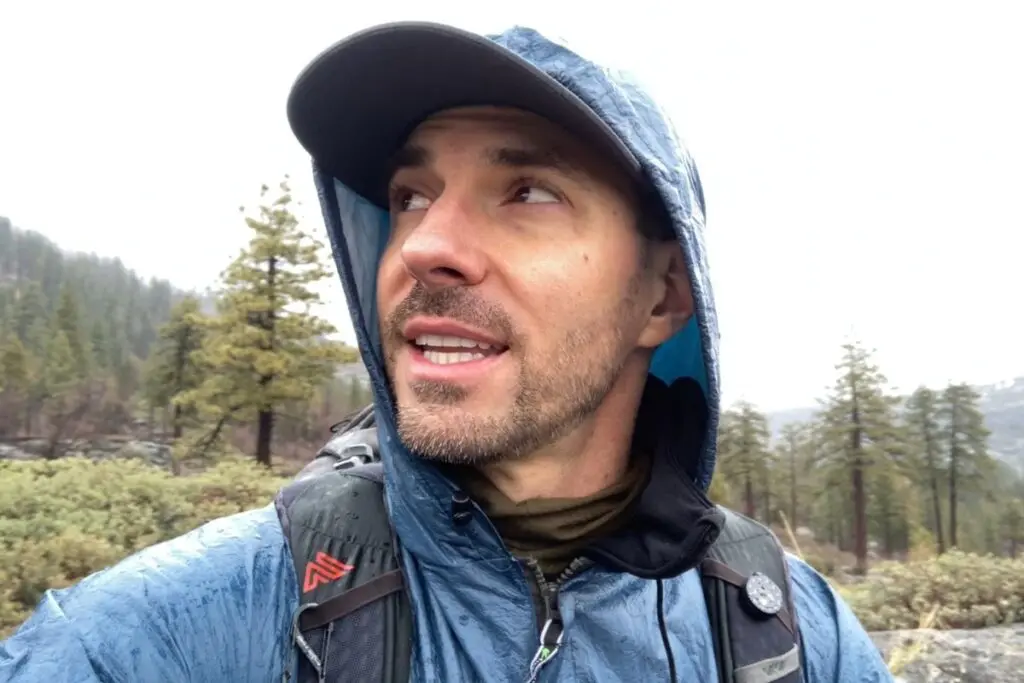
Budget-focused or buying your first rain jacket? The Marmot PreCip Eco gives you legitimate pit-zip protection without the premium spend, and it’s where I’d tell most people to start. And if you hike in serious mountain weather that punishes lesser gear, the Arc’teryx Beta SL is worth every ounce and every dollar. Pick the jacket that matches your terrain and your output, refresh the DWR when water stops beading, and you’ll stay dry without cooking yourself on the climbs.
Related Reading
Amazon and the Amazon logo are trademarks of Amazon.com, Inc. or its affiliates.