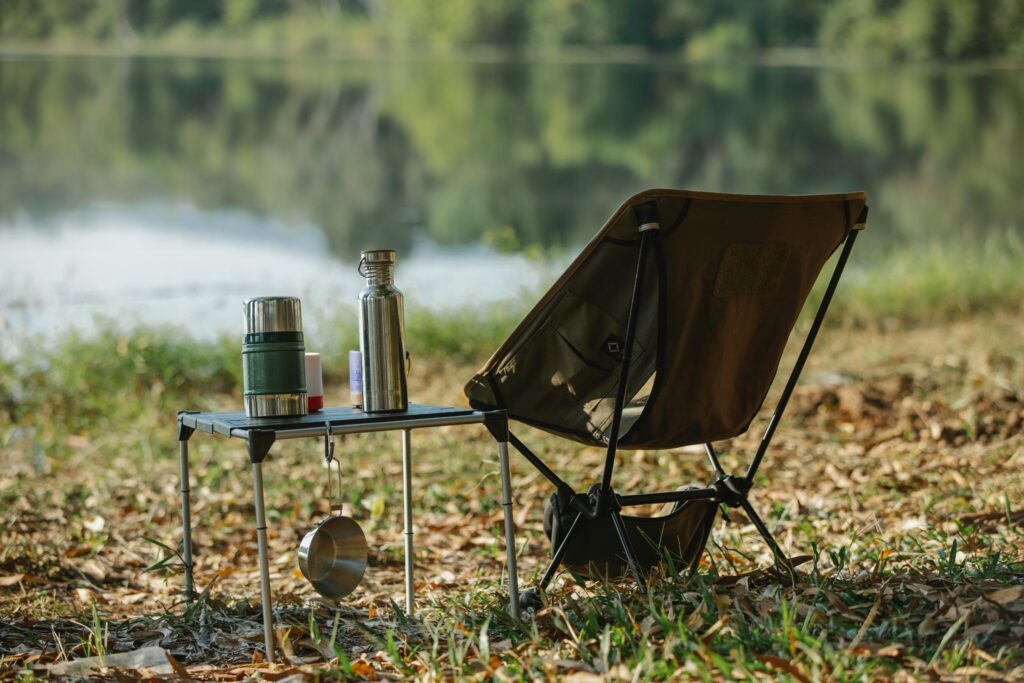
Best Backpacking Pillows: Sleep Better on Trail
Updated: January, 2026 | Reviewed by: the Step Massive team
Disclosure: This article contains affiliate links. As an Amazon Associate and an affiliate for other retailers, we earn from qualifying purchases, at no extra cost to you.
Finding the right backpacking pillow is one of those small decisions that can make a surprisingly big difference a few nights into a trip. When your head and neck aren’t supported, even a great sleeping pad and quilt can’t fully save your sleep. You end up shifting, sliding, or waking up stiff in the morning.
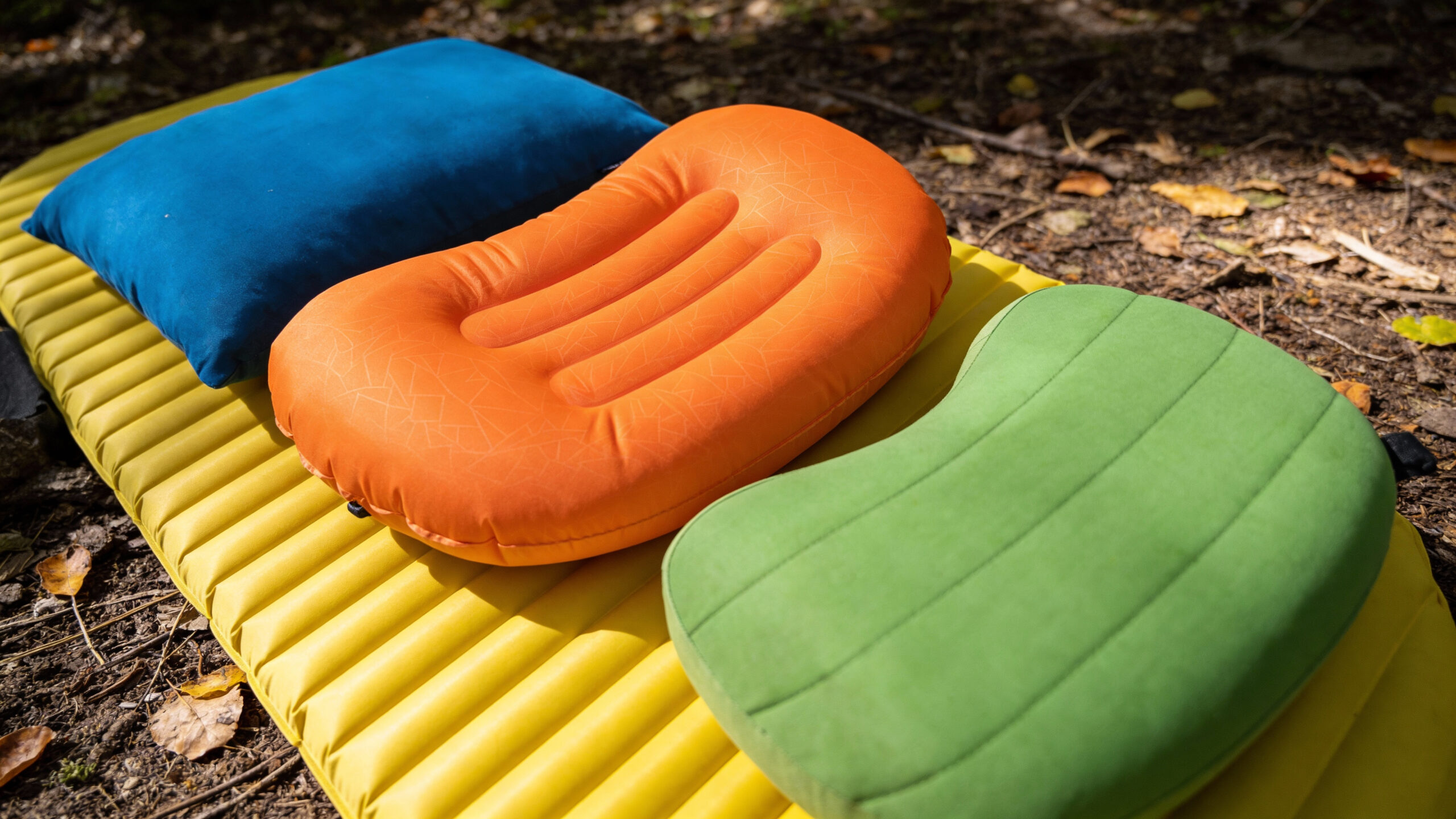
Most people searching for the best backpacking pillows are trying to solve a handful of real problems. They want better sleep without adding bulk, something that stays in place on a sleeping pad, and a setup that doesn’t feel fiddly after a long day on trail. Details like fabric feel, noise, and pillow height tend to matter more than expected.
This guide compares inflatable, hybrid, and foam backpacking pillows with those realities in mind. If you’re still dialing in the rest of your kit, it can also help to reference a gear checklist or our complete beginner backpacking gear guide so your sleep setup works as a system, not just a collection of parts.
Our picks
Best overall: NEMO Fillo Elite Ultralight Pillow
Best ultralight: Sea to Summit Aeros Ultralight Pillow
Best budget: Trekology ALUFT 2.0 Pillow
Buyer’s Guide: How to Choose a Backpacking Pillow
A backpacking pillow seems simple, but small design differences have a big impact on sleep quality. Pillow height, surface feel, and whether it stays in place on your sleeping pad often matter more than weight once you are actually sleeping on it night after night.
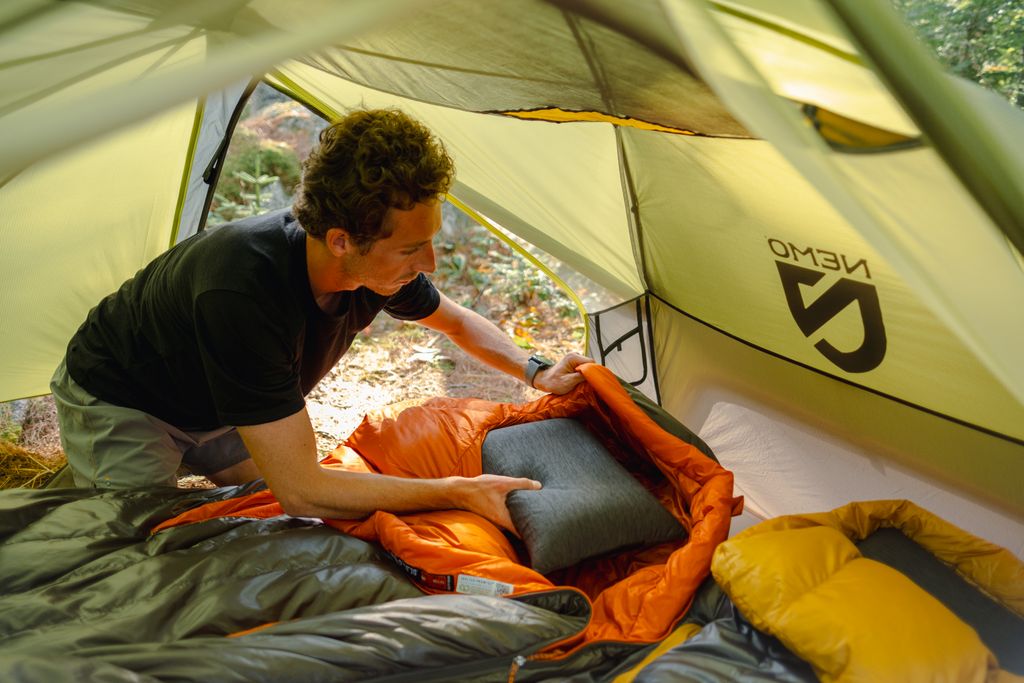
This buyer’s guide walks through the key tradeoffs between inflatable, hybrid, and compressible pillows, so you can match pillow style to your sleep position and camp routine, not just specs on a chart.
Pillow Height and Sleep Position
Pillow height is the single biggest comfort factor for most backpackers. Side sleepers generally need more loft to keep their neck aligned, while back sleepers usually prefer something lower. Stomach sleepers often want the flattest option possible. Inflatable pillows shine here because you can fine-tune height by letting out a bit of air, but some hikers prefer the consistent feel of foam or hybrid pillows.
Stability on Your Sleeping Pad
A pillow that slides off your pad can ruin an otherwise decent night’s sleep. Some designs rely on grippy fabrics, others use attachment straps, and some simply have shapes that nest better against pad edges. Stability matters even more if you toss and turn or camp on uneven ground. In practice, this often matters more than how soft the pillow feels at first touch.
Fabric Feel and Noise
Ultralight materials help with pack size and weight, but they can feel slick or make crinkly noises when you move. For face sleepers, fabric feel against skin becomes a real comfort factor. Hybrid pillows with a fabric or foam top often feel more natural, while fully inflatable options emphasize packability and adjustability. There’s no universal winner here, just personal preference.
Ease of Use at Camp
At the end of a long hiking day, simple matters. Valves that inflate quickly and release air in small increments make it easier to dial in comfort. Overly stiff valves or awkward deflation can turn a minor adjustment into an annoyance, especially over multiple nights.
Weight, Bulk, and Bigger Tradeoffs
Pillows sit right at the intersection of comfort and minimalism. Some hikers skip them entirely, while others are happy to carry a few extra ounces for better sleep. This fits into the same mindset discussed in our base weight guide and our guide on ultralight backpacking upgrades. The goal isn’t to chase the lightest setup, but to sleep well enough to hike better the next day.
Your sleep environment also affects how a pillow feels overnight. Tight headroom, sloped floors, and limited space can restrict movement, which makes pillow height and stability matter more than softness alone. We dig into these same space and layout tradeoffs when comparing shelters in our best lightweight backpacking tents guide.
1. NEMO Fillo Elite Ultralight Pillow
Best for: Backpackers who want a compact inflatable pillow with a fabric cover for overnight to multi-day trips where comfort and packability both matter.
At a Glance
- Weight: 2.8 oz
- Key Features: Removable fabric cover, micro-adjustable valve, integrated stuff sack
- Highlights: Insulated air cell with synthetic fill layer for warmth and comfort separation
- Best Use: Backpacking trips where comfort and packability both matter
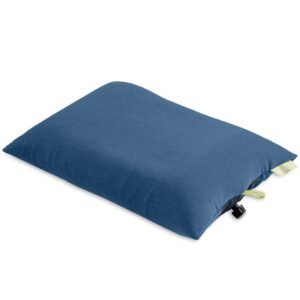
An insulated inflatable pillow with a removable polyester jersey fabric cover and a synthetic insulation layer, designed for compact packing.
Comfort & Usability
The NEMO Fillo Elite inflates quickly and uses a micro-adjustable valve that allows small air releases without full deflation. The removable fabric cover provides a non-nylon surface and can be removed for washing.
Performance Factors
The inflatable air cell provides adjustable loft up to 3 inches, with an internal synthetic insulation layer separating the head from the air bladder. Packed size remains small due to the integrated stuff sack design.
Compared to Similar Pillows
Compared to the Sea to Summit Aeros Pillow, this model adds a synthetic insulation layer and removable fabric cover. Compared to the Therm-a-Rest Air Head Down Pillow, it uses synthetic insulation instead of down and packs smaller.
Who it’s For:
Backpackers who prefer an insulated inflatable pillow with a soft fabric cover and the ability to fine-tune loft for different sleep positions.
Trail Takeaway: A compact inflatable pillow that balances minimal packed size with a fabric-covered surface and adjustable loft, suited for backpackers who want a traditional pillow feel in a lightweight package.
2. Trekology ALUFT 2.0 Pillow
Best for: Backpackers who want a compact, air-only pillow that packs small and inflates quickly without added weight from fabric covers or insulation.
At a Glance
- Weight: 4.2 oz
- Key Features: Ergonomic curved shape, air-only construction, roll-top valve
- Highlights: Low price point with consistent shape retention
- Best Use: Budget-conscious backpackers who want adjustable loft without extra features


Comfort & Usability
Inflation level directly affects the pillow’s height and firmness. The roll-top valve allows gradual air release for loft adjustment. The curved ergonomic shape is designed to support neck alignment.
Performance Factors
The air-only construction allows the pillow to compress to a very small size. The nylon shell is lightweight but feels slick against skin without a pillowcase. Shape holds well once inflated to preferred firmness.
Compared to Similar Pillows
Compared to the NEMO Fillo Elite, the Trekology lacks a fabric cover and insulation layer but costs significantly less. Compared to the Sea to Summit Aeros Ultralight, it is heavier but less expensive.
Who it’s For:
Backpackers who prioritize packability and adjustable support at a low price point, and are comfortable with a bare nylon surface or using a stuff sack as a pillowcase.
Trail Takeaway: A compact inflatable pillow that relies on adjustable air volume for support, suited for minimalist backpackers who want a dedicated pillow without spending much.
3. Sea to Summit Aeros Pillow
Best for: Backpackers and travelers who prioritize minimal packed size and low weight in an inflatable pillow.
At a Glance
- Weight: 2.1 oz
- Key Features: TPU bladder, multifunctional valve, rectangular shape
- Highlights: One of the lightest dedicated backpacking pillows available
- Best Use: Ultralight backpackers who want a dedicated pillow with minimal weight penalty

Comfort & Usability
The Sea to Summit Aeros Ultralight uses a multifunctional valve that allows both inflation by mouth and controlled deflation. The TPU bladder is lightweight but the bare surface can feel slick against skin.
Performance Factors
The inflatable construction allows the pillow to compress into a very small stuff sack. Loft is fully adjustable. The rectangular shape provides consistent support across different sleep positions.
Compared to Similar Pillows
Compared to the Sea to Summit Aeros Premium, the Ultralight version removes the fabric cover and insulation for lower weight and packed size. Compared to the Exped Ultra Pillow, it is slightly heavier but more widely available.
Who it’s For:
Backpackers who prefer inflatable backpacking pillows with minimal weight and packed size, and are comfortable adjusting loft manually.
Trail Takeaway: A minimalist inflatable pillow focused on low weight, compact storage, and adjustable loft for backpackers who want a dedicated pillow without the bulk.
4. Exped Ultra Pillow
Best for: Backpackers and travelers who want a very low-weight inflatable pillow with minimal packed volume.
At a Glance
- Weight: 1.8 oz
- Key Features: Ultralight TPU construction, flat valve, minimal stuff sack
- Highlights: Among the lightest inflatable pillows available at any price
- Best Use: Gram-counting backpackers who still want a dedicated pillow

Comfort & Usability
The Exped Ultra Pillow inflates by mouth and deflates via a simple flat valve. The bare TPU surface is slick and may require a pillowcase for comfort-sensitive sleepers. Loft is adjustable but the pillow is on the flatter side at full inflation.
Performance Factors
The inflatable construction allows the pillow to pack down to a very small size. At 1.8 oz it is one of the lightest options in the category. The flat profile works better for back and stomach sleepers than side sleepers needing significant loft.
Compared to Similar Pillows
Compared to the Sea to Summit Aeros Ultralight, the Exped Ultra is lighter but provides less maximum loft. Compared to the NEMO Fillo Elite, it skips the fabric cover and insulation entirely in favor of minimum weight.
Who it’s For:
Backpackers who prefer inflatable backpacking pillows with minimal weight and packed volume, particularly back or stomach sleepers who don’t need significant loft.
Trail Takeaway: A very light inflatable pillow that emphasizes compact storage and low weight above all else, best suited for backpackers who sleep on their back or stomach and want to minimize pack weight.
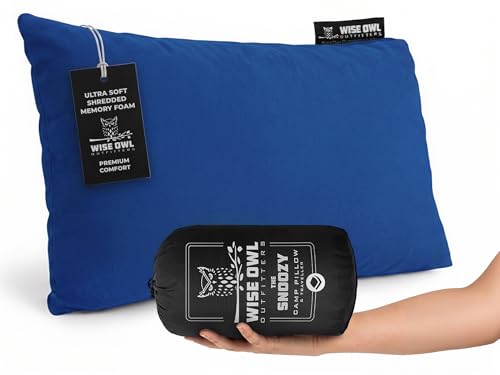
5. Wise Owl "The Snoozy" Pillow
Best for: Campers and travelers who prefer a compressible foam camping pillow with a soft cover and adjustable shape.
At a Glance
- Weight: 9 oz
- Key Features: Shredded foam fill, cinch drawstring, soft outer cover
- Highlights: Moldable shape, no inflation required, washable cover
- Best Use: Car campers or short-trip backpackers who prioritize comfort over pack weight
Comfort & Usability
The Wise Owl Snoozy uses shredded foam fill that can be cinched tighter or loosened for loft adjustment without inflation. The soft outer cover is comfortable against skin and removes for washing. No valve adjustments needed.
Performance Factors
The foam construction results in greater packed volume and weight compared to inflatable options. At 9 oz it is heavier than most inflatable pillows on this list. The cinch system provides shape customization without any inflation mechanism.
Compared to Similar Pillows
Compared to the NEMO Fillo Elite, the Wise Owl is heavier and bulkier but requires no inflation and has a more natural foam feel. Compared to the Therm-a-Rest Cinch, it uses shredded foam versus compressible foam and has a different cinch mechanism.
Who it’s For:
Campers and travelers who want a small travel pillow with foam fill, adjustable shape, and a soft cover — and are willing to accept more packed bulk in exchange for a no-inflation setup.
Trail Takeaway: A compact foam camping pillow that trades packed size and weight for a natural foam feel and zero-fuss setup — best for car camping or short backpacking trips where pack weight is less critical.
6. Hyperlite Mountain Gear Stuff Sack Pillow
Best for: Backpackers who do not carry a dedicated inflatable or foam pillow and want to use a stuff sack filled with spare clothing as a pillow system.
At a Glance
- Weight: 1.7 oz
- Key Features: Dyneema Composite Fabric construction, roll-top closure, doubles as stuff sack
- Highlights: Extremely light, eliminates need for dedicated pillow
- Best Use: Ultralight backpackers comfortable stuffing clothing inside for loft

The Hyperlite Mountain Gear Stuff Sack Pillow is a non inflatable pillow solution built as a reversible, fleece-lined stuff sack designed to be filled with clothing for nighttime use.
Comfort & Usability
Comfort and loft depend entirely on the type and amount of clothing stuffed inside. The Dyneema shell is smooth but does not bunch or shift the way loose clothing can. Roll-top closure keeps contents secure overnight.
Performance Factors
The design adds minimal standalone weight and eliminates reliance on a dedicated pillow. Performance varies based on available clothing. The Dyneema fabric is highly durable and water resistant for its weight class.
Compared to Similar Pillows
Compared to the Sea to Summit Aeros Ultralight, the HMG Stuff Sack Pillow weighs slightly less and doubles as gear storage but requires clothing fill for loft. Compared to any dedicated inflatable, it offers zero guaranteed loft on its own.
Who it’s For:
Backpackers who want a stuff sack pillow and typically carry enough spare clothing to fill it, and are comfortable with variable loft depending on what gear is available each night.
Trail Takeaway: A minimalist pillow approach that relies on spare clothing and a premium stuff sack — best for ultralight backpackers who already carry clothing that can double as pillow fill.
7. Therm-a-Rest Cinch Pillow
Best for: Campers and backpackers on shorter trips who want a foam-filled camp pillow with adjustable shape and a soft cover.
At a Glance
- Weight: 11.5 oz
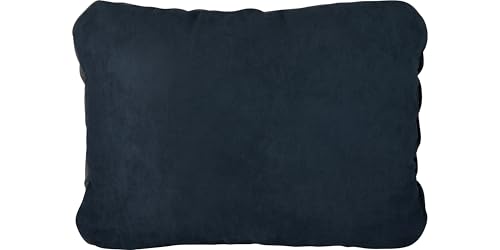
- Key Features: Compressible foam fill, cinch closure, soft knit cover
- Highlights: Adjustable shape via cinch, machine washable, no inflation needed
- Best Use: Car camping or casual backpacking where weight is not the top priority
Comfort & Usability
The Therm-a-Rest Cinch uses compressible foam fill that can be shaped by pulling the cinch cord tighter or releasing it. The soft knit cover is comfortable against skin and the whole pillow is machine washable. Setup requires no inflation.
Performance Factors
Performance Factors
The foam-filled construction results in higher packed volume and weight compared to inflatable alternatives. At 11.5 oz it is the heaviest pillow on this list. The cinch system allows loft customization without any mechanical components.
Compared to Similar Pillows
Compared to the NEMO Fillo Elite, the Cinch is heavier and bulkier but requires no inflation and has a more consistent foam feel. Compared to the Wise Owl Snoozy, it uses compressible foam versus shredded foam and comes from a more established backpacking brand.
Who it’s For:
Campers and backpackers who prefer a foam-filled camp pillow with adjustable shape and a machine-washable cover, and are not prioritizing minimum pack weight.
Trail Takeaway: A foam-based camp pillow that prioritizes ease of use and adjustable shape over minimum weight — best for car camping or shorter backpacking trips where comfort matters more than grams.
Conclusion
The best backpacking pillows are the ones that quietly do their job night after night. Whether you prefer an adjustable inflatable, a softer hybrid feel, or a compressible foam option, it comes down to sleep position, tolerance for noise, and how simple you want camp to feel. Once you understand those tradeoffs, choosing a pillow gets much easier. For a final gut check, it is worth revisiting a complete backpacking gear checklist to make sure your whole sleep system works together.
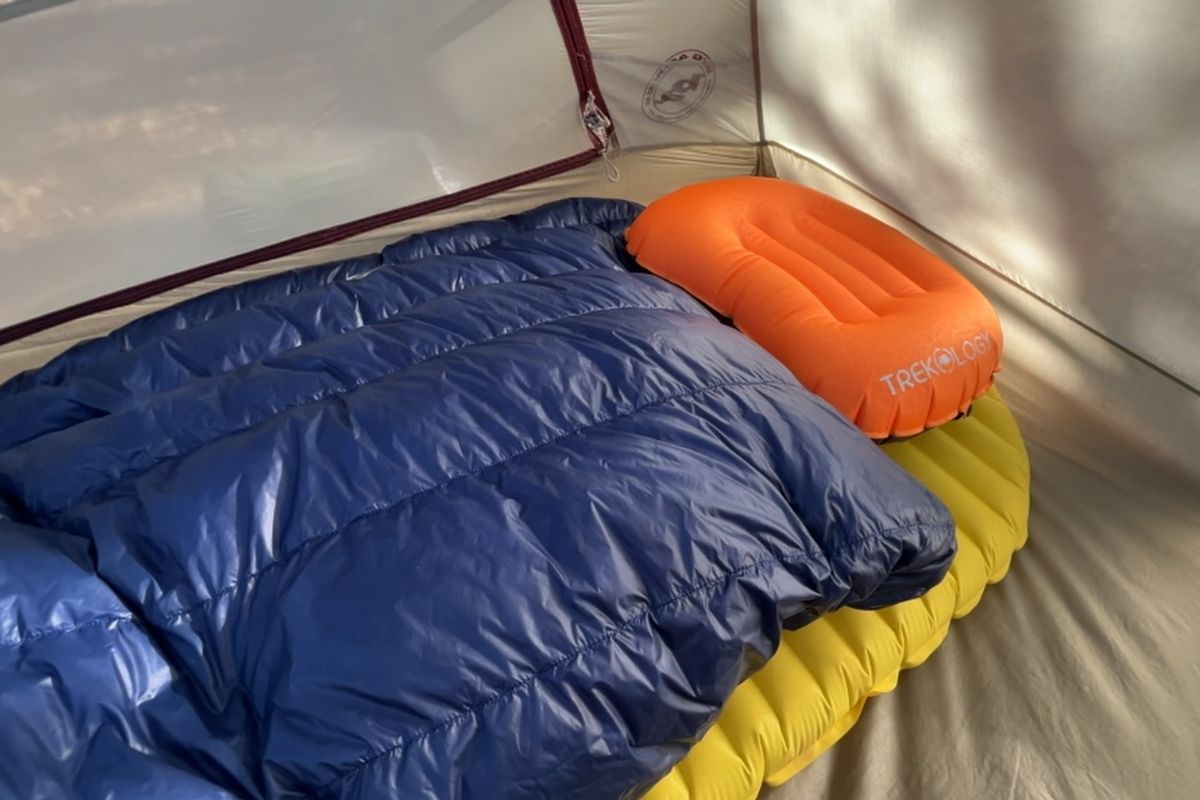
If you’re curious what gear I actually pack for my own trips, you can see my personal backpacking gear list. It’s the full collection of gear I’ve refined after 300+ nights on the trail.
See all my recommended backpacking gear in my Amazon Store → Amazon.com/shop/stepmassive
Related Reading
Written by the Step Massive team, backpackers focused on practical, field-tested gear systems since 2019.
Amazon and the Amazon logo are trademarks of Amazon.com, Inc. or its affiliates.