Best Power Banks for Backpacking: Capacity, Weight, and Weather Protection Compared
Updated: 2026 | Reviewed by: Chris Mercer
Disclosure: As an Amazon Associate, we earn from qualifying purchases, at no extra cost to you.
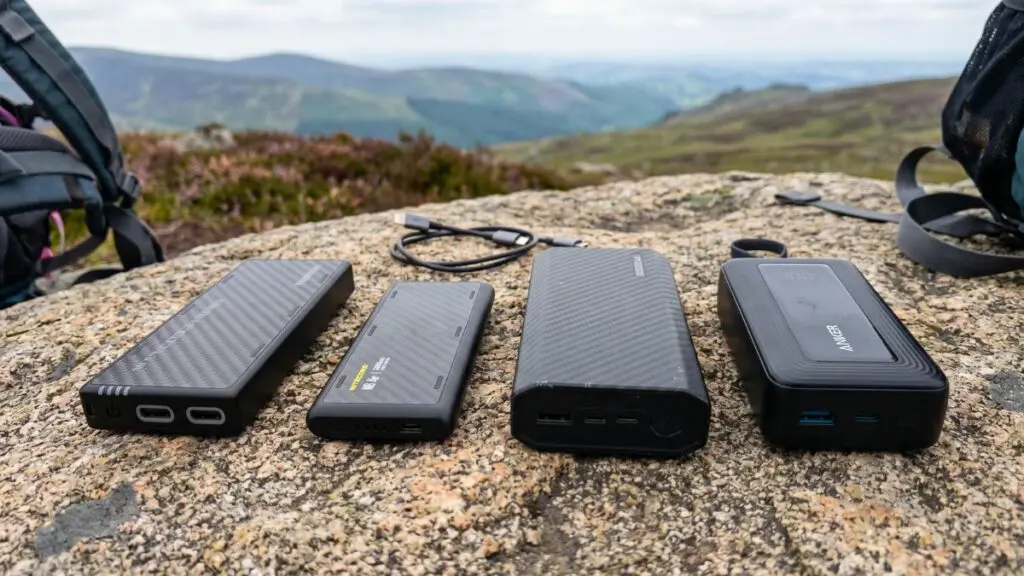
Picking the best power bank for backpacking looks simple until you start digging, and then the capacity math, weight tradeoffs, and waterproof ratings get complicated fast.
This post focuses on what weekend warriors actually need: how much capacity is enough for 2–3 nights, which banks are light enough to earn their spot, and where weather protection matters versus where it doesn’t. Seven options are covered across three capacity tiers so you can match the right bank to the trips you’re actually taking.
My Picks
Best Overall: Nitecore NB10000 Gen4
Best Budget: INIU Pocket Rocket P50
Best Ultralight: Nitecore NB Air
Best High Capacity: Nitecore NB20000 Gen3
Best Budget High Capacity: Anker Zolo 20K
How to Choose a Backpacking Power Bank
How Much Capacity Do You Actually Need?
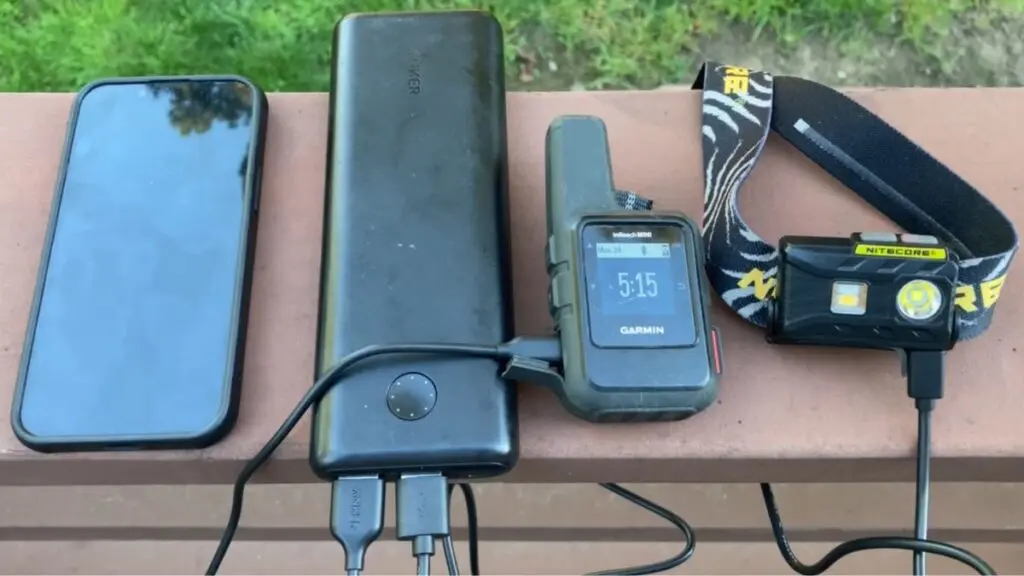
The mAh number on the label is not what lands in your phone. Conversion losses in lithium cells mean a 10,000mAh bank delivers roughly 6,500–7,000mAh at 5V to your devices, or about one to two full phone charges depending on your model. For a 2–3 night weekend trip where your phone is your camera, navigation, and emergency contact, one 10,000mAh bank is the right call for most people. If you’re running a satellite communicator, a headlamp that charges via USB, and a camera on top of your phone, or if you’re out 4–7 days between resupplies, step up to 20,000mAh.
The 5,000mAh tier (like the NB Air) is genuinely useful only for ultralighters and overnighters running strict airplane-mode phone discipline. It’s not a “save a few ounces” swap for a standard weekend trip. It’s a different use case entirely.
Weight vs. Capacity Tradeoffs
The relevant comparison is capacity per ounce, not raw capacity. The 10,000mAh tier is where the best ratios live. The NB10000 Gen4 delivers 10K at 5.0 oz. The 20,000mAh options nearly double the weight for double the capacity, which is a fair trade if you need it, but there’s no free lunch. If you’re already carrying a headlamp with USB charging and want to centralize your power, that’s one place where a 20K bank starts making weight sense.
Waterproof Ratings: When They Matter
In the backcountry, your power bank lives in a hip belt pocket, a pack lid, or inside your bag. Rain, stream crossings, condensation, and the occasional dunking are real events. IPX7 (submersible to 1m for 30 minutes) is meaningful protection. IPX5 (rain-resistant, not submersible) handles most conditions but not an accidental drop in water. No IP rating means the bank needs its own dry bag every time.
This is not a make-or-break factor in dry conditions or desert backpacking. It is a real factor if you’re in the Sierra or the Pacific Northwest, or if you’re the type who doesn’t want to manage a second dry bag for every piece of electronics. Worth weighing alongside the price difference.
USB-C Only vs. Mixed Ports
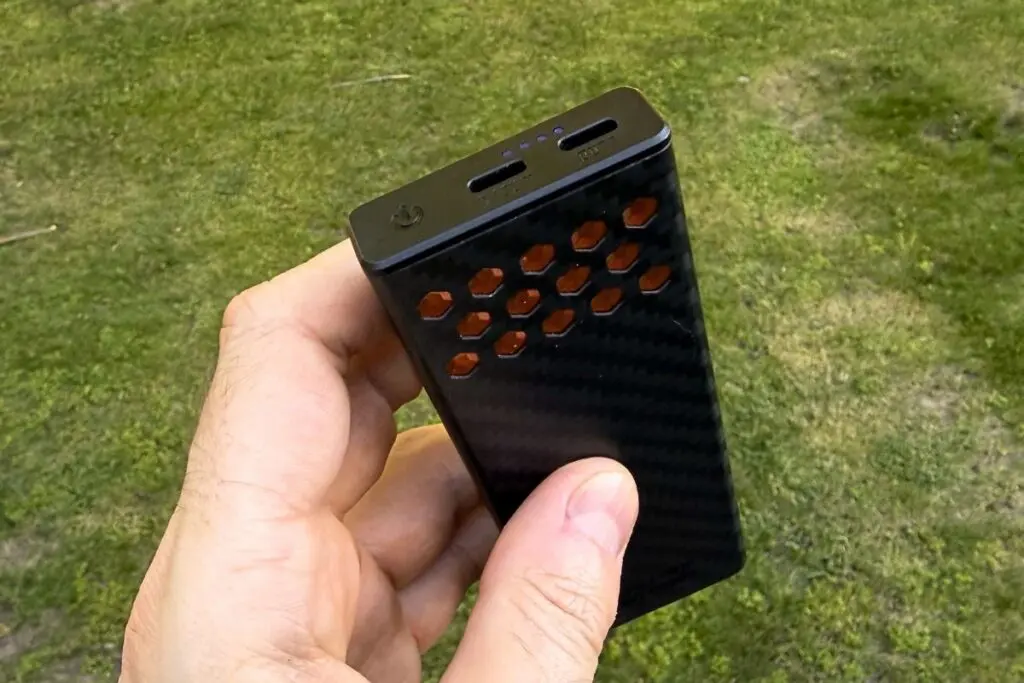
Banks that dropped USB-A entirely (the NB10000 Gen4, NB Air, Carbo 10000 Gen2) assume you’ve gone fully USB-C on your kit. If your headlamp, inReach, or backup light still uses micro-USB or USB-A charging, a USB-A port matters. The Summit 10000 and Anker Zolo 20K both carry USB-A alongside USB-C for exactly this reason. Check your full device list before committing to a USB-C-only bank.
A Note on Old Power Banks
If you’re still running a power bank you bought several years ago, it’s worth verifying there are no active recalls. Older lithium-ion banks, particularly some early-gen Anker and generic models, have been subject to CPSC recalls for overheating and fire hazard. A recalled bank has no place in a tent or a sleeping bag. Check the CPSC recall database before you pack it.
| POWER BANKS | Capacity (mAh) | Weight (oz) | Max Output (W) | Waterproof Rating |
|---|---|---|---|---|
| Nitecore NB10000 Gen4 | 10,000 | 5.0 | 22.5 | IPX7 |
| INIU Pocket Rocket P50 | 10,000 | 5.6 | 45 | — |
| Nitecore NB Air | 5,000 | 3.1 | 18 | IPX7 |
| Nitecore Carbo 10000 Gen2 | 10,000 | 6.0 | 30 | IPX8 |
| Nitecore NB20000 Gen3 | 20,000 | 10.3 | 22.5 | IPX5 |
| Anker Zolo 20K | 20,000 | 12.5 | 30 | — |
| Nitecore Summit 10000 | 10,000 | 6.2 | 20 | IPX5 |
Best Overall Power Bank for Backpacking: Nitecore NB10000 Gen4
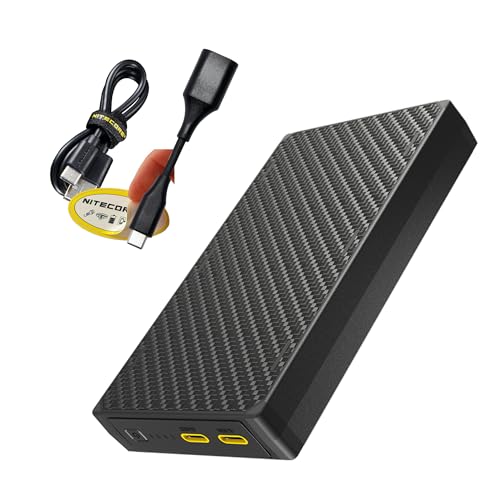
The Nitecore NB10000 Gen4 is what most weekend backpackers should be carrying: 10,000mAh at 5.0 oz with a real IPX7 submersible rating, housed in a carbon fiber shell thin enough to sit flat in a hip belt pocket. The combination of weight, weather protection, and capacity in one package is genuinely hard to beat at this size.
The Gen4 runs USB-C only: two ports, both bidirectional, both supporting PD and QC at up to 22.5W. That’s fast enough to top up a phone in under an hour on a break. One caveat: total output drops to 15W when you’re charging two devices at the same time, so if you’re running a phone and an inReach simultaneously, you’re not getting full-speed on either. The included lanyard cable pulls double duty as a carry loop, which is a small but useful detail.
The main argument against the Gen4 is price: it costs more than most competitors in the 10K tier. If your phone is your only device and you want to spend as little as possible, the INIU P50 handles that job. The Gen4 is for people building a long-term kit who want real weather protection and the best capacity-to-weight ratio available. One thing worth knowing: the Gen4 isn’t available on Amazon, so you’re buying direct from the Nitecore Store. If returns or warranty service ever became an issue, that’s the channel you’d be working through.

An ultralight 10,000mAh carbon fiber power bank with dual USB-C ports, 22.5W fast charging, and an IPX7 waterproof rating. One of the lightest full-capacity power banks made for backcountry use.
Not sure what gear you actually need?
Grab the free backpacking checklist I built after 120+ trips. It covers every category so you don’t overbuy or forget something important.
Get the Checklist →Free. No spam. Unsubscribe anytime.
Best Budget Power Bank for Backpacking: INIU Pocket Rocket P50
The INIU Pocket Rocket P50 puts 10,000mAh in the cheapest package on this list and punches well above its price in output: 45W peak on a single port, which is faster charging than anything else on this list and more than twice what the NB10000 Gen4 delivers. Three simultaneous ports (two USB-C, one USB-A) and a 6.7-inch integrated cable that handles day-to-day use without needing to dig for a cord in your pack. For straightforward weekend use, this is a capable and genuinely inexpensive solution.
What you’re trading is weather protection and shape. The P50 carries no IP rating, so it needs to live in a dry bag or ziplock whenever conditions get wet. That’s not optional. It’s also thicker than the slab-style banks at 1.0 inch, which means it rides less flush in a hip belt pocket than the NB10000 Gen4’s 0.57-inch profile. It fits, but it’s not as comfortable for extended carries. And INIU doesn’t have the outdoor track record of Nitecore or Anker, which is worth noting on an item you’re relying on for phone communication in the backcountry.
Budget-focused weekenders hiking in dry conditions who don’t want to spend three times as much for weather resistance they may never need will find everything they need here. It’s a real 10K bank, not a compromised one.

Best Ultralight Power Bank for Backpacking: Nitecore NB Air
The Nitecore NB Air weighs 3.1 oz. For a backpacking power bank with a legitimate IPX7 waterproof rating and 18W USB-C output, that’s a remarkable number. It’s the lightest credible option on this list by almost 2 oz.
The constraint is equally real: 5,000mAh at 5V translates to roughly one full phone charge in practice. The NB Air is a top-up battery, not a trip battery. It’s designed to get you through an overnight or extend a short trip, not to carry a phone-plus-extras setup for three nights. Single port, USB-C only, no USB-A. On trips where you’re in airplane mode most of the day and checking in occasionally for navigation and photos, the NB Air’s math works. On a standard weekend warrior trip where your phone is doing real navigational and camera work, 5,000mAh is likely to run short by the end of night two.
If you’re an ultralighter who’s genuinely disciplined about power consumption and your trips are overnights or short two-nighters, this is the right bank. If you’re a three-night weekend tripper who just wants to save weight, the NB10000 Gen4 at two extra ounces is the better call.

An ultralight 5,000mAh USB-C power bank weighing just over 3 ounces, with an IPX7 waterproof rating and 18W output. Built for minimalist overnight kits.
Nitecore Carbo 10000 Gen2
The Nitecore Carbo 10000 Gen2 is the most weather-hardened 10K bank on this list. IPX8 (the highest submersibility rating here, a step above the IPX7 on the NB10000 Gen4) combined with 30W bidirectional fast charging, rounded snag-free corners, and a carbon fiber shell with magnesium alloy heat sinks built in. This is not a bank designed to be handled gently. Built for longevity in harsh conditions, and it shows in the construction.
The tradeoff is weight and price. At 6.0 oz the Carbo weighs an ounce more than the NB10000 Gen4 for the same 10,000mAh capacity. It costs meaningfully more than the Gen4 and several times the P50, a premium that reviewers acknowledge while openly questioning whether IPX8 over IPX7 justifies it for most use cases. The 30W input advantage is real: it’s the fastest recharge input in the 10K group, which matters on town stops when you want to top up and move on fast.
The bank is currently in my kit. The build quality is immediately noticeable compared to the NB series: stiffer, denser, and without the flex of the NB10000 Gen4’s more minimal carbon shell. For someone who treats gear roughly, loses things to gravity regularly, or hikes in genuinely wet climates where the bank might see more than a splash, the Carbo earns its price premium. For desert Southwest backpacking in dry weather, the NB10000 Gen4 is just as capable at lower weight and cost.

A rugged 10,000mAh carbon fiber power bank with 30W two-way fast charging, dual USB-C ports, and an IPX8 waterproof rating for hard outdoor use.
Best High Capacity Power Bank for Backpacking: Nitecore NB20000 Gen3
The Nitecore NB20000 Gen3 is the lightest serious 20K bank available for backcountry use at 10.3 oz, meaningfully under the 12–15 oz range typical for 20,000mAh banks. At 72Wh it stays under the airline carry-on limit. For trips running 4–7 days between resupplies, or for anyone charging a full suite of devices (phone, satellite communicator, USB headlamp, camera), this is the capacity tier you need. 10K banks simply aren’t enough for longer carries or multi-device loads, and the NB20000 Gen3 closes that gap at reasonable weight.
Two USB-C ports (with a USB-C-to-USB-A adapter included), 22.5W output, pass-through charging, and an IPX5 rain-resistant rating. The weather protection is a step down from the NB10000 Gen4’s IPX7: rain and splash are handled, submersion is not. That’s a slight concession for doubling the capacity. The other constraint is recharge time: 18W input on a 72Wh bank means around 4.5–5 hours to fully refill on a fast charger, which is a long window if your town stops are quick.
This is the right call for extended trips, for groups or couples sharing one bank, and for backpackers who’d rather consolidate power than carry two smaller banks. The weight savings over generic 20K options are significant enough to justify the Nitecore price.
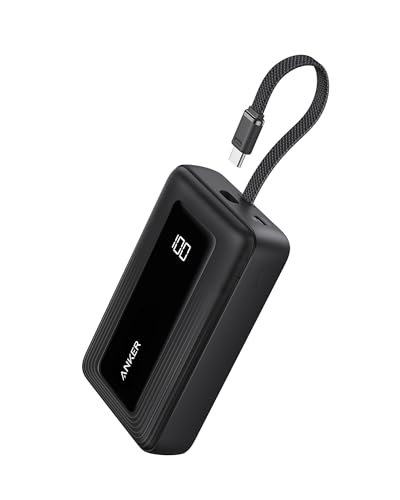
Best Budget High Capacity Power Bank for Backpacking: Anker Zolo 20K
The Anker Zolo 20K is a budget-first 20K bank and delivers on that premise: roughly a quarter of the per-mAh cost of the Nitecore NB20000 Gen3, 30W peak output (higher than the Nitecore 20K), a built-in USB-C cable rated for 10,000+ bends, and a percentage display that tells you exactly what’s left without having to interpret LED dots. For base camps, car-supported trips, and group gear lists where cost matters more than weight, this covers the capacity need effectively.
The honest version of the tradeoffs: at 12.5 oz it’s over 2 oz heavier than the NB20000 Gen3, and at 1.23 inches thick it’s a brick compared to the slab-style Nitecore banks. No IP rating means a dry bag is mandatory in any wet conditions. Despite the 20W input, a full refill takes over 5 hours, the longest recharge on this list. One USB-C port handles all bidirectional duty; multi-device charging routes through USB-C plus USB-A, which is fine but not as flexible as two full USB-C outputs. Anker has a strong reliability reputation and backs the Zolo with an 18-month warranty, which helps offset the few early-failure reports that have surfaced in deal forums.
Groups splitting the bank across two or three people, car-camping bases that want cheap high-capacity insurance, and anyone who needs 20K at the lowest possible cost will get what they came for. The 2-oz weight penalty over the NB20000 Gen3 buys a serious price saving. That’s a real choice, and for the right trip it’s the correct one.

Nitecore Summit 10000
The Nitecore Summit 10000 has a feature set that no other bank on this list can match: a built-in PI heating system that activates automatically below freezing, rated operation down to -40°F, and a manufacturer claim of retaining roughly 70% of its usable capacity at -4°F. For winter camping and high-altitude shoulder-season trips, that’s not a novelty. It’s the reason to buy this bank over anything else. Standard lithium-ion cells lose capacity fast in cold, and a bank rated for 10K that delivers 4K when you’re on the summit at 12,000 feet in January isn’t doing its job. The Summit 10000 solves the one cold-weather power failure mode that standard banks can’t address.
The rest of the spec sheet is solid but not exceptional: 10,000mAh, one USB-C and one USB-A port, IPX5 rating, unibody carbon fiber shell with 1.5m impact resistance, an insulated carry bag, and a cold-rated braided USB-C cable included in the box. At 6.2 oz it’s 1.2 oz heavier than the NB10000 Gen4. Fast charging cuts out below 41°F by design: the bank protects its cells by charging at standard rates in freezing temperatures, which surprises users who expect full-speed charging in the cold. The heating system itself draws from the bank’s own capacity in sustained deep cold, which is the right engineering call but a real constraint to understand.
If you’re running three-season desert Southwest and Sierra trips, the Summit 10000 is an expensive bank for a capability you’ll never use. For winter camping, shoulder-season alpine routes, and any trip where you’re genuinely operating in sustained freezing temperatures, it’s the only bank on this list engineered for the job.

A 10,000mAh cold-weather power bank with a built-in heating system rated to -40°F, unibody carbon fiber shell, and an insulated carrying bag. Made for winter and alpine trips.
The Complete Kit I Use on Every Trip
This post covers one piece of the puzzle. If you want to see everything I actually carry, I keep my full kit documented on one page.
After 100+ trips across the Sierra, the Pacific Coast, and Desert Southwest, this is the setup I’ve dialed in for three-season weekend trips. Same gear, trip after trip. It’s what I’d recommend to anyone building out a dependable kit without overpacking.
Picking the Best Power Bank for Backpacking
Most weekend backpackers land in the same place: the Nitecore NB10000 Gen4 is the default correct answer. The weight is right, the weather protection is real, and 10K is enough for a 2–3 night phone-plus-headlamp load. If the price is prohibitive, the INIU P50 covers the same capacity at a fraction of the cost. You manage it in wet weather with a dry bag and accept the tradeoff. If you’re running longer trips or charging multiple devices, the Nitecore NB20000 Gen3 is the lightest path to 20K. And if you’re extending your backpacking into winter or high-altitude cold, the Summit 10000 is the only bank on this list that actually solves the cold-weather problem.
The one scenario where the choice gets more interesting is if you’re already carrying a capable backpack with a solid hip belt system and you want the bank to ride in that pocket all day. Profile and thickness start to matter here: the NB10000 Gen4’s 0.57-inch slab shape beats the P50 and Anker Zolo’s chunkier dimensions for hip belt pocket carry. Buy the bank that matches your trip length, your device list, and your conditions. Not the one with the biggest number on the label.
Related Reading
Amazon and the Amazon logo are trademarks of Amazon.com, Inc. or its affiliates.