
Best Satellite Communicators for Backpacking: Device + Plan Cost Compared
Updated: 2026 | Reviewed by: Chris Mercer
As an Amazon Associate I earn from qualifying purchases. I also earn a commission on purchases through other retailer links here, at no extra cost to you.
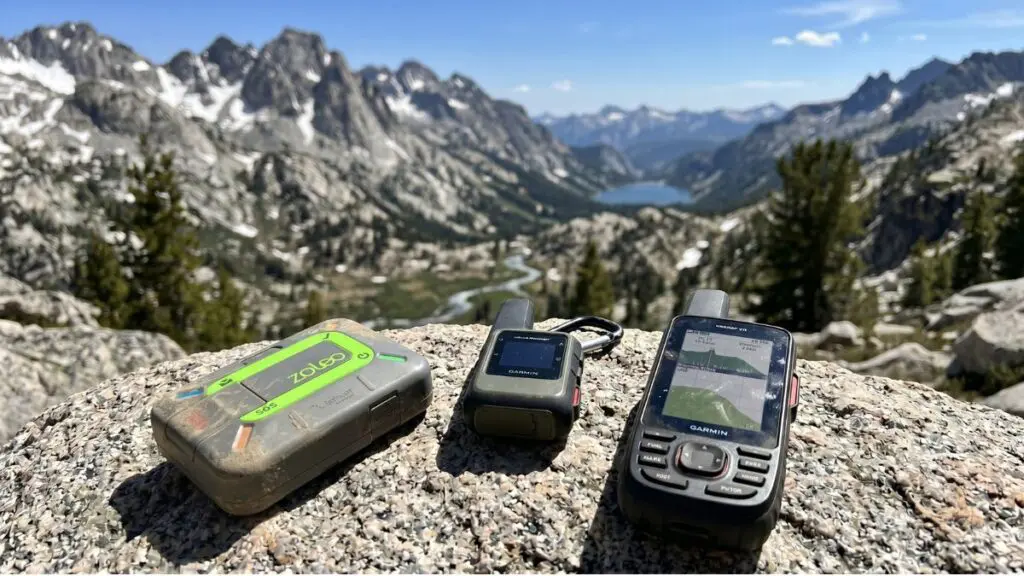
A satellite communicator is the one piece of backpacking gear that’s only useful when everything else has gone wrong, which means choosing the wrong one, or skipping it entirely, is a mistake that tends to matter at the worst possible time. This post covers every major satellite communicator on the current market, with a focus on what the total cost of ownership actually looks like over a season’s worth of weekend trips, and which device is genuinely right for each kind of buyer.
My Picks
Best Overall: Garmin inReach Mini 3 Plus
Best for Weekend Warriors: Garmin inReach Mini 2
Best Budget: ZOLEO Satellite Communicator
Best No-Nav Messenger: Garmin inReach Messenger Plus
Best for Off-Trail Navigation: Garmin GPSMAP 67i
What to Know Before Choosing a Satellite Communicator
There are really only a few decisions that determine which device belongs in your pack. Get these right and the rest falls into place.
Network first. Every device here except the SPOT X runs on the Iridium satellite network, which is genuinely global — pole to pole, no terrain gaps worth worrying about. The SPOT X runs on Globalstar, which has meaningfully smaller coverage and performs worse behind ridgelines. For most backpackers in the continental US, Globalstar works fine. If you’re going remote Alaska, international, or deep canyon country, Iridium is the only network worth trusting.
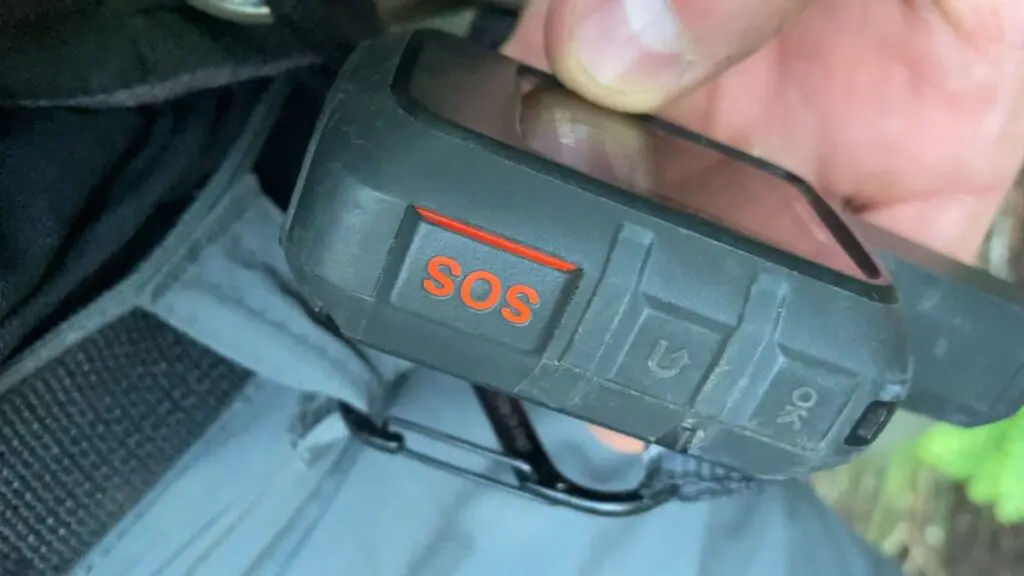
Standalone or phone-paired? Some devices here can send a text message from their own screen without touching your phone. Others are functionally useless for messaging unless your phone is on and paired. That’s not a deal-breaker — most of us carry a phone anyway — but it matters if your phone dies, gets wet, or you’re the kind of person who wants to send a check-in without digging through your pack. The Garmin inReach Mini 2, the Mini 3 Plus, and the GPSMAP 67i can all operate standalone. The ZOLEO, the Messenger Plus, and the Bivy Stick all lean heavily on your phone.
Navigation or not? If you navigate by phone already — downloaded maps, GPS track, the whole setup — you don’t need navigation built into your communicator. Most of these devices offer a basic breadcrumb or waypoint feature, but none of the compact devices are replacements for a dedicated navigator or a capable phone. The single exception is the GPSMAP 67i, which is a full standalone GPS unit first and a satellite communicator second.
The subscription is the long-term cost. Every device here requires an ongoing subscription to actually work. Plans range from roughly $12 to $20 per month at the floor, and the right plan depends heavily on how often you go out. If you’re doing 20+ nights a year, an annual plan makes sense. If you’re doing 6-8 nights a season, credit-based or seasonal plans are worth hunting for. Whatever device you’re considering, build the subscription cost into your decision before you buy the hardware — it’s often the bigger number over a two-year ownership window. Published floor pricing represents the minimums; real plans at realistic usage levels tend to cost more.
A note on the ongoing subscription: it runs whether you’re in the backcountry or not, unless you specifically pause or cancel it. That recurring cost during trip-free months is worth factoring in.
| COMMUNICATORS | Weight (oz) | Battery Life (hr) | Network | Two-Way Messaging |
|---|---|---|---|---|
| Garmin inReach Mini 3 Plus | 4.42 | 350 | Iridium | Yes |
| Garmin inReach Mini 2 | 3.5 | 336 | Iridium | Yes |
| ZOLEO | 5.3 | 200 | Iridium | Yes |
| Garmin inReach Messenger Plus | 4.1 | 600 | Iridium | Yes |
| ACR Bivy Stick | 3.95 | 120 | Iridium | Yes |
| Garmin GPSMAP 67i | 9.7 | 165 | Iridium | Yes |
| SPOT X | 7.0 | 240 | Globalstar | Yes |
Best Overall Satellite Communicator: Garmin inReach Mini 3 Plus
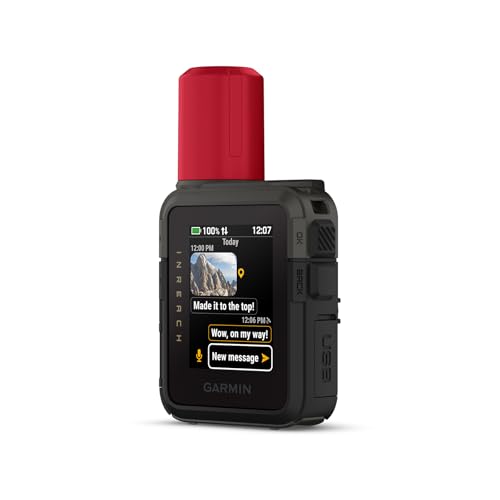
The Garmin inReach Mini 3 Plus is the most capable compact satellite communicator available right now, and it’s not particularly close. Released in December 2025, it adds a color touchscreen, photo and voice messaging, a built-in speaker and microphone, and a faster Iridium antenna (the IMT module) to the Mini family — all in a device that clips to a shoulder strap and runs for up to 350 hours at 10-minute tracking intervals.
That IMT module is what actually matters here. Photo and voice messaging exist on this device because of it — it’s the same technology in the Garmin inReach Messenger Plus, and it’s what separates the Mini 3 Plus from every other compact Garmin device. You can send a photo back to your family from a summit camp. You can leave a voice note rather than thumbing out a message on a tiny screen. If those features matter to you, the Plus is the only Mini-class device that has them.
The tradeoffs are real: at 4.42 oz, it’s nearly an ounce heavier than the Garmin inReach Mini 2, and it’s the most expensive device in the lineup. For buyers who don’t need photo/voice and aren’t going to use a color touchscreen much, the case for spending extra gets thinner fast. The Mini 3 Plus also isn’t a navigation device in any meaningful sense — it does basic waypoints and TracBack, and it pairs with the Garmin Messenger app for a richer mapping view, but if you’re off-trail navigating seriously, you need a phone or a GPSMAP unit alongside it.
This is the right device for the buyer who wants the most capable clip-on communicator and will actually use photo messaging and live tracking. If that’s you, it’s the clear choice. If you mostly want SOS and a text check-in to your contacts, the Mini 2 saves weight and money without giving up anything that matters for that use case.

Not sure what gear you actually need?
Grab the free backpacking checklist I built after 120+ trips. It covers every category so you don’t overbuy or forget something important.
Get the Checklist →Free. No spam. Unsubscribe anytime.
Best Satellite Communicator for Weekend Warriors: Garmin inReach Mini 2
The Garmin inReach Mini 2 is what I carry, and it’s what most weekend backpackers should buy. At 3.5 oz, it’s the lightest Garmin in the lineup. It runs for up to 336 hours on a charge at 10-minute tracking intervals — that’s two weeks of continuous use, which covers any trip you’re actually going to take. It runs on Iridium, so the coverage is global and reliable. And it does two-way text messaging and interactive SOS over satellite without needing your phone for those core functions.
The two-way messaging is where this device earns its keep. Being able to send a real message back to someone at home — not just a canned “I’m OK” ping, but an actual response — changes the dynamic of how people who care about you experience your trip. In practice, messages can be slow to send or receive; it’s satellite communication, not SMS. But in my experience they do go through. On-demand weather reports are genuinely useful too, especially when you’re trying to decide whether to push a ridge crossing or wait a day — Garmin’s basic vs. detailed report option is a real feature, not a marketing checkbox.
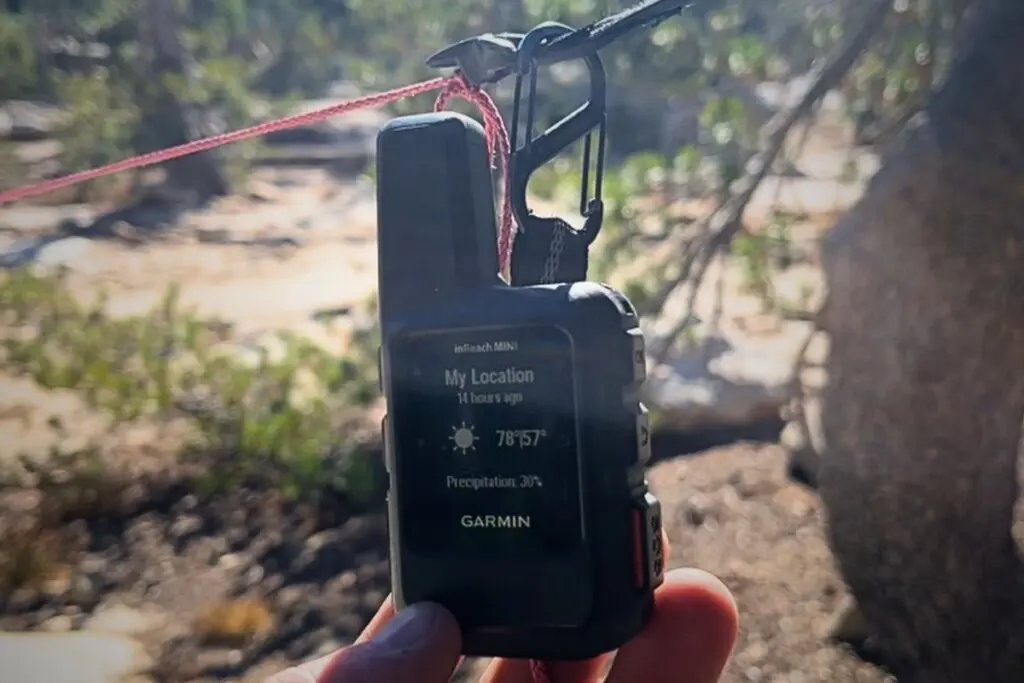
What the Mini 2 doesn’t have: a color or touch display (monochrome, button-operated), photo or voice messaging, or the faster IMT antenna the Mini 3 Plus introduced. For most weekend backpackers those aren’t meaningful omissions. The one genuine limitation worth knowing is that the older antenna is slower, which shows up in message latency more than coverage — you’ll occasionally wait longer than you’d like for a send confirmation.
The Mini 2 is the proven, no-frills workhorse of this category. It frequently streets well under its MSRP, which makes it an even cleaner recommendation for anyone who doesn’t specifically need the new features the Mini 3 Plus added. The subscription requirement remains the persistent downside — you keep paying during months with no trips unless you actively manage the plan.
For backpackers who are also using a power bank to keep devices charged on multi-day trips, the Mini 2’s long battery life means it’s rarely the limiting factor. My overview of the best power banks for backpacking covers what actually makes sense for the electronics load you’re carrying.

Best Budget Satellite Communicator: ZOLEO Satellite Communicator
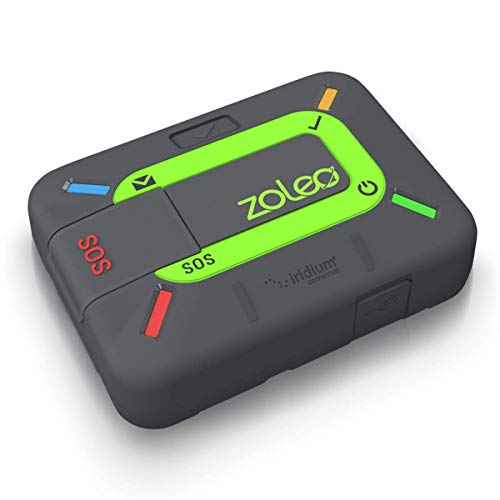
The ZOLEO Satellite Communicator costs a fraction of what the Garmin devices do at the hardware level, and for a specific kind of buyer it’s genuinely the right call. The core pitch: Iridium network, two-way text messaging, 24/7 SOS monitoring, seamless cellular and Wi-Fi handoff for messaging when you’re in range, and a dedicated phone number and email address you can give to contacts so they can reach you on your device’s number rather than yours.
That seamless handoff is legitimately useful. The ZOLEO acts as a single messaging address across satellite, cellular, and Wi-Fi — when you’re in cell coverage, messages route through your phone’s carrier; when you leave it, they route through Iridium. Your contacts don’t have to think about it. For messaging-first buyers who want the simplest possible experience, this is the cleanest implementation in the category.
The tradeoffs are significant. The ZOLEO has zero navigation capability on the device itself — no maps, no breadcrumb, location sharing only (and the Location Share+ feature is a paid add-on). It has no display at all beyond status LEDs and buttons. For anything beyond a check-in or SOS, you need a paired smartphone in your hand. At 5.3 oz, it’s the heaviest of the compact devices here. And the subscription floor, at around $20/month, is actually higher than the Garmin plans — so the hardware savings don’t always translate to long-term savings.
This is the right device for the budget-minded buyer who navigates by phone and doesn’t care about standalone functionality. If you’re in that camp and want the simplest, most familiar texting experience on satellite, the ZOLEO delivers it cleanly.
Best No-Nav Satellite Messenger: Garmin inReach Messenger Plus
The Garmin inReach Messenger Plus is a niche device that’s genuinely excellent for the buyer it’s built for. The headline number is 600 hours of battery life at 10-minute tracking intervals — by a wide margin the longest in this roundup. It also has the IMT module that enables photo and voice messaging, the same as the Mini 3 Plus. At 4.1 oz, it’s lighter than the Mini 3 Plus and has better battery life. On paper, it sounds like it wins.
The catch is the display. There isn’t one, really — there’s a small status and text bar that can technically show you a message, but in practice standalone messaging on this device is a last resort, not a workflow. Everything useful — composing messages, reading replies, managing tracking — happens through the paired Garmin Messenger app on your phone. If your phone is dead or unavailable, the Messenger Plus’s text bar will get you through, but it’s not how you want to be operating. The Messenger Plus also includes a reverse charging feature that can push a small charge to a paired phone, though real-world utility here is limited.
This device also has essentially no navigation capability — basic location sharing and TracBack via the app only. No detailed maps, no standalone routing.
The Messenger Plus is the right pick for the buyer who prioritizes maximum battery life and photo/voice messaging, always has their phone available, and has no use for built-in navigation. It’s the device for someone whose phone is their GPS and who wants a communicator that can go the longest between charges. If standalone capability matters to you — the ability to text without your phone — the Garmin inReach Mini 2 or Mini 3 Plus serves that better.

ACR Bivy Stick
The ACR Bivy Stick occupies an interesting position: affordable hardware, lightweight (3.95 oz), Iridium network, and credit-based subscription plans that make it genuinely cheaper for intermittent users than any of the Garmin plans. The GroupTrack feature for up to 12 users is a real differentiator for group trips.
The Bivy Stick has no display — all messaging goes through the paired Bivy app on your phone, and the Bivy app includes offline map capability and a large route library that the Garmin devices don’t match. For phone-based navigation, that’s actually a reasonable trade. SOS monitoring is handled by Global Rescue rather than Garmin Response, which is a solid provider in its own right.
The battery life is the real limitation. At 120 hours maximum (with 15-minute mailbox checks), it’s the shortest in the group by a significant margin — roughly a third of the Mini 2’s runtime. For a 2-3 night trip that’s not a practical problem, but it does mean the Bivy Stick needs charging on longer trips when other devices don’t.
One availability note: ACR’s standard Bivy Stick has had backorder issues as of this writing. A newer Bivy Stick MESH variant (with device-to-device mesh relay capability) is also sold alongside it. Confirm current availability before purchasing.
The Bivy Stick makes the most sense for the intermittent user who goes out a few times a year and wants to keep ongoing subscription costs as low as possible. The credit-based plan suits that pattern well. For backpackers with a regular season, the Garmin subscription plans offer better value at volume, and the Garmin ecosystem’s track record is deeper.

Best for Off-Trail Navigation: Garmin GPSMAP 67i
The Garmin GPSMAP 67i is a fundamentally different device from everything else in this roundup. At 9.7 oz, it’s not a clip-on messenger — it’s a full standalone GPS navigator with a satellite communicator built in. If you’re navigating off-trail, in winter, or in any environment where your phone isn’t a reliable navigation tool, the 67i is the only device here that solves the whole problem.
The navigation capability is the real differentiator. The 67i has a 3-inch sunlight-readable color display, preloaded TopoActive maps, 10,000 waypoint storage, and multi-band GNSS that pulls from GPS, GLONASS, Galileo, and QZSS simultaneously. That multi-band positioning is genuinely more accurate and more reliable in canyon country and heavy tree cover than a phone GPS or any of the compact communicators. There’s no phone dependence — this device navigates and communicates completely standalone.
It does all of this at roughly 2-3 times the weight of a Mini 2, which is the honest trade. For backpackers who rely on their phone for navigation and are happy with that, the 67i’s navigation advantage doesn’t justify the weight penalty. For off-trail navigation, desert canyon work, thru-hiking, guiding, or any environment where a separate GPS unit is the right call anyway, the 67i consolidates two devices into one at a weight that’s competitive with carrying both.
Two-way messaging is present via Iridium, the same interactive SOS as the other Garmin devices. Battery life is up to 165 hours at 10-minute tracking intervals in standard mode, 425 hours in expedition mode. No photo or voice messaging — that’s currently a Mini 3 Plus / Messenger Plus exclusive feature within the Garmin lineup.
This is the right device for anyone who needs a standalone navigator and wants to consolidate. If you’re already carrying a dedicated GPS unit and resent the redundancy, the 67i makes the merger argument cleanly. For the typical weekend warrior who navigates by phone, it’s more device than you need.
For backpackers pairing this with a full electronics setup, I recently discussed the best ultralight headlamps for backpacking — the 67i’s battery overhead means thinking about the full electronics picture.

SPOT X
The SPOT X is the outlier in this roundup in two ways: it runs on the Globalstar network instead of Iridium, and it has a built-in physical QWERTY keyboard. The keyboard is the only reason to consider it — genuine standalone text messaging without a phone, typed on real keys rather than a tiny screen or an app. If standalone keyboard messaging at a low hardware cost is your priority, no other device here offers it.
The network is the reason most serious backcountry users should look elsewhere. Globalstar’s coverage is meaningfully smaller than Iridium’s, and it’s more sensitive to terrain obstruction. For most of the continental US and Canada, Globalstar works reliably. For remote Alaska, international travel, deep canyon environments, or anywhere you’re genuinely off the grid, the Iridium devices in this roundup are the safer choice. Reviewers flag the Globalstar coverage limitation consistently enough that it’s not a minor caveat — it’s the main reason the SPOT X sits at the end of this list.
The SPOT X is also bulky — roughly iPhone-sized — and heavier than several Iridium options at 7.0 oz. Navigation is minimal: compass, waypoints, breadcrumb tracking, but no maps. The interface gets described as clunky in most head-to-head comparisons.
The SPOT X makes sense for the buyer in Globalstar’s strong coverage zones who wants standalone keyboard messaging at a low hardware cost and doesn’t need serious navigation. It’s a narrow fit. If you’re in doubt about Globalstar coverage for the terrain you actually backpack, go with an Iridium device.

The Complete Kit I Use on Every Trip
This post covers one piece of the puzzle. If you want to see everything I actually carry, I keep my full kit documented on one page.
After 100+ trips across the Sierra, the Pacific Coast, and Desert Southwest, this is the setup I’ve dialed in for three-season weekend trips. Same gear, trip after trip. It’s what I’d recommend to anyone building out a dependable kit without overpacking.
The Bottom Line
Most weekend backpackers should be choosing between two devices: the Garmin inReach Mini 2 and the Garmin inReach Mini 3 Plus. The Mini 2 is the lighter, more affordable option with every core feature you need — two-way messaging, interactive SOS, Iridium coverage, standalone operation. The Mini 3 Plus adds photo and voice messaging, a color touchscreen, and a faster antenna; if those matter to you, it’s worth the upgrade.
If budget is the priority and you navigate by phone anyway, the ZOLEO is the most accessible entry point. If battery life is paramount and you never put your phone down, the Garmin inReach Messenger Plus makes that case cleanly.
The GPSMAP 67i is a consolidation play for off-trail navigators, not a general recommendation. And the SPOT X is the right pick for a specific buyer in Globalstar coverage who wants standalone keyboard messaging — a narrow set, but it’s the correct answer for them.
Whichever device you pick, build the subscription into your decision before you commit to hardware. The ongoing plan cost is what separates a satellite communicator that lives in your pack from one that lives in a drawer.
Related Reading
Amazon and the Amazon logo are trademarks of Amazon.com, Inc. or its affiliates.